 Previous article
Version 1 - Primary Nav Search
For Companies and Institutions
-
Commercial Banking
We provide tailored credit, financing, treasury and payment solutions for businesses of all sizes and commercial real estate. Backed by the strength and stability of J.P. Morgan, our dedicated experts deliver industry-specific guidance and services, empowering you to manage cash flow, seize growth opportunities and achieve your strategic goals. -
Global Corporate Banking
We help clients achieve their long-term strategic goals through financing, liquidity, payments, risk management and investment banking solutions. -
Investment Banking
Providing investment banking solutions, including M&A, capital raising and risk management, for a broad range of corporations, institutions and governments. -
Payments
Your partner for commerce, receivables, cross-currency, working capital, blockchain, liquidity and more.
Key Links
For Institutional Investors
-
Asset Management
Putting our long-tenured investment teams on the line to earn the trust of institutional investors.
-
Markets
Direct access to market leading liquidity harnessed through world-class research, tools, data, and analytics.
-
Securities Services
Helping institutional investors, traditional and alternative asset and fund managers, broker dealers and equity issuers meet the demands of a rapidly evolving market.
-
Global Research
Leveraging cutting-edge technology and innovative tools to bring clients industry-leading analysis and investment advice.
-
Prime Services
Helping hedge funds, asset managers and institutional investors meet the demands of a rapidly evolving market.
-
Global Liquidity Solutions
Global short-term fixed income strategies designed to help clients manage liquidity through the cycle.
Key Links
For Individuals
-
Wealth Management
With J.P. Morgan Wealth Management, you can invest on your own or work with an advisor to design a personalized investment strategy. We have opportunities for every investor.
-
Private Bank
A uniquely elevated private banking experience shaped around you.
-
Personal Investing (UK only)
Invest with J.P. Morgan Personal Investing, a platform for UK-based clients with the human expertise, intuitive app and tools to help you work towards your long-term goals.
For Employers
-
Workplace Solutions
Enhance your equity compensation offering with solutions designed to empower your employees and bring your reward strategy to life.
Key Links
Who We Serve
Key Links
All Insights
Explore a variety of insights.
Key Links
Insights by Topic
Explore a variety of insights organized by different topics.
Key Links
Insights by Type
Explore a variety of insights organized by different types of content and media.
Key Links
About Us
We aim to be the most respected financial services firm in the world, serving corporations and individuals in more than 100 countries.
Key Links

X less
Featuring future-thinking clients
Payments Unbound unites clients from a wide range of industries to bring you innovative insights that help you navigate the future of payments.
Payments Unbound Volume 6 Supply Chain Reactions (Data Visualization)
Wired reports
Chain reactions
3 minute read
Data viz
Making even simple products involves
intricate financial choreography.
We reveal the payment flows that
take a running shoe from components
to customer.
Supply chains manage flows of goods—but they also manage the flows of cash that make global commerce possible. When a parcel arrives on your doorstep, it represents the culmination of a series of complex financial interactions that began months earlier.
Consider a single product, like a running shoe: It might contain inputs and processes that span a wide range of countries. Rubber from Indonesia, foam from China, eyelets from Vietnam. And payments must be carefully coordinated between all parties— often across different currencies, regulatory regimes and banking systems—to keep production moving.
The challenge, however, is timing. Component manufacturers need funding to produce parts. Assembly facilities must pay for production runs. Logistics companies need capital to ferry the finished goods around the world. In all cases, outgoings precede revenue, meaning that monitoring cash flow is crucial. To avoid operations stalling, businesses need to preempt deficits and get finance at the right time. Global events, however, can make this easier said than done.
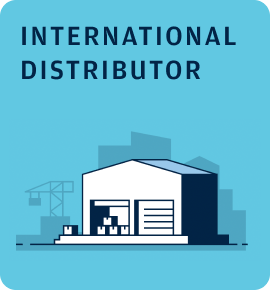
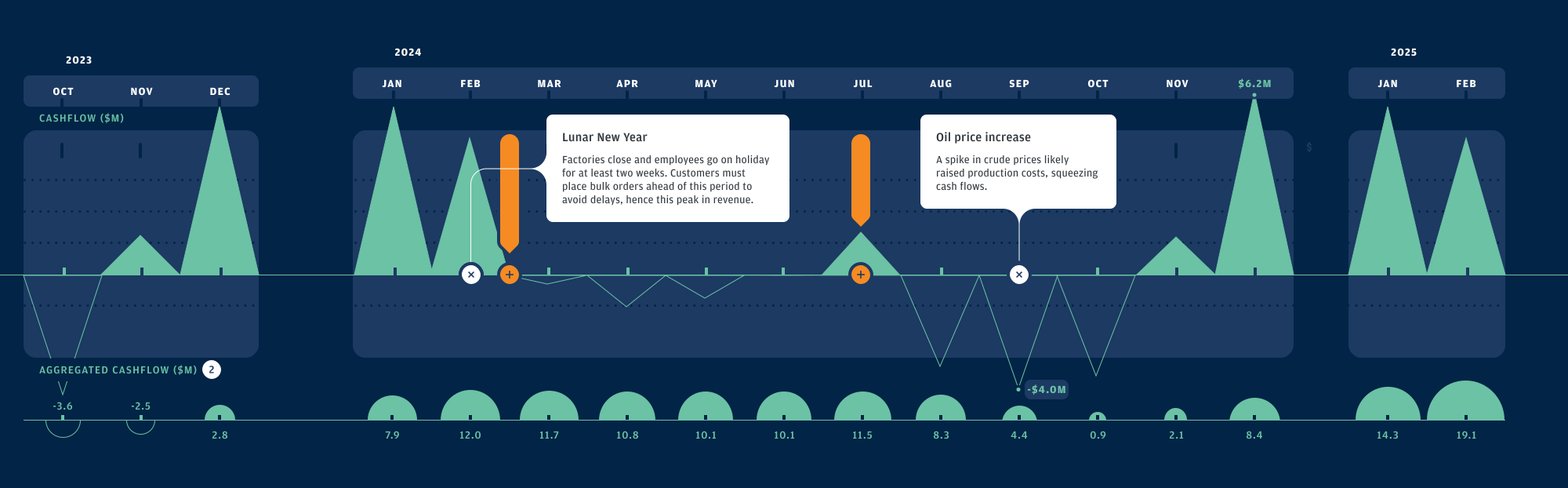
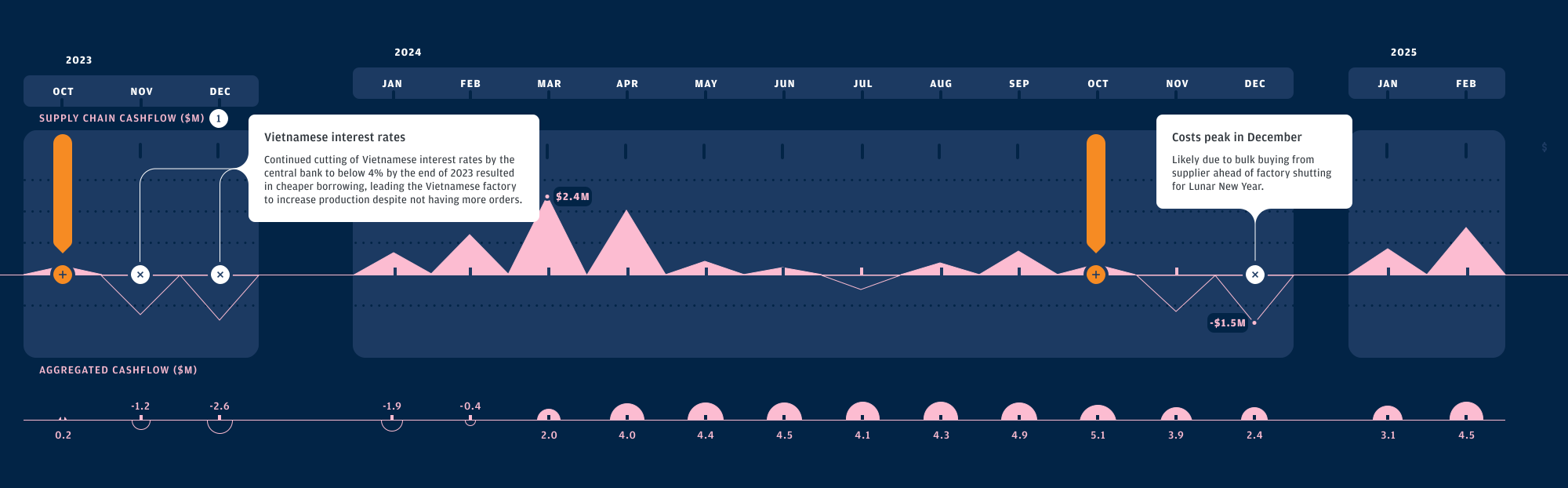
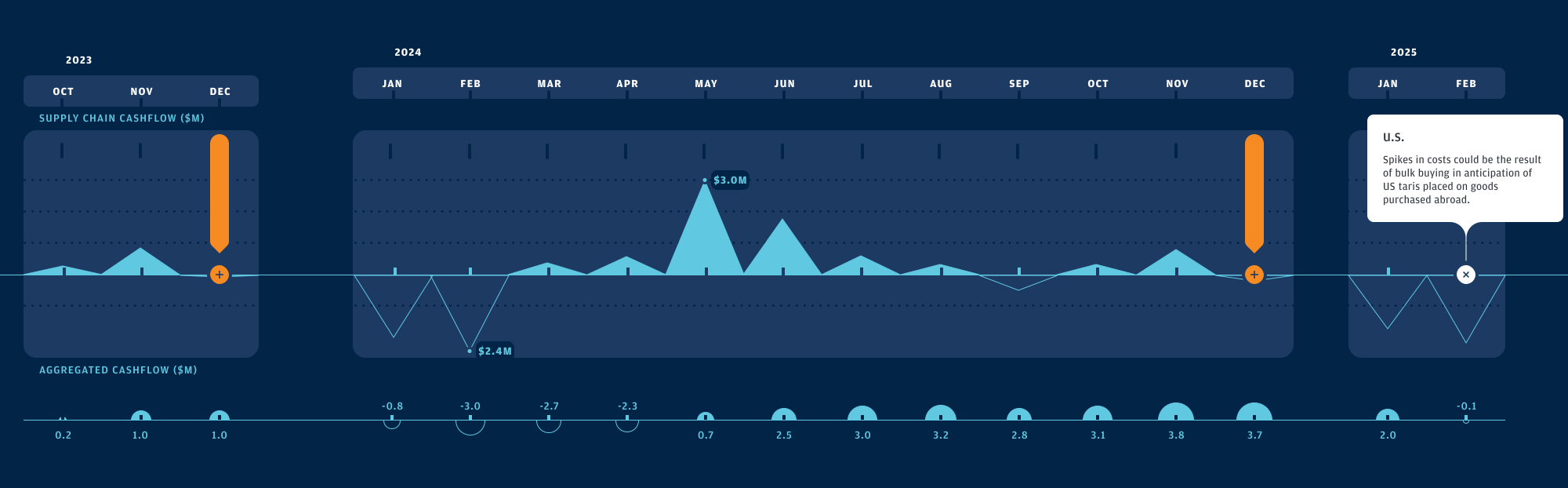
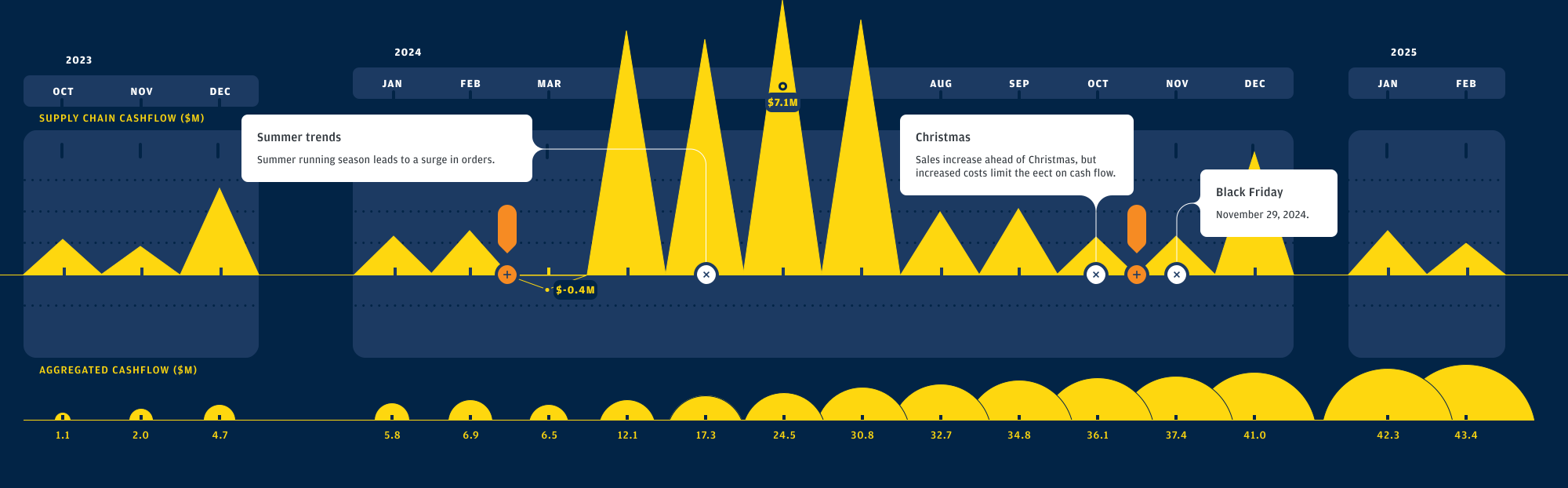
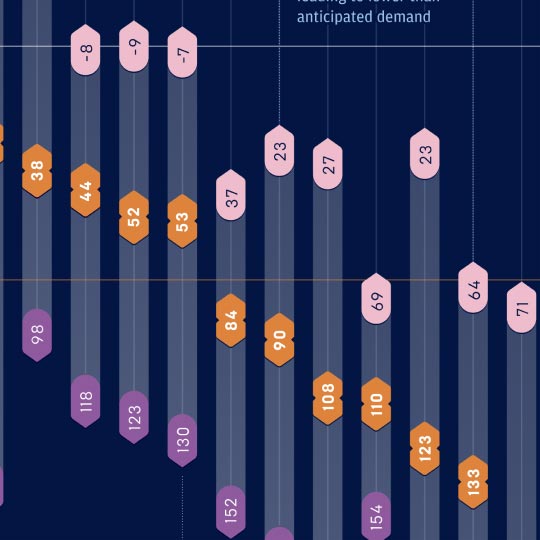
Using data from Slope, a B2B payments platform for enterprise companies, we visualized the 2024 financial stories of four anonymized businesses, each reflecting a typical player in the global running shoe supply chain.

SUPPLY CHAIN CASH FLOW
The monthly revenue from the downstream company, minus the cost of buying from the upstream company
AGGREGATED CASH FLOW
The cumulative monthly revenue from the downstream company, minus the cumulative monthly costs of buying from the upstream company
FINANCE OPPORTUNITY
The ideal time for each entity to finance, as recommended by Slope


SCROLL TO SEE MORE
BY J.P. MORGAN PAYMENTS
SOURCES: WWW.JPMORGAN.COM/PAYMENTS-UNBOUND/SOURCES
INFOGRPAHIC: SETRESET



MAGAZINE
Volume 6: Open Banking Is Just Getting Started Volume 5: Game Changer Volume 4: Ready Payer One Volume 3: Bank to the Future Volume 2: The New World of Commerce Volume 1: The Money Revolution Browse all articlesWEBINARS
View all webinars



































































You're now leaving J.P. Morgan
J.P. Morgan’s website and/or mobile terms, privacy and security policies don’t apply to the site or app you're about to visit. Please review its terms, privacy and security policies to see how they apply to you. J.P. Morgan isn’t responsible for (and doesn’t provide) any products, services or content at this third-party site or app, except for products and services that explicitly carry the J.P. Morgan name.