Nine Payment Corridors to Watch in Global Cross-Border Trade
A December surge in demand has left a London-based fashion retailer dangerously low on stock for a top-selling item. The retailer orders an emergency batch of replacements from its Turkish garment supplier. If the goods are sent by express air freight, they could be there in 48 hours, in time for the holiday rush.
The trouble is the money. Even when a company has the liquidity, getting funds to the supplier can still take one to three days, slowing the release of the goods. A cross-border payment may have to pass through a chain of correspondent banks before reaching its final destination, adding time, cost, and complexity at each hop. While supply chains are engineered to be frictionless and fast, payments have often lagged behind.

That mismatch shows up everywhere in business: not just retailers paying their suppliers, but expatriate workers sending money back home, companies trying to organize payroll for a global workforce, and investors sending vital capital to a new startup. Despite significant recent advances in global financial infrastructure, it can sometimes be quicker to move a multi-ton shipment across borders than to arrange a payment for it.
Fortunately, this landscape is changing. Financial institutions support important payment corridors by investing in infrastructure that accelerates and simplifies the transfer of funds. For example, they may build or expand local capabilities in both markets, or integrate local clearing access more tightly with FX liquidity to improve pricing and execution.1
These developments do more than shave hours off settlement times. They help multinational businesses scale and adapt with greater confidence, support remittance flows, and reinforce bilateral trade. Over the coming years, more will need to be done to reduce friction on the world’s payment highways as the amount spent via cross-border payments is expected to increase tremendously: from $208 trillion in 2025 to $320 trillion by 2032.2,3
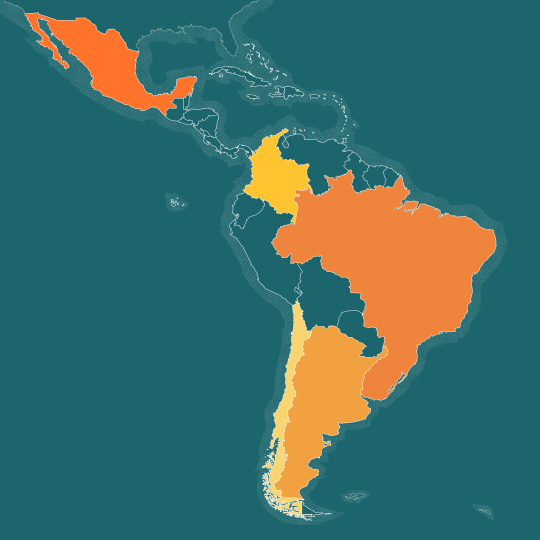
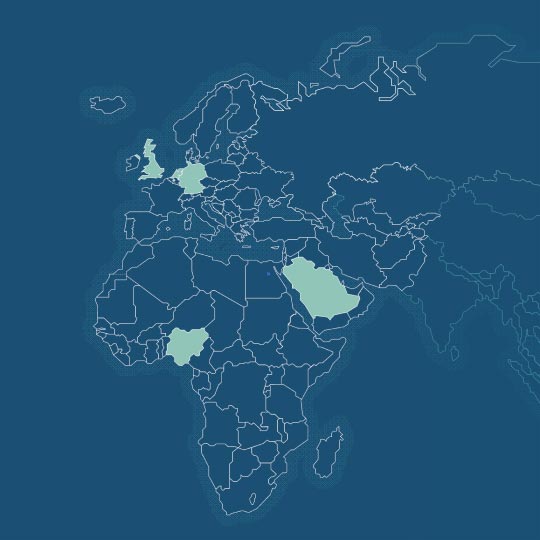
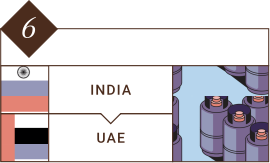
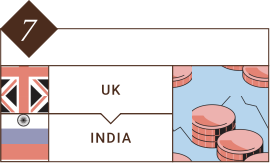
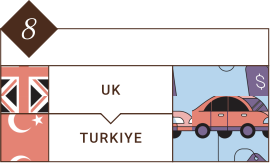
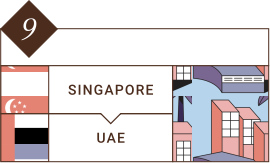
Here, we highlight nine notable payment corridors identified by J.P. Morgan, with 2023-2025 data on transaction volumes moving from the originating country to the destination. While the figures reflect recent activity, these corridors were also selected for their potential for future growth, meaning attention will be centered on them by banks and other financial institutions in the years ahead. These routes signal where money is moving today—and also where it may be headed next.
 VIDEO
VIDEO
The numbers indicate USD/GBP transactions processed by J.P. Morgan
either as sending, intermediary, or recipient bank from 2023 to 2025.
This does not include non-STP or book transfer payments.
https://www.jpmorgan.com/payments/payments-unbound/sources
Illustration: Manuel Bortoletti