Real-time reframed
It’s prime time for real-time payments—but how will they evolve from here?

One of the beauties of cash is that it is so fast. When paying with paper money, a transaction is settled instantaneously. The advent of modern technology has managed to slow things down. Whether tapping a card or using a digital wallet, electronic payments can take days to complete. Take a client out for a steak dinner on Friday night, and by Monday morning the banking app still shows “pending.” Not only is this frustrating for consumers, who must engage in mental gymnastics to work out how much money they have available, but it ties up cash flow for the merchant.
But this is now changing. Thanks to a new generation of high-speed payment rails being built around the world—from FedNow in the US to Pix in Brazil—electronic transactions can now settle in seconds.1 As well as removing friction for the consumer, this can be transformative for businesses, which are able to pay invoices and manage liquidity with greater speed and control. When payments happen in real time, it is not just money that moves at greater velocity, it is also data and decision-making. As we enter the real-time era, we look at how the space will continue to evolve—and the implications for consumers, businesses, and the wider economy.



What are real-time payments?
“The Amazon package gets to my house faster than the payment completes.”
Aharon Levine, VP of Payments Strategy at Melio, an online bill-paying platform, is describing a complaint he heard recently. And he agrees with the observation. “Payments can just be really slow in the modern economy,” he says.
So why is this? The answer lies in the underlying infrastructure. Automated Clearing House (ACH) and card payments are processed in batch cycles. Think of it like a freight network where goods arrive in the rail yard and are stored up before being loaded onto a train, which then departs at a set time. With electronic payments, transactions are collected throughout the day by a bank before being bundled together and sent all at once. The batch file, typically, then goes to a clearing house, which acts a bit like a freight hub. The ACH accepts batch files from all the banks in the network and then sorts through the transactions to find out where they are going before calculating a net position for each bank. These positions are then forwarded to a central bank to organize final settlement.
But just like a freight network, there can be delays. If a transaction misses the cut-off time, it has to wait for the next batch to be sent. ACH networks mainly operate during working hours and are closed over weekends. So, if the payment misses the last cycle of the day, then it may get processed the next day or at the start of the following week. This is why, although some banks do offer same-day ACH, electronic payments can often take anywhere from a few hours to a few days to arrive.
Conversely, real-time payments (RTP) operate like a hi-tech drone delivery system. Payments are not batched, and each transaction is sent individually to the receiving bank. There are no cut-offs, delays, or manual handling. Everything is automated, and transactions are processed 24/7/365—except during planned maintenance windows, when processing may be temporarily unavailable.
The global RTP boom
The global RTP market is expected to increase from $34 billion in 2025 to nearly $500 billion by 2034.4 India’s Unified Payments Interface (UPI) is the largest RTP scheme in the world, processing about 660 million transactions daily; Brazil’s Pix is second-largest, processing more than 200 million transactions per day.5,6 Following on from the massive success of these programs, the US Federal Reserve launched its own RTP network, FedNow in 2023.7 The EU’s SEPA Instant Credit scheme took a leap forward in 2025, mandating that instant Euro credit transfers must complete in under 10 seconds.8
More than 70 countries around the world have adopted RTP schemes.9 One of the reasons for this rapid expansion is that as well as being fast, there has been a boom in domestic account-to-account payments schemes teamed with consumer-friendly mobile interfaces, and operating in real-time is seen as a key tenet of such schemes. In countries without a developed banking infrastructure, schemes like these can help bring millions of people into the formal financial system. Instead of an existing bank account, users can often just set up a virtual account via a smartphone app.
Another key advantage is cost. When RTP networks became prominent in the 2010s, they were typically more expensive than existing payment rails. After all, processing transactions in batches, rather than individually, generates economies of scale. However, this is now changing. The Pix instant payment platform—which was developed by Brazil’s central bank—charges no fees for personal use and is low-cost for businesses and merchants.10 It is essentially run as a public, non-profit service by the state. UPI also operates as a public utility and follows a similar model of low or no fees.11
Major RTP schemes
| Country | Scheme | Start date | Daily transaction volumes (est.) |
|---|---|---|---|
| Asia-Pacific | |||
| India | UPI | 2016 | 660 million12 |
| Thailand | Prompt Pay | 2016 | 74 million13, 14 |
| China | IBPS | 2010 | 46 million15 |
| South Korea | Korea Financial Telecommunications & Clearing Institute | 1988 | 25 million16 |
| Europe | |||
| EU | SEPA Instant Credit | 2017 | 70 million*17 |
| UK | Faster Payments Service | 200818 | 15 million19 |
| Americas | |||
| Brazil | Pix | 2020 | 218 million20 |
| Mexico | SPEI | 200421 | 14 million22 |
| US—Public | FedNow | 2023 | 23,00023 |
| US—Private | RTP® Network | 2017 | 1.4 million24 |
| MEA | |||
| Nigeria | NIBSS Instant Payments | 2011 | 30 million25 |
| Egypt | Instant Payment Network | 2022 | 4 million26 |
| Saudi Arabia | Sarie | 2021 | 582,00027 |
*Based on 35 retail payment systems within the euro area in the first half of 2025

Where do real-time payments go next?
As RTP schemes become more established, they are also broadening their functionality. Initially, many networks focused on peer-to-peer or consumer-to-merchant payments, with strict transaction limits. They were tools that consumers used for low-value items, like paying a utility bill or sending a friend money for a movie ticket. But as RTP systems became more trusted, they started raising transaction limits. In November 2025, FedNow increased its transaction ceiling from $1 million to $10 million so it could be used for corporate actions like invoicing or payroll.28 SEPA Instant has a theoretical limit of just under €1 billion, although in practice participating banks set their caps far lower than this.29 In turn, RTP rails are now taking a growing share of B2B payments and becoming more embedded in corporate treasury operations. As this happens, applications are expanding, and innovation is growing.
Here are three key developments:
1.Real-time liquidity
“With real-time payments, it's not only about the speed and the lack of friction, it’s control of cash flow. It's hitting the most critical part of managing a business,” says Levine.
With traditional electronic payments, a company would have to send funds a few days before the due date to factor in processing times. With RTP, treasury teams can hold onto this cash for longer, paying only when needed, and earning interest and returns.
“Sometimes companies have to pay on Monday to get the funds out on Friday. If payment runs are every other week, then you can lose a quarter of your month’s cash flow,” explains Levine. “It’s money that's in the middle, so somebody else is earning the float, and you’re out of pocket.”
As well as the real-time movement of funds, digital technology is also allowing the real-time processing and transfer of financial information. It is these two elements working together that enable a concept known as “real-time liquidity.”
Here’s how it works in practice. RTP rails use the ISO 20022 standard, which requires detailed data with every transaction, including remittance info, purpose of the payment, and any deductions like tax. Modern ERP systems can process ISO 20022 data, using it to reconcile payments and close out invoices automatically without the need for manual processing. Cash positions can be updated instantly giving treasurers a real-time view over liquidity. Through application programming interfaces (APIs), finance executives can also link ERP systems across all their operating entities and get real-time visibility into their total global cash positions.
Programmable automation means that money can then be moved instantly between different corporate accounts based on triggers or events. A drop in an interest rate can lead to money being automatically switched to an asset or account with higher returns. Or if cash balances in an account drop to a certain threshold, then money is shifted into it to ensure sufficient liquidity. Instead of waiting for end-of-day reports, treasuries can be much more dynamic and responsive.
Financial institutions have already migrated to ISO 20022, and corporates are encouraged to adopt the standard over time in alignment with the SWIFT roadmap, which will facilitate the further expansion of real-time liquidity in the B2B space. 30
“Real-time liquidity isn’t just about making a payment faster,” says Carolina Antico, the LATAM Head of Payment Rails Commercialization at J.P. Morgan. “It's about understanding what each stakeholder of the business needs—and being able to move cash and assets to the right place at the right time, so liquidity is put to work, value is optimized, and funds are available exactly where they’re needed.”
2.Real-time payroll and taxes
Beyond optimizing corporate cash flow, RTP enables instant wage and tax processing.
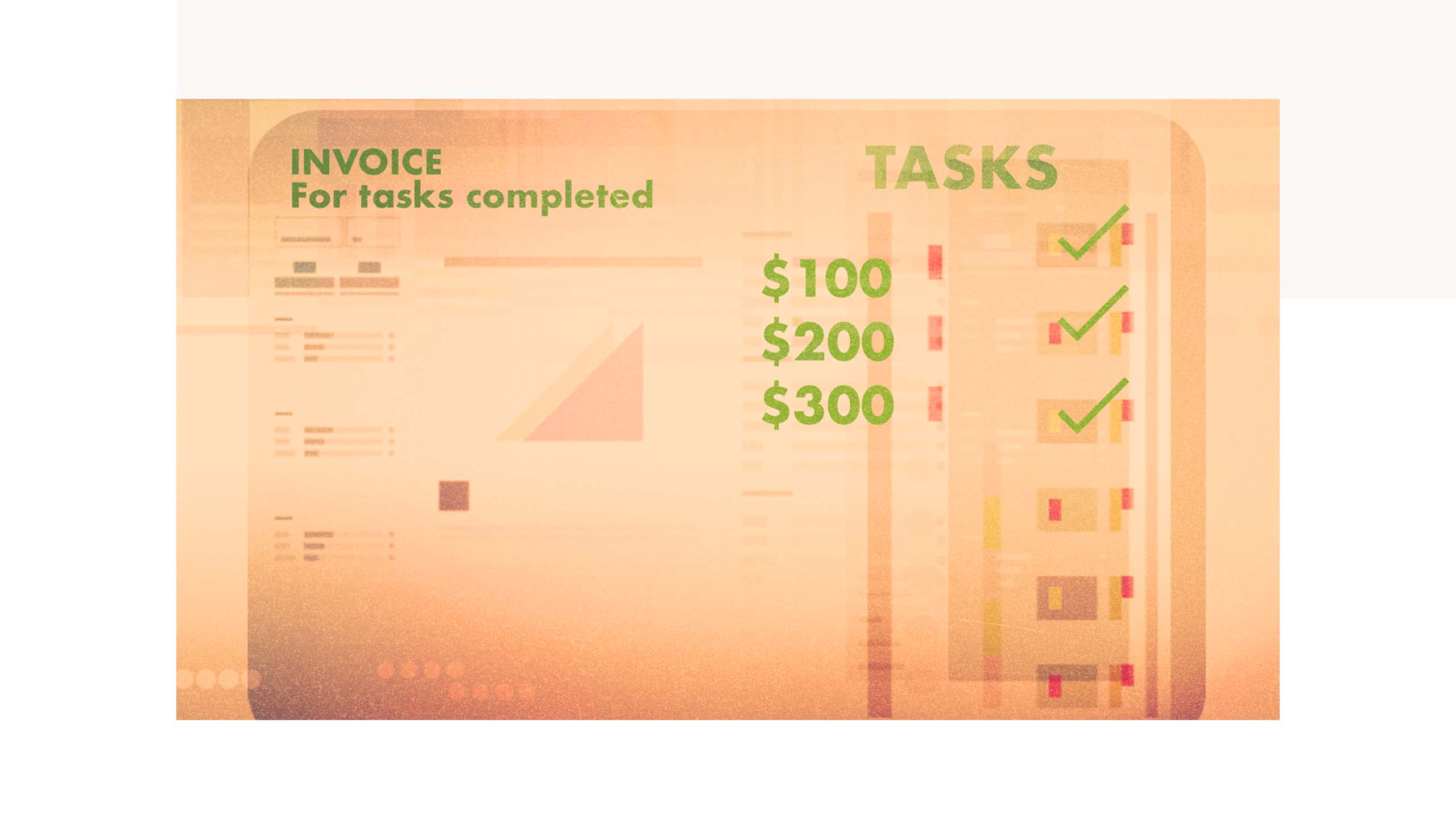
Temporary workers can receive their earnings the moment a shift ends, completely replacing rigid weekly or monthly payment cycles. Pay is calculated as the hours are logged, with all taxes and deductions seamlessly applied in real time.
Cristina Puertas Blanco, Product Scale Director at Job&Talent, a leading AI-native frontline workforce platform, highlights the employee benefit. “Through embedded fintech products, we are giving workers greater financial flexibility through access to earned pay ahead of payroll. Providing immediate access to accrued earnings serves as a modern liquidity tool that empowers individuals to manage their cash flow dynamically and on their own terms.”
This immediate access acts as a critical safety net, preventing workers from relying on high-interest, short-term loans to bridge temporary financial gaps.
The same architecture allows companies to shift from retroactive year-end tax submission to instant compliance. In Brazil, for instance, voluntary “split payment” approaches via the Pix network will begin in 2027, automatically routing the taxable portion of a B2B transaction directly to the government—turning tax collection into a frictionless, automated, in-flow event.31

3.Real-time cross-border payments
International transfers follow a disjointed, multi-step process, often passing through multiple different correspondent banks before reaching the final destination. It can take days to settle a cross-border payment, with fees reaching three to five percent of the total transaction.32 The reason RTP has not yet disrupted this situation is that the networks are usually domestic in nature, since they are based around the country’s central bank, which acts as the master ledger and disburses funds between the participants (see box). An international system would have no central bank to manage this process. But a new range of initiatives are finding workarounds to connect domestic RTP schemes together.
UPI has a bilateral link with Singapore’s PayNow.33 An API bridge allows data to be securely shared between the schemes, while commercial settlement banks that already operate in both countries—and are integrated into the local payments system—are used to facilitate the transfer of funds.
Scaling this approach globally would require hundreds of bespoke links between countries, which would be both costly and complex, and would also entail vast networks of settlement banks. That’s the rationale behind Project Nexus, being developed by the Bank for International Settlements (BIS), which aims to serve as a multilateral gateway for cross-border RTP.34 Domestic RTP schemes would connect into the Nexus hub to reach the other participants, with ISO 20022 ensuring interoperability. The BIS created a formal rule book with a set of operational obligations, ensuring payments are legally compliant across all participating countries via eligibility criteria and defined obligations of different participants.35
Once operational, Nexus would connect a market of about 1.7 billion and complete payments in 60 seconds, providing an alternative to the correspondent banking model.36 As long as the underlying RTP rails support B2B payments, the system could be used for corporate transactions as well.
However, building this system is not without challenges. It requires complex regulatory negotiations, and fraud remains a significant concern given RTP’s irrevocable nature—especially as cross-border recovery and dispute resolution are more difficult.
Carolina Antico
LATAM Head of Payment Rails Commercialization, J.P. Morgan
Tackling the limitations of RTP
Despite RTP’s growing utility, barriers remain.
One issue concerns liquidity. Banks have to keep large amounts of cash in their RTP accounts, as these payments settle continuously, 24/7, including over the weekend. This ties up capital that could have been deployed in higher-yield accounts. Smaller or regional banks, with less liquidity, may struggle to keep their RTP accounts topped-up.
But the biggest challenge is fraud. Traditional payment rails are slower, but that delay allows banks to spot potential issues, and in some cases, cancel, reverse, or recover funds. By contrast, RTP settles in seconds, leaving little time for additional checks. Settlement is final, with no network-level mechanism to claw money back. Because RTP are “push” payments initiated by the sender, banks assume the transaction is authorized. Yet push payment scams, where payers are tricked into sending money to a criminal, are rising in frequency.37
The answer may lie in the guardrails built into payments services. A J.P. Morgan Payments executive says, “The more we can do on account validation, on the pre-payment experience, and embed that into the journey of a company or a business trying to make a payment, it creates that surety, that success rate.”
Progress is being made. “In general, the markers we have to identify fraud have increased significantly across the RTP space, as we understand it more,” says Krystle Ritchens, APAC Real-time Payments Product Director at J.P. Morgan. Say a bank receives a payment request, and its fraud engine detects something suspicious, such as a new IP address, or even a behavioral indicator like a different typing pattern that could suggest a bot. A friction point can then be inserted, requiring additional authentication. Rather than just blocking the payment, for instance, the bank could send a “request-for-information" message to the initiator, asking for confirmation of the identity of the account holder and further details on the transaction. “The use of AI and machine learning has been significant in improving our response times and the accuracy rates of our fraud challenges,” says Ritchens.
The path ahead
For all of its advantages, RTP faces adoption issues due to entrenched preferences in certain markets. Cards are hard to displace because they offer strong consumer protection, with the ability to challenge transactions and receive chargebacks. They are accepted almost everywhere, and many have attractive rewards programs. In addition, credit cards offer instant credit lines that make them an attractive option for consumers.
Meanwhile, in the corporate setting, cards are commonly used for business expenses and paying suppliers. For strategic finance leaders who are challenged daily by complex compliance regulations aiming to strengthen data security and prevent fraud in global payment networks, an incentive is needed from steering away from what they know.
To win meaningful market share, RTP schemes will likely need new functionality—either to improve the user experience or support incentives that drive adoption. One example is adding mechanisms for recurring payments or creating loyalty schemes that work in tandem with RTP rails. Trusted customers could even be offered pre-approved credit facilities. For corporates these could be designed for working capital management, such as offering up to 120 days interest-free credit. For consumers, the appeal is simple: fast, low-cost payments, without spending Monday morning seeing Friday night’s steak dinner still marked “pending.”
If these limitations are addressed, then the future of RTP is bright. One executive sees it becoming commonplace across corporate B2B and B2C flows, claims, refunds, and reimbursements. That’s because ultimately RTP is about more than just the speed of payments. It’s about building a financial system that moves with the modern economy—responsive, data-rich, and always on.
https://www.jpmorgan.com/payments/payments-unbound/sources
Illustration: James Gilleard