8 min read
As mayor of Winnfield, Louisiana—located about 100 miles southeast of Shreveport—in the early 2000s, Deano Thornton focused on providing essential community services: water, sewer, fire and police. When his son was injured in a car accident and struggled to access care through Medicaid, he realized a critical service was missing: quality rural healthcare.
“His Medicaid assignment was for a doctor that lived 50 miles away,” Thornton said. “I was the mayor of the city at the time and had no idea nobody took Medicaid in town except for the emergency room.”
Around the same time, President George W. Bush was working to establish new Federally Qualified Health Centers (FQHCs) in some of the country’s most economically distressed counties. Winnfield was on that list. Four years later, Winn Community Health Center opened with five employees, including Thornton, its CEO.
Fueled by federal grants, the rural healthcare provider continued to grow, expanding to more parishes and adding medical specialties to its offerings.
Today, Winn Community Health includes 11 standalone clinics and 60 school-based health centers, along with patient transportation and medication delivery services.
Winn’s centerpiece is its three-story medical center, which opened in 2026.
“We were able to help Winn build a facility that really offers the community the quality of care it deserves,” said Melissa Pillars, Executive Director, New Markets Tax Credit at J.P. Morgan.
Primary care, behavioral health, chiropractic and a pharmacy occupy the first floor. Pediatrics is on the same floor and includes a space for rocking chairs, animal-shaped seating and interactive tablets, plus a glass wall separating patients visiting for checkups versus sickness. The second floor features optometry, dental care and physical therapy. Administration services, a cafe and a 100-person conference room make up the top floor. All floors include outdoor space for employees, including a patio on the first floor and balconies on the others.
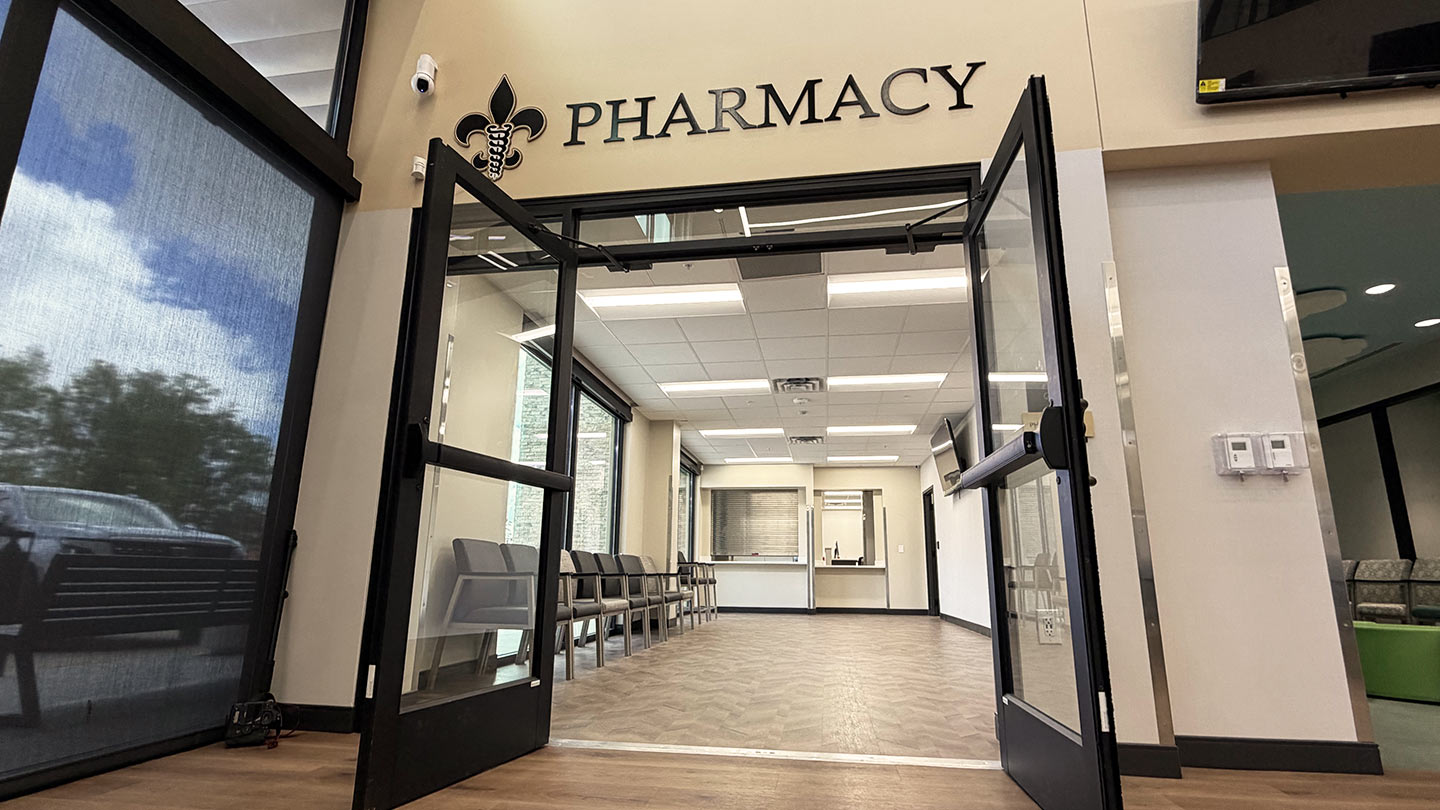
Winn Community Health opened the doors to the new home of its flagship Federally Qualified Health Center in 2026. Image provided by Winn Community Health
Unfortunately, many rural healthcare systems are struggling as they face clinician shortages, limited broadband internet and a lack of public transportation, all of which make it more difficult to serve their communities.
That’s on top of the funding challenges rural healthcare facilities face.
Rural healthcare funding challenges
According to the health policy organization KFF, rural residents have lower incomes and higher rates of poverty than individuals living in urban areas.
As a result, rural healthcare facilities can’t draw on their tax bases to increase revenue. This leads to the same funding challenges for rural hospitals and clinics across the country:
- Tight profit margins: Urban and suburban health systems struggle with persistent labor shortages, high staffing costs and operational challenges. Those concerns are compounded for rural healthcare systems, as it can be even more difficult to attract and retain talent. “It’s a very delicate balance,” Pillars said. “Competitive wages and strong benefits are often the biggest levers rural areas have to recruit physicians, especially specialists. The downside is the financial pressure it creates.”
- Federal funding cuts: Medicaid covers almost a quarter of nonelderly individuals in rural areas, and 17.5% of Medicare beneficiaries with both Parts A and B live in rural locations, according to KFF. Recent program funding cuts and the possibility of more could cause further financial issues. “With the expected Medicare and Medicaid cuts, everyone knows there will be an impact,” Pillars said. “But I don’t think anyone fully understands the scope of it yet.”
- Need for ongoing investment: Healthcare is rapidly evolving, so there’s a constant need for health systems to invest in infrastructure and equipment. “Many of these facilities are aging, and the equipment is often outdated,” Pillars said. “With lower incomes and limited tax capacity in many rural communities, local funding can’t realistically cover the gap—so facilities rely on rural subsidies.”
The results of these funding issues are profound for patients:
- Limited access to healthcare: More than 100 rural hospitals closed between 2015 and 2025, with one-third of all rural hospitals at risk of closing in the near future, according to The Center for Healthcare Quality and Payment Reform (CHQPR). “Many rural facilities scale back or shutter certain service lines, like maternal care, which are generally less profitable,” said Adam Rudner, Central Region Manager of Healthcare, Higher Education & Nonprofit Industries at J.P. Morgan.
- Breakdown in continuity of care: When specialists are available at rural locations, it’s often only a few days a week. The limited availability can make scheduling a challenge. The alternative can be hours of travel. “If rural clinics are unable to invest in larger facilities or provide specialty care, clients have to travel significant distances—some travel hours to get to a specialty provider,” Pillars said. The issue is compounded if patients need regular specialty care, such as twice weekly physical therapy sessions. It’s similar for rural hospitals without advanced equipment. “At a certain point, people either make the trip or decide it’s not worth it and go without care,” Pillars said.
$20M
New Markets Tax Credit equity Investments in healthcare establishments from J.P. Morgan in 2025.*
650+
healthcare entities the firm banks across the U.S.*
Disclaimer: *As of April 2026
How NMTC can help fund rural healthcare projects
The NMTC program channels capital to projects and organizations with limited financing. This successful community investment tool recently gained permanent extension.
“NMTC financing has the ability to lower the capital cost of building rural healthcare facilities and provide necessary care to the communities they serve,” Rudner said.
“An NMTC subsidy can provide up to 20% of the project cost, which allows rural medical facilities to reinvest that money into quality of care,” Pillars said.
Without NMTC, rural health systems may scale back on projects, take longer to complete them or both. Alternatively, the rural medical facility may be forced to tap into funding that could have been used to improve operations and patient care.
With the help of NMTC equity from J.P. Morgan, rural medical facilities can make more expansive updates, such as:
Consolidating to one location
“Rural facilities often make do with what they have. They have a facility in one area and then acquire property somewhere else. It becomes a fragmented campus,” Pillars said. “A lot of these facilities want to build stronger, state-of-the-art locations where folks can access different types of care in one place.”
For example, NMTC helped Desert Sage Health Center develop a one-stop shop for primary medicine in Mountain Home, Idaho. The new campus spans more than 30,000 square feet with space for family and internal medicine, obstetrics and gynecology, dietician services, dental care and mental health care. The new property allows Desert Sage to add providers and increase the number of patients it serves by 38%.
Likewise, Morehouse Medical Community Center in Bastrop, Louisiana used NMTC financing to consolidate three stand-alone sites—a pediatric health center, family practice clinic and administrative location—into a single medical facility. The new FQHC facility also expands medical, dental and behavioral health services and provides onsite access to pharmacy, radiology and laboratory services. In addition, the health center includes space that can be converted to a 25-bed emergency shelter to house patients who need low-level medical attention.
Modernizing health facilities to serve patient needs
Most of today’s rural hospitals were opened with funding from the Hill-Burton Act, which Congress passed in 1946 and stopped providing funding for by 1997. Now, many rural health facilities require upgrades—that’s where NMTC can make a difference.
In DuBois, Pennsylvania, Penn Highlands Healthcare will repurpose and expand its east campus into a state-of-the-art behavioral health hospital. The project also adds an inpatient pharmacy, which is expected to serve 100 patients daily.
J.P. Morgan also supported the Frio Regional Hospital modernization and expansion in Pearsall, Texas. The upgrades include adding emergency room space, a new hospital wing and an expanded radiology and imaging department.
In addition, the firm made an NMTC equity investment in Fairchild Medical Center in Yreka, California. The rural medical provider’s project aims to enhance services by expanding the emergency department and laboratory facilities.
NMTC funding also played a key role in Signature Health’s acquisition and renovation of two Ohio buildings: one in Ashtabula and one in Painesville. The Ashtabula site will provide critical mental health, addiction, primary care and pharmacy services. The Painesville one will become a comprehensive medical and behavioral health facility providing care for an additional 5,000 patients.
Attracting and retaining talent
“To attract staff, rural health systems need to have strong partnerships with different colleges and universities,” Pillars said. “Rural hospitals want to connect with future physicians and medical staff early, before they’ve locked in where they’re going to build their careers.”
Prime Health+ used NMTC funding to develop a flagship facility in a Medically Underserved Area (MUA) of Grand Junction, Colorado. The FQHC’s new headquarters will provide pharmacy, dental and medical training for 80 Colorado Mesa University students. The location will also expand primary care, dental and behavioral health services, so Prime Health+ can serve an additional 4,000 patients annually.
NMTC funding will help Family Health Services of Darke County in Greenville, Ohio expand its main health center to support its family medicine residency program. The FQHC’s project—which includes an in-house pharmacy with a drive thru—will also bring existing services to the main campus and offer room for expanded healthcare for women, infants and children, plus mental and behavioral health services and home health services.
We’re here to help
In addition to NMTC equity, J.P. Morgan provides clients with access to services and knowledge across the firm, including teams with expertise and strong industry relationships.
- Healthcare team: Whether it's fraud protection, trends in healthcare payments or seamless digital solutions, our healthcare bankers are here to help rural health systems improve efficiency and enhance patient experience.
- Intermediaries Lending team: We work with national and regional Community Development Financial Institutions (CDFIs) in low- and moderate-income communities. Our team provided over $2.5 billion in financing to CDFIs between 2016 and 2025.
- Workforce Housing Solutions team: Affordable housing is a way to attract and retain talent. Our team can provide insights to healthcare systems interested in workforce housing opportunities for medical staff and employees.
JPMorgan Chase Bank, N.A. Member FDIC. Visit jpmorgan.com/commercial-banking/legal-disclaimer for disclosures and disclaimers related to this content.