8 min read
Private sector relationships can help your housing authority meet your communities’ critical need for affordable housing—even amid ongoing funding constraints. Successful public-private housing development requires the right real estate, funding structure and—most importantly—relationships to navigate complex projects and turn plans into thriving developments.
Drawing on insights from a housing authority and developer, each with extensive experience in public-private deals, this guide offers six practical strategies to help you succeed and:
- Select the right development approach for your housing authority’s capabilities
- Create and maintain strong relationships with developers and capital providers
- Build capacity to reach your development ambitions
Start with honest self-assessment
Before starting any development project, take a candid inventory of your organization’s capacity. Housing authorities that skip this step can end up under-resourced on deals they could have shared with another developer.
Housing authorities ready to take on development projects independently typically have strong balance sheets and the experience to navigate the full financing, planning and construction process.
At least one person on your team should have experience taking a deal from start to finish—including experience with any capital resources you plan to use, such as Low-Income Housing Tax Credits (LIHTC) and the U.S. Department of Housing and Urban Development (HUD) Rental Assistance Demonstration (RAD) program.
“You can have a great architect and contractor, but if you don’t know when you need to start your Part 58 environmental review or subsidy layering review, you can miss important steps and hold up or complicate a deal,” said Jim Hatfield, former chief development officer at Knoxville’s Community Development Corporation (KCDC) in Tennessee.
Consultants can help housing authorities fill experience gaps when they’re not ready to share control with an outside developer. But unlike a developer with a stake in the outcome, consultants get paid regardless of whether the project succeeds.
“One of the benefits of having a developer by your side is that we are fully aligned to get the project done right,” said Todd Lieberman, president of Brinshore Development LLC.
Having the capacity to act as sole developer doesn’t mean it’s the right approach for every project. KCDC uses both models depending on a project’s funding requirements, scope and complexity. Some federal and state programs favor an outside development partner. These arrangements also create structured opportunities to build your team’s knowledge.
“It’s been really helpful for us to tap into some of the institutional knowledge a group like Brinshore has from past projects they’ve worked on around the country, bringing some ideas to design-and-build efficacy,” Hatfield said.
Understand what each partnership structure offers
Joint ventures and turnkey projects can both be successful models for public-private housing development partnerships. The question is how much risk, control and learning opportunity you want to retain—and whether your housing authority’s capacity matches that ambition.
- In turnkey development the developer finances, builds and stabilizes the asset, then transfers ownership to the housing authority at a defined point.
- In a joint venture the arrangement is customizable but typically involves a more equal partnership throughout the process.
The turnkey approach can be a good fit for housing authorities with less development experience who want to take full ownership of the asset once it’s stabilized. “It allows a housing authority to get an asset at the end of the day, learn about the process while having specific responsibilities and figure out if they want to continue,” Lieberman said.
Housing authorities that want a more active role are well-suited to the joint venture model. For KCDC, a joint venture means drawing on each party’s expertise without delegating accountability to the community.
“We have residents at some of our sites who have been there for a long time, we’ve built a rapport with them, and we owe it to them to be part of that development and not pass that torch on to a third party,” Hatfield said.
Know what to look for in a developer—and what developers are looking for in you
The relationship between your housing authority and your developer is critical to a project’s success.
“The most important thing in being successful isn’t always the real estate,” Lieberman said. “In a public-private partnership, having a good partner makes a good project.”
Qualities to look for in developers include:
- Willingness to teach: Working with a developer that has experience across project types, construction approaches and markets is an opportunity to learn—if the developer is willing to share knowledge, not just execute.
- Trust and adaptability: From local market shifts to macroeconomic changes, affordable housing development rarely goes exactly as planned. When a deal gets complicated, you want a developer that shares your vision and is dedicated to finding solutions. “It’s really important to be able to say, ‘Hey, here’s what we laid out in this agreement a couple years ago, but the situation’s changed and we need to, too,’” Hatfield said.
- A track record that lends credibility: Housing authorities with development experience can improve access to specific funding resources by partnering with a developer with expertise in those programs. KCDC, for example, tapped Brinshore to help with a project seeking funding through the HUD Choice Neighborhoods Initiative. “When we came in, the planning work was mostly done, but we were able to put together an implementation framework based on our past experience and help shepherd an application in a way we knew would be competitive with HUD,” Lieberman said.
The relationship works both ways. Here’s what developers often seek in a housing authority partner:
- Stable leadership: Developers want board-level support and leadership continuity, so a multi-year project doesn’t lose momentum with personnel changes.
- Entrepreneurial approach: Brinshore looks for housing authorities with the capacity to develop and operate housing communities and “a culture where people are focused on not just preserving what they have, but trying to build a shared future,” Lieberman said.
- Transparency and strong communication: When hurdles arise, both you and your developer need dedicated contacts who can find quick solutions. “It’s so much easier to pick up the phone and try to solve something than to send 300 emails where people are constantly misunderstanding each other,” Lieberman said.
“Having a good partner makes a good project.”
Todd Lieberman
President, Brinshore Development LLC
Build your capital stack
Assembling a capital stack for affordable housing development takes knowledge of available resources and careful sequencing. Start with what's committed or highly probable and build toward the gap. Use early commitments to establish credibility that can unlock additional capital. Every funder, from grant providers to equity investors, wants confidence that your team can see the project through to completion.
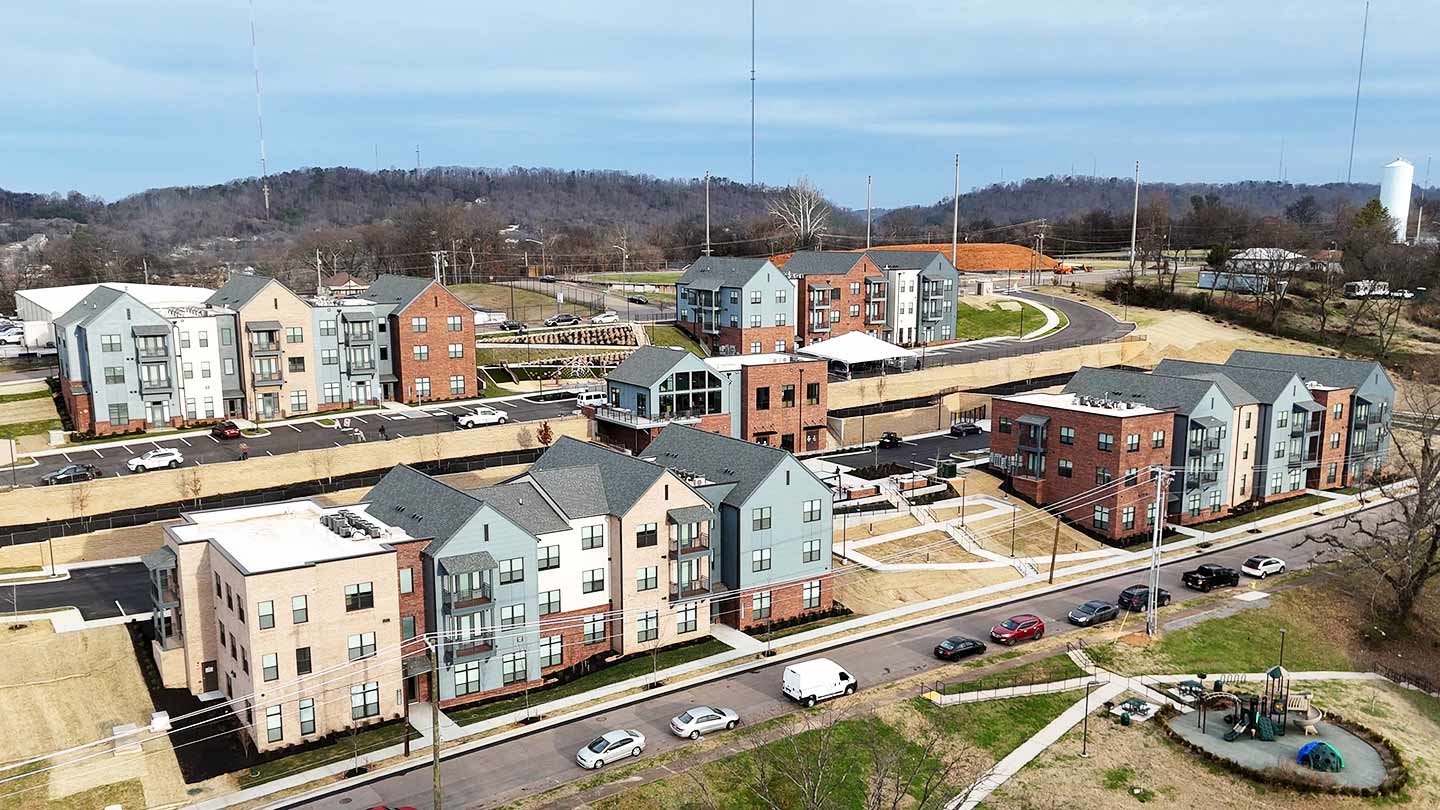
Take Transforming Western, a master-planned community in Knoxville developed through a public-private partnership between KCDC and Brinshore. The community will include 479 apartments, 80% of which will be affordable to households earning up to 60% of the area median income. The City of Knoxville agreed to fund infrastructure work required to prepare the site—utilities, roads and grading providing not only capital but a signal to subsequent funders, including HUD, that the project had strong local support.
“That commitment snowballs,” Lieberman said. “When you have that sort of commitment from a city, you’re able to unlock bigger dollars.”
Federal, state and local grants can fill critical funding gaps, but managing multiple programs means coordinating overlapping timelines—from application deadlines to placed-in-service requirements—while keeping all parties informed of progress and delays.
Prioritize experience in capital providers
The right lenders bring more than just financing—they bring experience with specific programs and agencies. Some key desirable characteristics include:
- Dedicated affordable housing teams: Experienced lenders understand that federal and state housing agencies run on their own schedules and that timelines require flexibility. “Working with J.P. Morgan and the Community Development Banking team, they understand the dynamics of how these deals come together, all the outside parties and agencies involved, how the timelines work and the give and take that is to be expected on a closing,” Hatfield said.
- Construction-to-permanent financing: A lender that provides both construction and permanent financing offers continuity through a critical phase of your project’s lifecycle. The lender already knows your deal and team, which streamlines the process.
- Relationships built on trust and flexibility: “When you get into those situations where something is unexpected, good or bad, you want to be able to pick up the phone and have a reasonable person on the other end to say, ‘Let’s figure this out and make it happen,’” Hatfield said.
- High-quality support: Your lender’s service providers, particularly outside counsel, affect your deal’s success in ways that aren’t visible until closing. “I’ve seen projects go sideways at closing because a bank is using a firm that maybe doesn’t have a ton of experience and doesn’t understand the give and take required on partnership agreements or loan documents for affordable housing,” Hatfield said.
Use projects to build capacity
Each development project your housing authority undertakes is an opportunity to build knowledge, relationships and internal systems to make the next one more achievable.
“It comes down to figuring out what are your assets and strong suits, where you have deficiencies as an organization and trying to fill those holes as best you can,” Hatfield said.
Collaborating with an outside developer can help you close gaps in your organization’s skill set through active involvement in the development process—design decisions, financing structure, application strategy and construction oversight.
“If we’re the guarantor, we’re going to have ultimate tiebreaker authority on certain things, because our company is ultimately on the hook. But we try to make things consensus-based, and that’s a great way to pick up knowledge as you’re moving through the process,” Lieberman said.
Even if your organization doesn’t plan to pursue independent development, repeating successful partnerships creates real efficiencies. Returning to tested deal structures, established working relationships and familiar legal frameworks means each subsequent project can move faster.
“When you can recycle development agreements and you have a framework in place, it’s a lot more efficient to be able to say, ‘Let’s do another one together,’” Hatfield said.
The bottom line: Public-private affordable housing development rewards preparation. Know your capacity before you choose the development approach. Select developers and lenders with the expertise you need. Build the relationships and internal knowledge that make each project a foundation for the next one.
JPMorgan Chase Bank, N.A. Member FDIC. Visit jpmorgan.com/commercial-banking/legal-disclaimer for disclosures and disclaimers related to this content.