
5 min read
The commercial real estate outlook is bright for the year ahead. But rising costs—largely fueled by tariffs and trade policy uncertainty—present challenges.
Ginger Chambless, Head of Research for Commercial Banking at J.P. Morgan; Mike Kraft, Commercial Real Estate Treasurer for Commercial Banking at J.P. Morgan; and Tom LaSalvia, Head of Commercial Real Estate Economics at Moody’s Analytics CRE, detail the ways tariffs and other economic concerns are driving up costs.
The impact of tariffs on commercial real estate
Tariffs and associated policy uncertainty have increased construction costs and delayed leasing and investment choices. Markets along key trade routes also face notable challenges. Plus, reduced consumer spending may affect multiple asset classes.
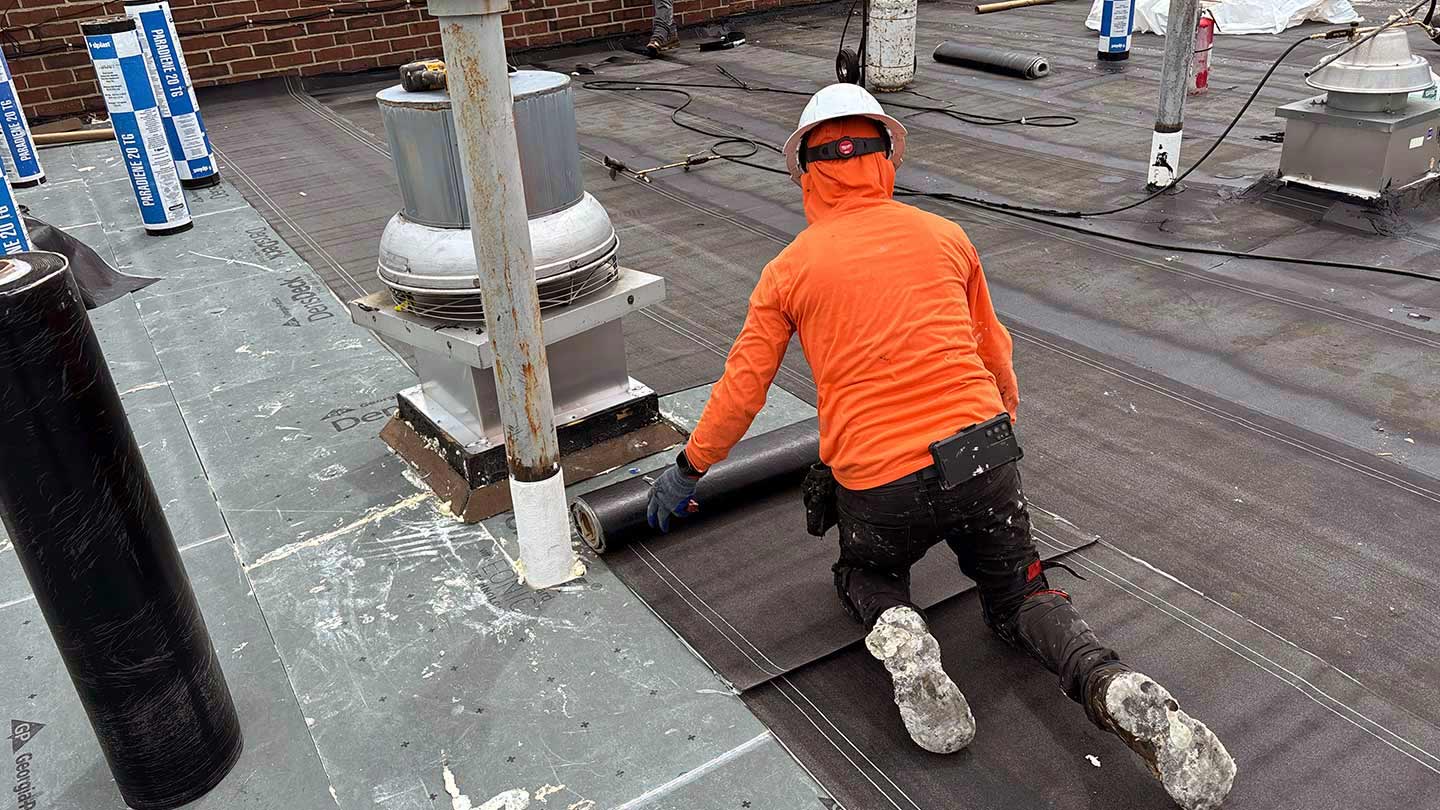
Higher construction costs
As of March 10, 2026, the estimated average tariff rate on all imports is 12%, according to the Urban-Brookings Tax Policy Center.
Commercial real estate has felt the greatest impact from elevated tariffs on building materials. For example, kitchen cabinets and vanities from some countries face tariffs up to 25%. Aluminum, copper and steel parts are all subject to a 50% tariff. Other building material costs may be subject to finalized reciprocal rates and trade agreements with various trade partners.
Delayed decision-making
The Federal Reserve’s Beige Book found residential real estate and construction sales and activity decreased slightly in most districts that report on the sector, with low inventories and affordability remaining key issues.
“The nascent rent, occupancy and pricing recovery was upended as tenants and investors delayed leasing and investment decisions, waiting to see what the landscape looks like after the trade-war smoke clears,” LaSalvia said. “Combined with only modest rent and occupancy performance, expense growth is hurting income returns across the market.”
Location-specific impacts
Location is a key factor, especially for industrial properties. “On the West Coast, for example, the warehouse and distribution property type shed millions of square feet in 2025,” LaSalvia said. “The bulk of that decline centered around the Asian trading hub of Southern California.”
Likewise, tariffs on Mexican and Canadian goods could slow leasing demand in border markets, such as Texas and the Upper Midwest, and along key trade routes.
“From an evolutionary perspective, monitoring the global trade network and its impact on the warehouse market is vital,” LaSalvia said. “Even prior to this administration's overhaul of tariffs, warehouse tenants were searching for cost savings in inland and secondary markets. As the trade network changes, this additional variable further complicates location choice.”
Other factors impacting the industry
Tariffs and trade-policy uncertainty have a major impact on commercial real estate, but they’re not the only factors driving up costs.
Immigration
“Stricter immigration policies are affecting labor supply in trades that over-index to foreign born workers, including construction," Chambless said. Reduced labor supply may drive up construction costs through higher wages.
Population shifts associated with immigration can also influence long-term demand for multifamily housing.
“Any significant reduction in international net migration will damage the apartment market. Across many states, population growth has been led by international migrants,” LaSalvia said. “If there is a long-term reduction in the inflow of this population, this will lead to greater market slack and reduce pressure on rent growth.”
Reduced consumer spending
Tariffs could place upward pressure on prices, impacting consumer spending. Retail and industrial properties could feel the greatest effects of inflation and reduced consumer spending. Multifamily and office may also experience reduced demand and supply as construction costs rise.
Oil prices
Sharply increasing oil prices resulting from the conflict in the Middle East have pushed inflationary concerns to the forefront.
“While a flight to quality was seen in gold and currency markets, an accompanying flight to quality in the bond market did not materialize,” Kraft said. “Instead, Brent crude oil futures were pushed to nearly $120 per barrel at the peak—compared to levels of roughly $71 before the conflict. The higher focus on inflation drove Treasury yields upward by as much as 0.15%.”
Interest rates and inflation
“Fed Chair Jerome Powell has indicated that the effects of tariffs seem to be manifesting themselves as a one-time price hike—albeit stretched over a period of time—rather than as triggering systemic inflation that would need to be dealt with by the Fed,” Kraft said.
“For now, markets continue to price in at least one rate cut for 2026, but the uncertainty will push any such action out till later in the year, with any reliable forecast open to question until and unless the Middle East conflict subsides,” he said.
“Tariff and immigration policies create both tailwinds and headwinds for the economy, shaping the broader environment for interest rate decisions,” Chambless said. “For instance, higher inflation or stronger growth could prompt policymakers to maintain higher interest rates or raise them, while policies that ease price pressures or increase labor supply could lead to lower interest rates.”
Ongoing tariff uncertainty
The recent Supreme Court decision striking down tariffs imposed in 2025 under the International Emergency Economic Powers Act has only added uncertainty.
“The administration announced new tariffs under Section 122 of the Trade Act of 1974, but those expire after 150 days,” Kraft said. “Open questions remain as to the status of previously negotiated trade agreements, the possibility of continuing court challenges and what may happen once the 150-day period expires.”
We’re here to help
Regardless of economic conditions, J.P. Morgan offers fixed- and adjustable-rate loan programs with flexible prepayment options. Contact our experts to discuss the best options for your commercial real estate business.
JPMorgan Chase Bank, N.A. Member FDIC. Visit jpmorgan.com/commercial-banking/legal-disclaimer for disclosures and disclaimers related to this content.





You're now leaving J.P. Morgan
J.P. Morgan’s website and/or mobile terms, privacy and security policies don’t apply to the site or app you're about to visit. Please review its terms, privacy and security policies to see how they apply to you. J.P. Morgan isn’t responsible for (and doesn’t provide) any products, services or content at this third-party site or app, except for products and services that explicitly carry the J.P. Morgan name.