How the Middle East is remapping global finance
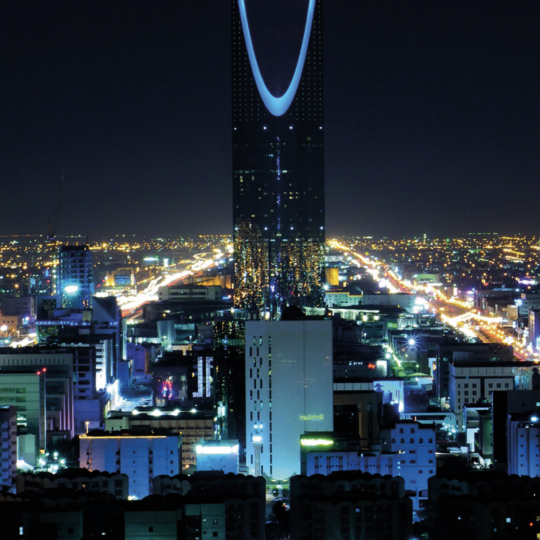
The Middle East has become one of the most dynamic regions in global finance. Over the past decade, it has emerged as a leading destination for international capital—and the numbers reflect that. The 2026 edition of the Global Financial Centres Index (GFCI) now counts multiple Middle Eastern cities among the world’s top financial hubs, and cities such as Riyadh are ranked among the top five most likely to become significant in the coming years.1 In 2025, the UAE was named the second-largest fintech market globally, trailing only the US.2
We spoke with four financial leaders with deep ties to the region to get their take on why it’s making waves.

1.It regulates to encourage rather than stifle innovation
“We are forward-thinking with regulation. Take digital assets [representations of value held on a cryptographically secured blockchain], for which Abu Dhabi is a leading ecosystem. ADGM—the international financial center of Abu Dhabi—has treated them as part of the financial ecosystem from day one. Since 2018, the FSRA has had a dedicated digital asset regime, and we’ve kept it relevant and user friendly by engaging with industry, which keeps us informed and able to adjust as needed to an ever-changing landscape. That feedback loop drives real, targeted upgrades. Today, over 20 firms are licensed by the FSRA to conduct regulated activities in virtual assets or fiat-referenced tokens (FRTs), including broker-dealers, custodians, exchanges, asset managers, and FRT issuers.
So how do we refine and develop our policy views to ensure they remain innovation-focused? By taking an innovative approach to that very process. One example is our RegLab, a ‘sandbox’ environment for fintechs to develop and test innovative solutions that don’t yet fit within our existing frameworks, but which we believe should or could be well-served under supervisory oversight. We’ve developed various fintech regulatory frameworks this way, including our open finance and robo-advisory frameworks. The current RegLab cohort is focused on on-chain tokenized markets, with products such as tokenized discount notes being tested. We’ve also partnered with academic institutions, including Mohamed bin Zayed University of Artificial Intelligence (MBZUAI), to develop RegTech tools, including a planned conversational chatbot to help firms navigate the FSRA rulebooks.”
George Davis
Founder and CEO, Lorum
2.The geographic location is a strong advantage

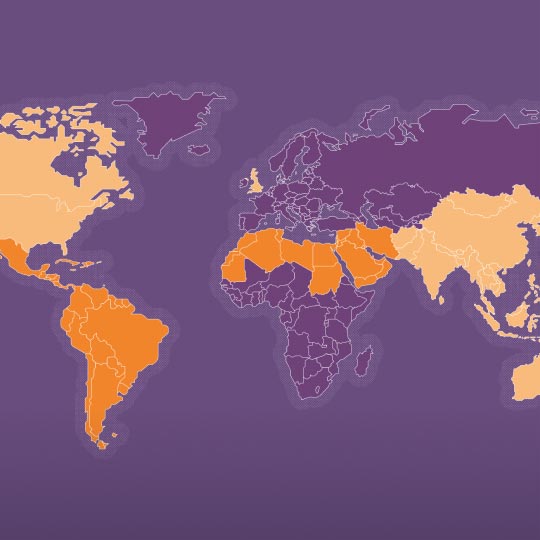
“The region itself has a growing number of multinationals, and we are now seeing that financial zones—like ADGM and Dubai International Financial Centre (DIFC)—are emerging as alternatives for London and New York when it comes to those firms’ liquidity management. These zones offer stability, local expertise, and the same time zone, which are attractive for businesses located there. As this ecosystem becomes more established, it is having a multiplier effect, attracting yet more interest in the region.
But the Middle East is also a natural center for the wider Middle East and North Africa (MENA) region. No continent has seen a larger population growth in the past year than Africa.3 In 2050, Africa is projected to be the world’s fastest growing economy, more than China, India, and the Americas, and certainly more than what we call the developed world. The Middle East is well located to capitalize on that growth, especially as the underlying banking infrastructure improves.”
3.It’s a treasury center of excellence

“In the Middle East, corporate treasurers are increasingly adopting modern, digital-first treasury practices to a notably high degree, which has helped the region’s performance as a whole and seen it emerge as a key hub.
Data centralization is one example. Large corporates in the region often use a diverse set of IT systems and have data spread across different operations and countries. We are seeing a lot of demand to help companies centralize and prepare this data so they have a ‘single source of truth’ across all currencies and assets. By having better visibility and control over their financial operations, they can make faster and better-informed business decisions, while also enabling greater automation.
And that is another key demand we are seeing. Companies are implementing automation solutions so that they can manage treasury operations at greater scale, while retaining full oversight over liquidity, cash flow, forecasts, and other operational areas. As companies in the region succeed, aided by these approaches, it will fuel further growth and investment.”
Stephan Mueller
Global Solution Owner for Finance and Risk, SAP
4.Remittance volumes are attracting fintech innovators

“The Gulf Cooperation Council processes more than $120 billion in outbound remittances annually. When you are sitting on that volume of money moving between Asia, Africa, and Europe, there is an immense incentive to make clearing faster, leaner, and fully traceable, and that is a key reason why the Middle East is becoming a hub for innovation in fintech, and especially cross-border payments.
We started in the region because there was enormous monetary flow, but almost no modern infrastructure to support it. That is now changing. Mid-market institutions and their customers need faster, more transparent cross border payments, and the Middle East is building infrastructure designed for the businesses and people not being served.
The region needs to lean into its corridor position and continue to develop solutions that can facilitate faster payments into emerging markets, because the demand is enormous. It has an advantage in that it can build from scratch. Smaller markets can make decisions faster and without legacy constraints. We are seeing that with the rapid adoption of new payment solutions in the region, including fintech platforms, stablecoins, and programmable central bank digital currencies.”
https://www.jpmorgan.com/payments/payments-unbound/sources
Illustration: Yo Hosoyamada