How it works
Inside the device that keeps your money secure
By WIRED Consulting / 3 min
In COLLABORATION with

Ever wondered how banks keep your PIN safe? Or where the verification processes for your transactions actually happen? Behind the scenes, small vault-like physical devices called Hardware Security Modules (HSMs) make sure your private information isn’t intercepted. Installed in the data centers that power payments, HSMs hold cryptographic keys and perform sensitive operations within their own reinforced walls. In some cases, a single HSM can process up to 10,000 operations per second. Think of them as the invisible foundation on which much of the global economy depends. Here’s a look inside.
01
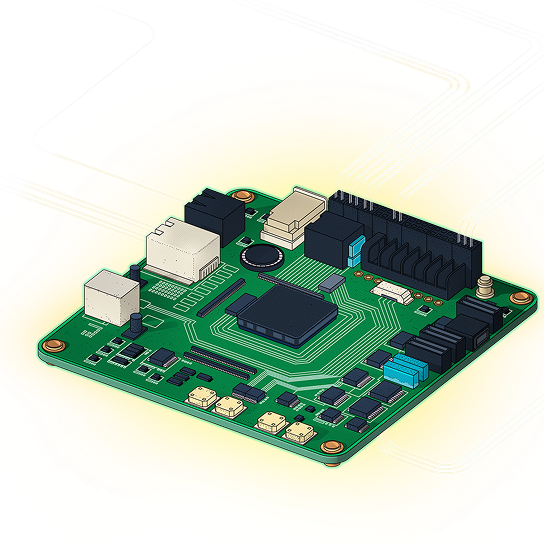
Cryptographic subsystem
This small, tamper-proof specialized circuit board within the HSM appliance is the cryptographic brain of the system. “It performs all the sensitive security operations like encryption, decryption, and key handling,” says Manish Upasani, Head of Product Management at HSM manufacturer Utimaco.
02
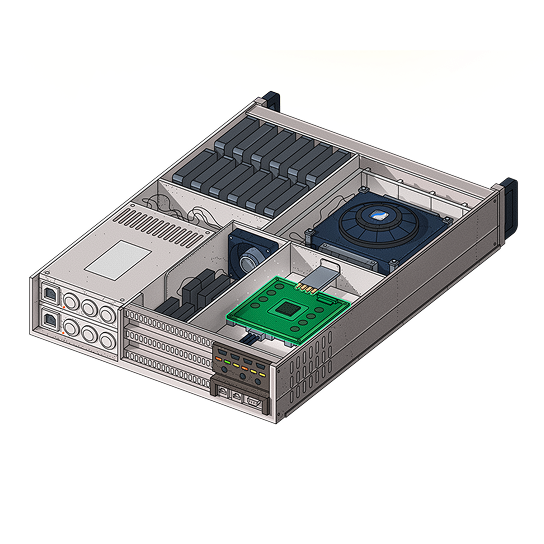
The Server
The server is effectively the external chassis and provides a controlled environment within which the cryptographic subsystem can operate. “It is all about power supply, configuration, network connectivity, logging, and parsing,” says Upasani. These servers can be individually secured with tamper-proof technology.1 “If someone were to lift the top cover off, or the environmental conditions change beyond a predefined threshold, they automatically wipe themselves to protect the keys,” says Upasani.
03
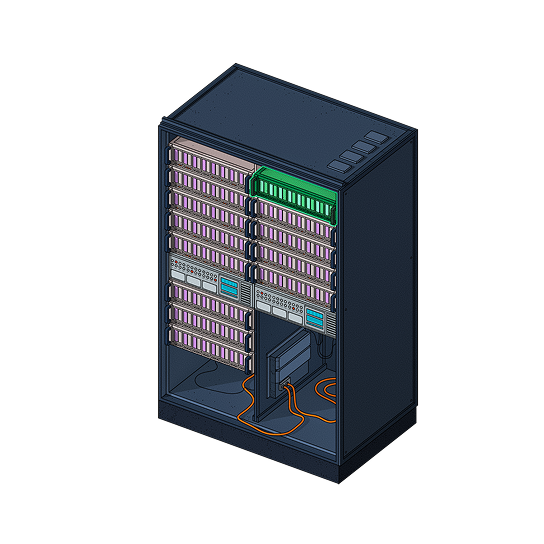
The setup
HSMs are often rack-mounted. To enhance security, these racks can be surrounded by dedicated security cages.2 Smaller financial services like credit unions might deploy two to four HSMs for redundancy, usually spread across different locations for resilience and availability. Larger institutions, like card networks, can have hundreds of HSMs operating across different systems and regions.
1
2
3
WHAT HAPPENS WHEN YOU ENTER YOUR PIN AT AN ATM:

The customer types in their PIN.

The PIN gets encrypted by the ATM using a pre-loaded encryption key.

The ATM sends this encrypted PIN to the bank.

The bank sends the encrypted PIN, along with other metadata such as the account number, to the HSM over a secure internal connection.

The HSM receives the information and combines it with an internal cryptographic key that is specific to the ATM in question.

The HSM decrypts the PIN.

The HSM now needs to verify that the decrypted PIN is correct. It runs the numbers through a cryptographic algorithm and compares the result of this calculation to a reference value stored in a database held separately by the bank. This means the decrypted PIN never leaves the HSM. If the two values match, the PIN is verified.

The HSM returns a simple result to the bank: correct or incorrect.

The bank approves or rejects the transaction accordingly.
https://www.jpmorgan.com/payments/payments-unbound/sources
Illustrations: Doug John Miller