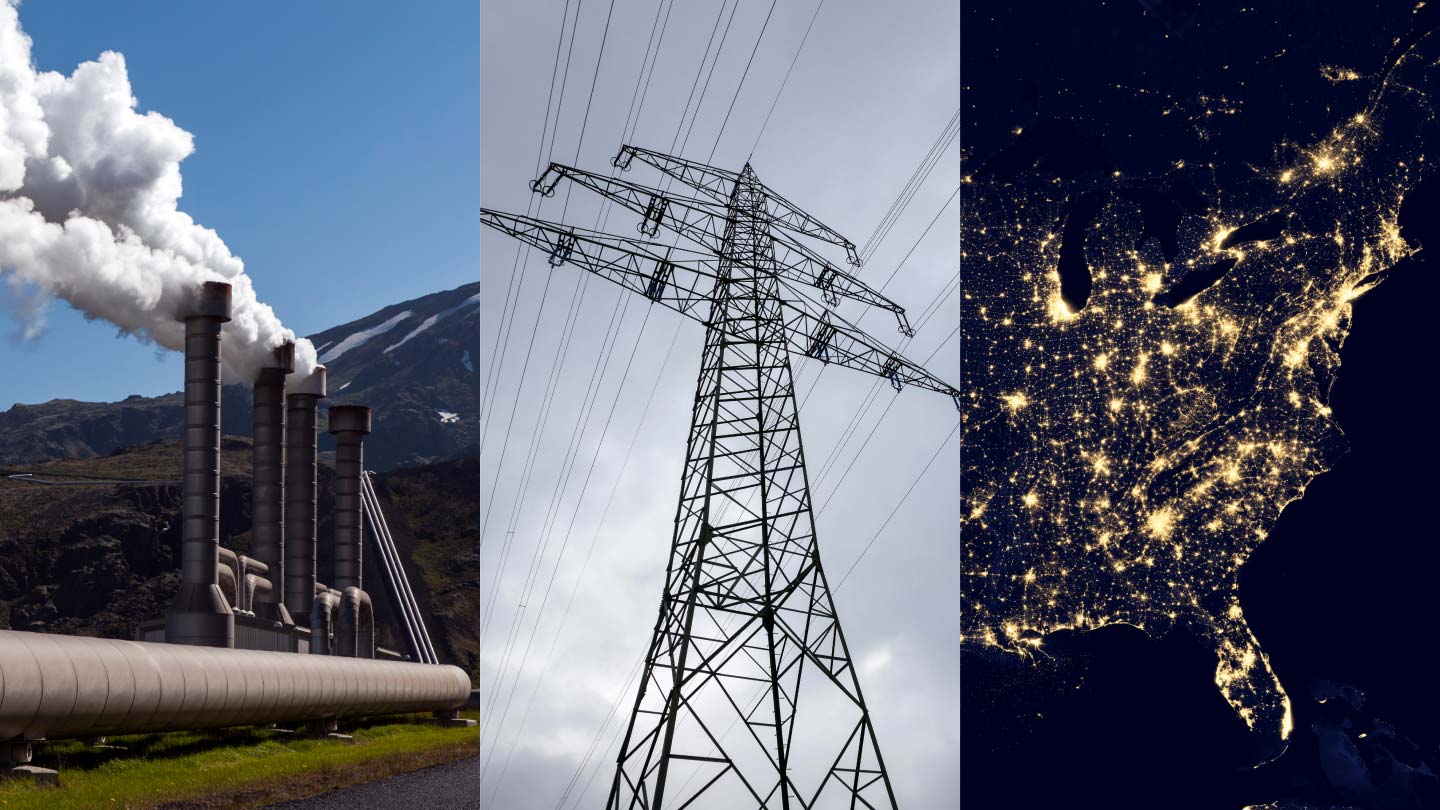
The U.S. grid is being tested in ways it hasn't been for a generation. After nearly 20 years of flat demand, electricity use is projected to climb sharply, driven by AI data centers, electrification of buildings and transport, and a return of industrial manufacturing. The grid has quietly become a gating factor on economic growth
Arshad Mansoor is helping utilities providers, policymakers, hyperscalers and investors build grid capacity to meet economic demand. He is President and CEO of the Electric Power Research Institute (EPRI), the independent, non-profit organization that works with more than 500 power companies and technology partners — including Microsoft, Google, Hitachi and GE — across 45 countries to advance and scale grid technology. An electrical engineer by training, he has spent more than two decades at the intersection of utilities, policy and the technologies reshaping how electricity is generated, moved and used.
In conversation with Michael Johnson, Vice Chairman of the Security and Resiliency Initiative at J.P. Morgan, Mansoor explained what it will take to meet surging demand without spiking prices — from permitting reform and behind-the-meter generation to data center flexibility, the return of nuclear, and the bottlenecks the industry has to solve.
“A grid that has been there for 120 years all of a sudden has become the tip of the spear on economic growth throughout the world.”
Arshad Mansoor
President and CEO, Electric Power Research Institute
About the Security and Resiliency Initiative
J.P. Morgan’s Security and Resiliency Initiative is a $1.5 trillion, 10-year plan to facilitate, finance and invest in industries critical to national economic security and resiliency. It includes direct equity investments for an initial amount of $10 billion. Energy Independence and Resilience is one of five focus areas and covers nuclear energy, grid resilience, distributed energy, battery storage and tech, and solar, wind, liquid natural gas and geothermal.
This material is for informational purposes only, is not intended as an offer or solicitation for the purchase, sale or tender of any financial instrument and does not constitute a commitment, undertaking, offer or solicitation by any JPMorgan Chase entity to extend or arrange credit or provide any other products or services to any person or entity. This material is not a product of the Research Department of J.P. Morgan Securities LLC.
Related insights
-

Security and Resiliency Initiative
Investing in reindustrialization and economic security
October 14, 2026
From energy and critical minerals to advanced manufacturing and defense, the first year of the Security and Resiliency Initiative has underscored what it takes to turn investment into long-term capacity and resilience.
-
Sustainability
Discover why resilience — not supply alone — is now the defining measure of energy security, and what can be done to safeguard systems against future disruptions.
-

12:47 - Sustainability
Supercharging the Energy Supply Chain
April 15, 2026
As data centers and electrification increase power demand, energy resiliency and a diversified energy mix are becoming even more crucial to national security. In this conversation, Dr. Sarah Kapnick, global head of Climate Advisory, and Michael Johnson, Security and Resiliency Initiative lead for Energy and the U.S. Government, discuss the need for new sources of energy, challenges across the supply chain and industry dealmaking trends.