APAC Technology, Innovation and Growth Conference
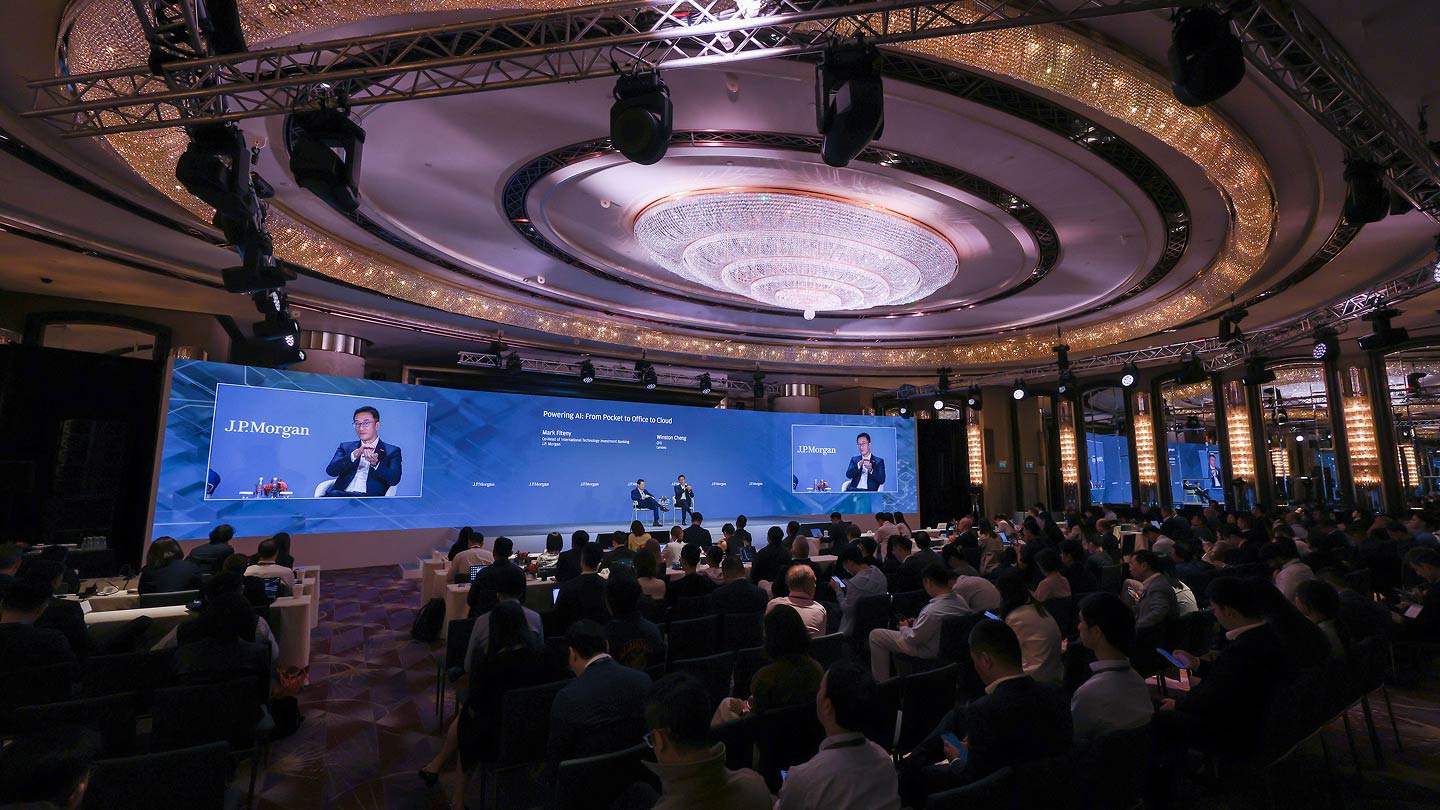
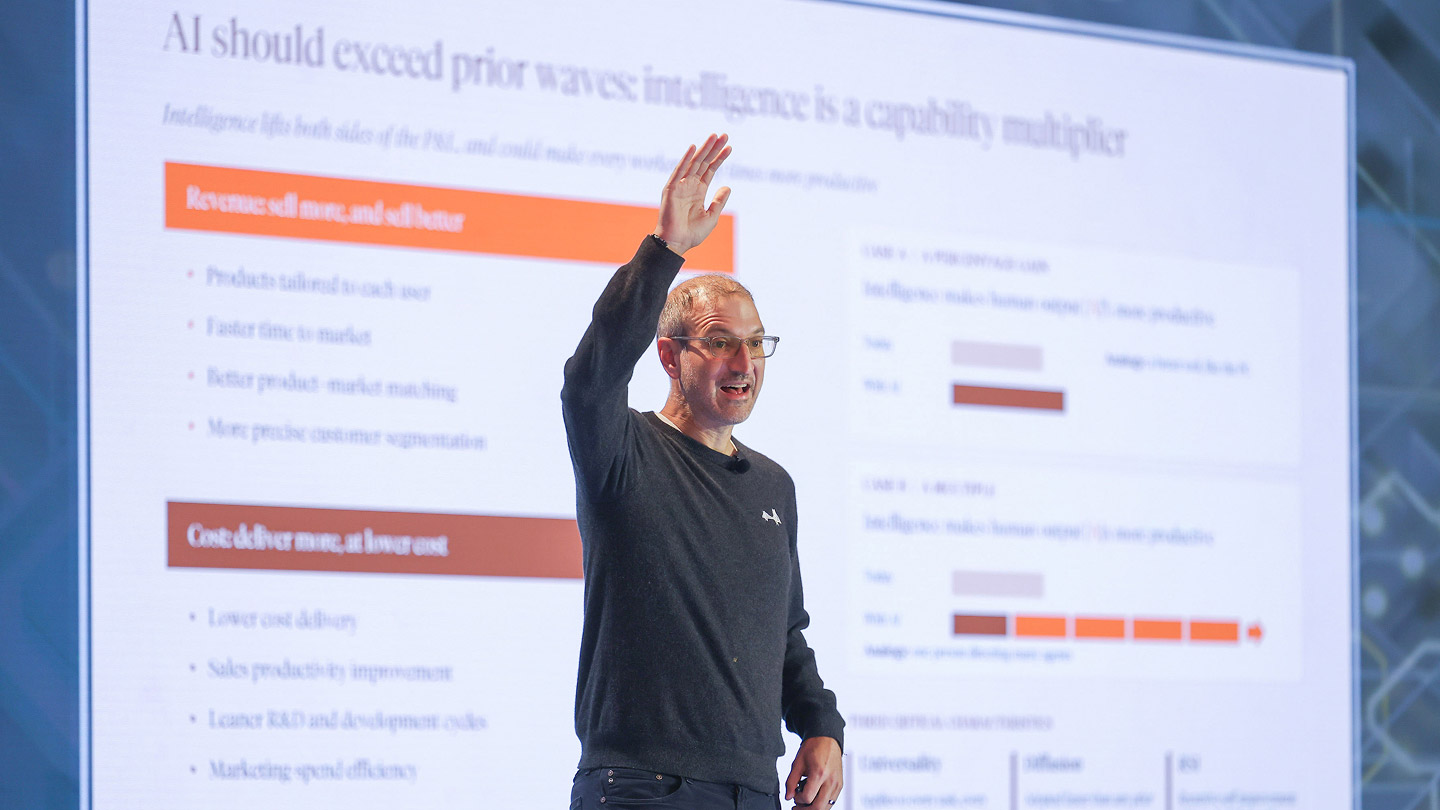
The inaugural J.P. Morgan APAC Technology, Innovation and Growth Conference welcomed more than 1,900 delegates from around the world to Hong Kong on November 16–17, 2026. Discussions highlighted the accelerating pace of change across industries and explored how technology — from AI and automation to innovations in healthcare, consumer and manufacturing — is reshaping how businesses operate and compete, moving beyond adoption to drive productivity, growth and long-term value.
Key takeaways from the 2026 APAC Technology, Innovation and Growth Conference
A growing focus on turning innovation into impact
At J.P. Morgan’s inaugural APAC Technology, Innovation and Growth Conference in Hong Kong, investors and corporates came together to explore several questions: How are AI and automation evolving? Is the infrastructure buildout keeping pace? And where is capital flowing? Read on for key insights from the panelists.
AI token costs have fallen roughly 98–99% since late 2022, driven by hardware improvements and architectural efficiencies. As intelligence becomes significantly cheaper and more scalable, the focus is shifting from building AI capabilities to deploying them — with increasing attention on applications that deliver tangible business returns.
The timing of that shift, however, remains uncertain. “We believe that value will switch from infrastructure to the application layer versus semiconductor and software. We just don’t know exactly when,” said Noah Wintroub, global chair of Investment Banking and Asset & Wealth Management at J.P. Morgan.
Already, 88% of enterprises in Asia have used AI in the last 12 months, according to a recent J.P. Morgan Global Research survey. For many of these businesses, the path to value creation begins with adoption and experimentation — not immediate ROI. Winston Cheng, CFO at Hong Kong-based tech company Lenovo, argued that AI does not have to instantly translate into financial returns. Instead, he said that teams should first explore where AI can improve workflows, then build toward measurable business outcomes.
Beyond enterprise productivity, AI is beginning to deliver practical value across sectors. In retail, Dhiresh Bansal, CFO of Indian online marketplace Meesho, shared how his company is using voice agents to help consumers who lack familiarity with app-based shopping. Consumer adoption, however, remains nascent: Rahul Bothra, CFO of food delivery app Swiggy, noted that orders placed through LLMs only number in the low triple digits per day, compared with more than 4 million total daily orders.
In healthcare, AI is already working across multiple stages of drug development — from target identification to molecular design — with further avenues for value creation still emerging. Feng Ren, co-CEO, CSO and head of Drug R&D at Insilico Medicine, shared that the longer-term promise of AI in healthcare could be transformative, helping researchers make discoveries that weren’t previously possible.
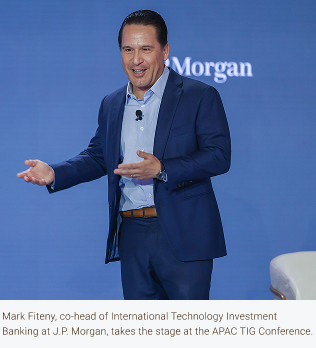
As Mark Fiteny, co-head of International Technology Investment Banking at J.P. Morgan, noted, the pace of change is accelerating: new companies are launching, fresh investment themes are emerging and a groundswell of opportunity is building for technology players. Looking ahead, the challenge will lie in turning that momentum into lasting advantage as AI reshapes industries across APAC and beyond.
Technology is increasingly shifting from automation to autonomy, enabling more sophisticated use cases. In robotics, attention is centered on physical AI — intelligent systems that can perceive, reason about and act directly within the real world.
Henry Zhang, vice president of Business & Strategy at Chinese robotics company Sudo AI, noted that while conventional automation is efficient, it is typically designed around specific tasks. The breakthrough will hinge on generalization: moving from machines programmed for individual duties toward systems capable of adapting across multiple contexts.
Despite the excitement around physical AI, Zhang noted that commercial adoption will be gradual, with a meaningful inflection point in industrial sectors likely two to three years away. For household adoption, the timeline could stretch to eight to 10 years, given regulatory and safety considerations. Wenbin Tang, founder and CEO of Chinese robotics startup Dexmal, added that autonomy is ultimately an investment decision: the technology must solve a real problem with demonstrable ROI.
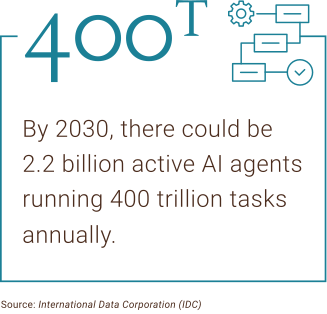
Outside of physical robotics, agentic AI — software systems that execute multi-step workflows with minimal human intervention — is gaining traction. Harlan Sur, head of the U.S. Semiconductor and Semiconductor Capital Equipment research team at J.P. Morgan, noted that AI workloads are evolving from answering individual prompts to carrying out more complex sequences of tasks. And as Wintroub highlighted, AI agents will increasingly perform duties traditionally undertaken by people, with around 2.2 billion active agents running 400 trillion tasks by 2030.
Companies are rethinking both the digital infrastructure and physical supply chains needed to support innovation at scale. In the realm of AI, infrastructure is becoming more specialized as workloads mature. For instance, Gokul Hariharan, co-head of Asia Pacific TMT Research at J.P. Morgan, observed that custom silicon for AI inference and training will grow in importance as LLM vendors and hyperscalers fine-tune hardware to their specific needs. Weiping Huang, co-founder of optical equipment maker Ligent Technologies, flagged that integration is key: components from chips to lasers and packaging need to be designed in tandem in order to work together efficiently.
The same shift toward specialization is reshaping physical supply chains. In retail, Bansal and Bothra highlighted that infrastructure must be designed around the customer proposition — whether the priority is value, speed or convenience.
Overall, tech supply chains are increasingly complex and interconnected — and even small disruptions can create outsized downstream effects. “Supply chains remain interwoven to a degree that we would not have expected,” said Aditya Srinath, head of Asia ex-Japan Equity Research at J.P. Morgan.
To this end, sustained collaboration is key — among players both within and outside the supply chain. As Brand Cheng, chairman of smart manufacturing and industrial internet company Foxconn Industrial Internet, explained, modern manufacturing is a combination of logistics, automation, materials expertise, engineering and vertical integration — and scaling capabilities will require working across these tightly connected ecosystems. Similarly, Sang-Chul Kang, vice president and head of NAND Product Planning at South Korean semiconductor company SK Hynix, emphasized that no single company can solve the next generation of infrastructure challenges alone.

Across public and private markets, investors are looking for companies and technologies that could define the next growth cycle. But capital isn’t simply chasing AI; instead, it’s flowing to businesses that have a clear competitive advantage and durability to scale.
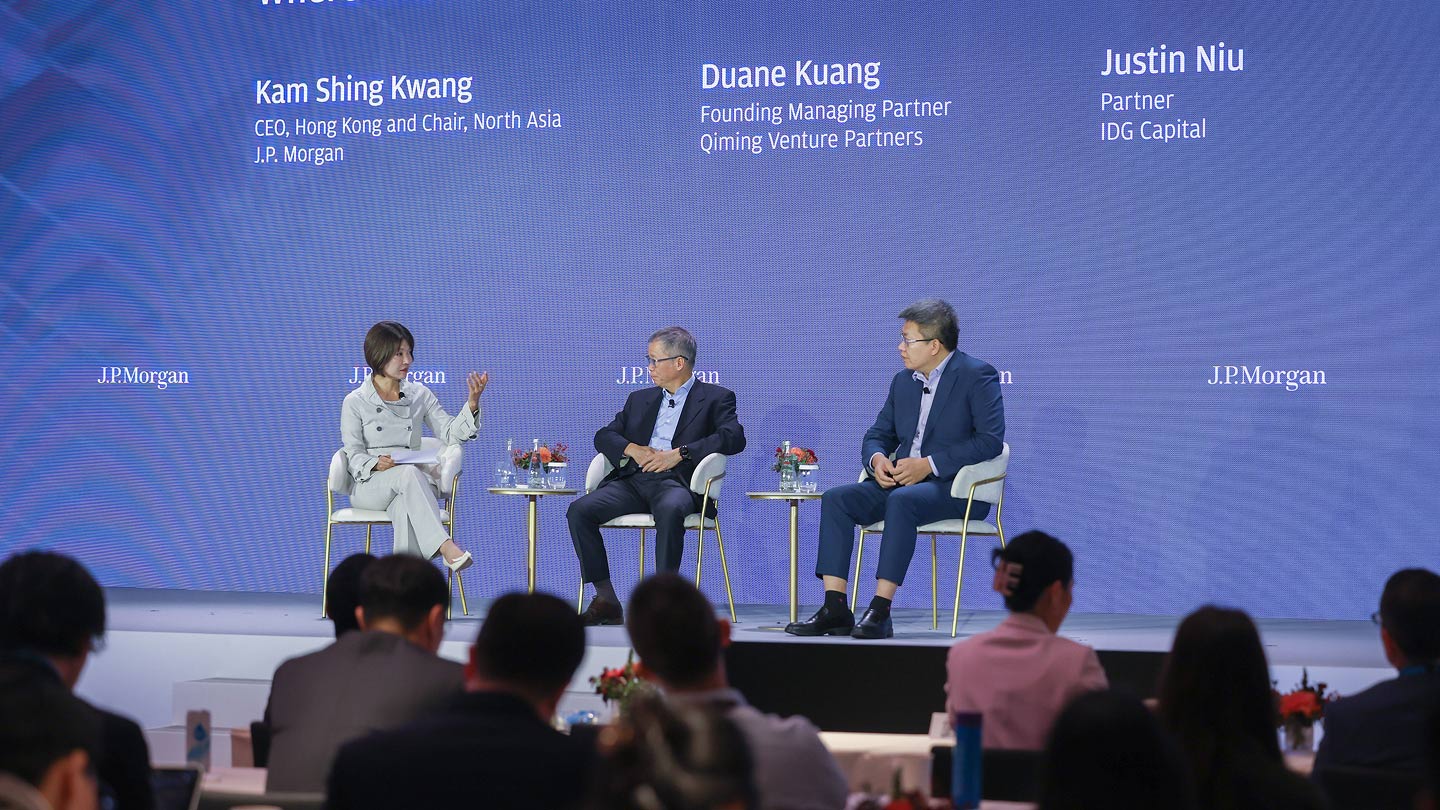
Wintroub noted that companies today are reaching significant revenue and valuation levels in remarkably short periods, attributing part of that acceleration to the new technology environment. In another panel, Kam Shing Kwang, CEO of Hong Kong and chair of North Asia at J.P. Morgan, framed the investor challenge as distinguishing hype from the characteristics of a durable business.
Oliver Cox, a portfolio manager at J.P. Morgan Asset Management, noted that the opportunity is moving up the AI stack — from infrastructure providers toward companies applying AI to accelerate existing businesses and create new sources of growth. “We’ve been finding more investment opportunities in that application layer at the top,” he shared. He also observed that AI could begin reshaping sectors that technology hasn’t historically transformed, paving the way for new productivity gains and business models. “What can AI potentially do in areas of the economy like medicine, education and construction?” he asked.
Clearly, tech isn’t the only investment theme to watch. Mislav Matejka, head of Global Equity Strategy at J.P. Morgan, argued that market leadership has become unusually concentrated, with tech companies dominating returns. In 2027 however, participation should broaden beyond the companies that led the first phase of the AI cycle, as innovation moves deeper into the real economy. “Tech isn’t going to be the only story in town anymore,” he declared.
Throughout the conference, a key theme stood out: fundamentals still matter. As the AI investment cycle matures, capital is becoming more discerning. Ultimately, investment underwriting will boil down to four factors: long-term revenue growth, sustainable margins, valuation and business risk.

Videos
The next wave of innovation in APAC:
Sectors to watch
Four themes for investors as geopolitics and AI define the next cycle
Analysts from across J.P. Morgan Global Research explore key trends in AI, consumer electronics, healthcare and retail.
Gokul Hariharan, co-head of APAC TMT Research at J.P. Morgan, explains how the AI buildout in APAC could evolve.
Can the AI-driven semiconductor supercycle sustain its momentum?
So far, the key driver of the semiconductor boom has been the rapid advancement in large language models (LLMs), which has opened up new capabilities every 6–12 months. That momentum looks set to continue as agentic AI develops and adoption expands across consumer and enterprise use cases.
That said, we’ve effectively been in a multi-year semiconductor upcycle, which naturally raises questions about how long the current phase can run. Even so, with agentic AI still in its early stages, we remain constructive on demand.
Where is the memory chip shortage most acutely felt, and when could it ease?
At this stage, we still see semiconductor chips as the primary bottleneck in the AI buildout. Tightness is most acute in three areas: leading-edge logic wafers, integrated-circuit package substrates and then memory chips themselves.
We expect the tightness to persist through 2027 and even early 2028, before incremental supply starts entering the market. The upward risk here is that AI compute demand once again steps up due to LLM advancements, further compounding the chip shortage.
Why hasn’t enterprise AI adoption translated into broader productivity gains?
Enterprise AI adoption has been uneven relative to the pace of model development. In some areas such as coding, adoption has been rapid. Yet in other areas, deployment has been more difficult as models need to navigate more complex operating environments, unclear information flows and limited organizational readiness.
As LLMs improve and enterprises embed them more deeply into workflows, we expect adoption to ramp up in the next 12 months. J.P. Morgan’s inaugural AI adoption survey in APAC points to a steep increase in AI spending as a percentage of IT budgets over the next year, with benefits concentrated in labor productivity, customer satisfaction and new revenue creation.
Junya Ayada, Japan senior equity research analyst covering consumer electronics at J.P. Morgan, highlights how AI is influencing sector dynamics.
How is the memory chip shortage weighing on consumer electronics?
Rising memory prices are primarily being passed through to customers. However, as some consumers may not accept higher prices, manufacturers are increasingly taking a more conservative view on sales forecasts and delaying price hikes.
However, this is ultimately demand-dependent. For example, demand has held up for B2B PCs and game consoles, even after price increases ahead of year-end blockbuster releases. In contrast, for more discretionary, hobby-oriented B2C categories — such as cameras and electronic musical instruments — we’re seeing softer demand and some reassessment of planned increases.
That said, inflation-driven cost pressures aren’t limited to memory chips, but extend across a broad range of components. As such, we think companies are likely to raise prices over time rather than try to absorb the full impact through other measures.
How is AI showing up in everyday devices?
PCs equipped with neural processing units (NPUs) can run AI workloads such as image generation and text summarization locally, delivering significant productivity gains. AI-enabled TVs are improving picture and sound quality through automatic correction and optimization, while cameras are using AI-based subject recognition to enhance autofocus and real-time tracking. In game consoles, beyond improving image quality, AI could also enhance the user experience by personalizing settings and gameplay. These AI-driven hardware improvements should help drive the next generation of product upgrades.
Yang Huang, head of China Healthcare Research at J.P. Morgan, shines a spotlight on the sector’s key developments and growth opportunities.
What’s driving the outperformance of China’s healthcare sector?
Firstly, Contract Outsourcing Organizations (CXOs) — third-party companies that provide specialist medical expertise — have posted strong earnings growth thanks to robust demand, largely from commercial manufacturers. Beyond blockbuster products, these CXOs are supporting R&D for complex drug modalities and innovative mechanisms of action (MoA).
In addition, there’s the continued global demand for innovative drugs. Cross-border partnerships and China-originated out-licensing deals highlight how multinational pharmaceutical and biotech companies are looking to Chinese assets to replenish pipelines and address upcoming patent cliffs. Some Chinese companies could begin receiving royalties from overseas partners in the next few years.
Overall, we view the sector’s strength as increasingly supported by earnings delivery, rather than sentiment alone. Sustaining this outperformance will depend on continued execution and strong clinical data that translate scientific promise into commercial opportunities.
How is AI-driven drug discovery (AIDD) shifting from proof-of-concept to commercialization?
AIDD is increasingly moving from technological validation towards commercial validation. The focus is shifting from what AI can theoretically achieve to whether it can produce better drug candidates, support repeatable discovery and create economic value.
As more AI-designed assets progress through development, human clinical data is key in showing whether AI can improve R&D productivity rather than simply accelerate early-stage discovery.
Commercialization also requires proving that AIDD can work repeatedly across different targets and modalities. Today, many companies operate a closed-loop discovery process — the opportunity here is to turn AI from a tool used for individual projects into scalable R&D infrastructure that can serve both internal pipelines and external customers.
Latika Chopra, co-head of APAC Consumer Research at J.P. Morgan, explores changing channel mix and AI-driven productivity gains in the retail space.
How are retail channels evolving across APAC?
E-commerce continues to gain share across APAC, driven by convenience, competitive pricing and wider choice. However, penetration varies widely, with South Korea and China leading and Japan and India still relatively underpenetrated. Within this space, social commerce and livestreaming are reshaping discovery and conversion, particularly in China and Southeast Asia, while quick commerce has emerged as an important growth driver across urban markets in India.
That said, offline retail remains relevant, with convenience stores gaining ground in Thailand and the Philippines. There’s also significant expansion potential for modern brick-and-mortar formats in India, particularly beyond major cities.
Where are retailers embedding AI in operations today?
Retailers are deploying AI across operations and customer engagement, from demand forecasting and supply-chain planning to marketing, pricing and customer service. Near term, the biggest payoff is productivity: automating repetitive work, speeding decisions and improving execution. Another opportunity lies in personalization and targeted marketing, especially for businesses with frequent customer touchpoints and mature digital platforms.
Financial benefits will likely build over time as companies identify and scale the most effective use cases. Strong data, systems integration and workforce readiness will be critical, putting companies with rich customer insights and embedded digital workflows at an advantage. Overall, we see AI as a gradual driver of productivity, execution and customer experience rather than an immediate, sector-wide earnings boost.
Conference photos




Key takeaways from the J.P. Morgan Global China Summit 2025
China: Key themes for investors to watch as trade talks continue
Despite the volatile start to the year, investors gathered at the 21st annual Global China Summit in Shanghai were optimistic on the path forward, with China’s economic outlook, trade dynamics, market fluctuations and industry innovation in focus at this year’s event.
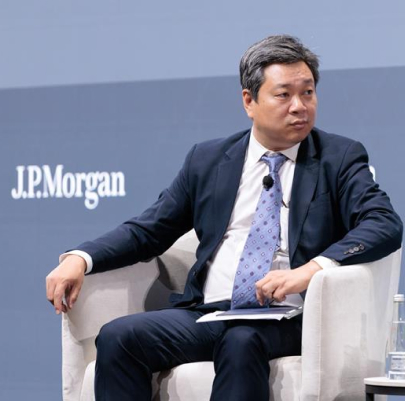
After months of tit-for-tat exchanges between the world’s two largest economies, the U.S. and China have temporarily agreed to lower tariffs on each other’s products.
Following constructive talks in Geneva earlier this month, the U.S. and China reduced tariffs by 115% each for the next 90 days, announcing a 10% universal tariff rate.
The timing of a potential deal, China’s export-driven economy and the future of global supply chains were key themes at the two-day event.
“For the moment, we assume the temporary tariff reduction will stay for the rest of 2025. The current agreement presents a temporary pause that allows room for further reduction of tariffs. Equally, the bar for a potential deal between China and the U.S. is high and it could take longer than 90 days, so a possible resurgence in tariffs cannot be ruled out yet,” said Haibin Zhu, chief China economist and head of Greater China Economic Research at J.P. Morgan.
Longer term, panelists agreed that China’s focus on boosting domestic demand and household spending to reduce its dependence on exports will be vital for sustaining future growth.
Transshipment, or the rerouting of goods through a third country, was also a focus, as the U.S.–China trade dispute has led to significant changes in transshipment patterns, particularly involving countries like Vietnam. As trade tensions have escalated, Vietnam’s imports from trading partners around the world and exports to the United States reached record highs.
"The issue of transshipment will become more important as part of this new wave of U.S. trade agreements," said Joyce Chang, chair of Global Research at J.P. Morgan, in a panel discussion.
Onshoring and “friendshoring” — working with other trade partners on strategic issues such as shipbuilding — will also be key for the U.S. administration as it refines trade agreements in the region.
Like the rest of equity markets around the world, Chinese stocks have experienced significant volatility so far this year. However, recent trade developments have provided a more optimistic outlook, with potential for further gains as tariff negotiations progress and domestic policies support economic stability.
As of late May, Chinese equities have shown resilience, with the MSCI China index up over 15% for the year. The onshore CSI 300 Index lagged with a 1.4% return over the same period, marking a recovery from earlier losses.
“China equities had an earnings per share (EPS) down cycle from 2021 to early 2024 — but earnings have come back, particularly in the MSCI China In some of the key sectors we see some really strong growth, which would suggest upside to 2025 consensus estimates,” said Wendy Liu, head of China and Hong Kong Equity Strategy at J.P. Morgan, in a Bloomberg TV interview on the sidelines of the conference.
Liu said sectors to watch included communications (essentially internet platforms in gaming, media and entertainment), discretionary and healthcare. J.P. Morgan Research has a base case and bullish case year-end targets for the MSCI China of 80 and 89 respectively, which would represent double-digit upside from current levels of around 75 — contingent on a positive trade agreement between the U.S. and China after the current negotiation period, during which the index may trade range-bound.
Elsewhere, Amin Nasser, president and CEO of Saudi Aramco, highlighted China’s strategic importance to energy markets and his firm, which has significant investments and projects valued at over 240 billion yuan (around $35 billion).
On the state of the oil market, Nasser said there was growth of 1.7 million barrels [a day] in the first quarter year-on-year. Despite the volatility following tariffs, the market is healthy, particularly in China.
“China is one of the biggest importers of crude oil. As it stands today, [oil demand is] at around 17.4 million barrels [a day]. Considering that China’s indigenous production is around 4 million barrels a day, it imports close to more than 13 million barrels of crude every day. It is the largest in terms of imports globally and it’s an important market for all energy players around the world,” said Nasser in a conversation with Filippo Gori, co-head of Global Banking and CEO of EMEA at J.P. Morgan.
On the global deficit, Jamie Dimon, chairman and CEO of JPMorganChase, warned of the potential impact it could have on interest rates worldwide, urging investors not to become complacent.
“We have gone from a fairly benign inflationary environment of low rates to a slightly higher one. People think higher rates means the 30-year U.S. Treasury bond hits 5% — but why not 6%, what law says it can’t be 7%? I would be cautious of being complacent when it comes to the outlook for stock prices and bond spreads,” Dimon said.


Innovation across some of China’s specialist sectors was another area of interest, with a focus on assisted driving, robotics and biotech.
In assisted or partially automated driving, the proportion of vehicles equipped with assisted driving technologies is set to expand rapidly, according to Dapeng Gao, chairman and president of Desay SV, who discussed the outlook for the market with Nick Lai, head of Asia Autos Research at J.P. Morgan.
Level 2 assisted driving refers to partial automation and these systems typically offer functionalities such as traffic-aware cruise control, in-lane autosteer, automated lane changing and auto parking.
The regulatory environment in China has been tightening around autonomous driving technologies, but the penetration rate of Level 2 is still expected to more than double from 14% currently to around 40% in the next two years, Gao said.
Robotics was in the spotlight, with panelists discussing how innovation in the sector could address labor shortages, high costs and efficiency demands in industries such as logistics and warehousing.
Humanoid robots are also poised to enter consumer markets, driven by advancements in artificial intelligence (AI) and motion control technologies. In a panel on the future of automation, Shitao Gu, co-founder of MagicLab, said the group was focusing on reducing production costs through in-house development of core components, with an aim to provide cost-effective mass production.
In biotech, AI is helping to fuel drug discovery. The first drugs conceived entirely by AI could hit the market in just a few years, said Alex Zhavoronkov, CEO of startup Insilico, in a session on the sector.
The pharmaceutical industry has been harnessing AI to reduce the cost and the amount of time it takes for drugs to make it through the research and development (R&D) phase before going to clinical trials, but no AI-conceived drugs have been approved as yet.
Insilico have over 30 programs out of generative AI and Zhavoronkov hopes to see some approved in the next five years or so.
China’s government has emphasized the importance of boosting consumption to spur economic growth. For panelists in the consumer and retail sectors, changing consumer preferences, the need for constant innovation and the importance of localizing supply chains were top of mind.
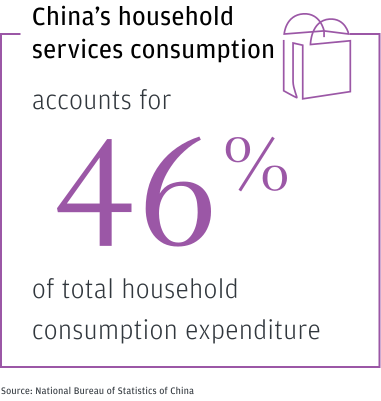
In 2024, China’s household services consumption expenditure accounted for around 46% of total household consumption expenditure, official data showed. The significant portion of consumer spending currently directed toward services, rather than goods, provides opportunities for businesses in the region, according to speakers.
Yuanwen Sun, founder and CEO of TOP TOY — known for its focus on collectible and designer toys — said the group has been expanding its presence in the market by opening new stores and collaborating with various brands to offer a wider range of products.
The company aims to cater to both children and adult collectors, tapping into the growing trend of collectible toys and pop culture merchandise, along with demand for immersive retail experiences.
Joost Vlaanderen, president of Mondelez International (the parent company of Oreos) in Greater China, said having a local strategy was critical to success. The group is basing a headquarters and a large R&D center in China, so products can be developed locally.
Vlaanderen also said supply chain diversification is key to remaining competitive, with Mondelez aiming to produce as much locally as possible. The biscuit maker plans to harvest its first wheat grown in China to avoid the direct impact of tariffs.
Insights
Trade talks and volatility: An equity markets Q&A
Investors have had an unforgettable start to 2025, with tariffs, a stock market selloff felt in most major markets, followed by trade negotiations between the world’s two largest economies. Tom Summersall, head of Asia-Ex Equity Sales, shares his view on current market conditions and what investors need to look out for.
We came into the year reasonably optimistic, with a strong narrative supporting U.S. exceptionalism that had been pervasive across markets for some time. After Liberation Day, investors’ ability to forecast, whether that's economics or company earnings has been compromised and the lens through which markets are viewed is cloudier. For pension funds or long-only asset managers that track an index, many will have adjusted to more defensive stocks or reduced beta. For non-fundamental investors, systematic, quant or momentum strategies, or even multimanager platforms and hedge funds, leverage was likely reduced. As a function of the lower volatility since then, some of these systematic strategies are now starting to increase their leverage again. Meanwhile, fundamental investors have been watching and waiting, but others such as momentum or trend-focused strategies have been triggered to start buying the market, so we have a tactical view that equities can move higher.
There are a lot of signs showing that China is focused on providing comprehensive policy support to boost its domestic economy, pivoting from an export-led, investment-focused economy to a more domestic consumption-driven model. Secondary home sales in major cities in China are up 11 percent. Historically, the property market has been an important sentiment indicator and onshore retail sales are up 10 percent year-on-year in some categories. Looking at industrial commodities like copper and aluminum, prices are also broadly moving higher. In terms of tariffs, we've gone through the initial shock – market participants are defensively positioned and will continue to be buffeted by headlines, but current talks with the U.S. administration look increasingly constructive. From an equity valuation standpoint, Asia is significantly cheaper than other parts of the world and represents an opportunity.
In China, there has been a regulatory push to incentivize economic activity and investment that started long before tariffs. Certain sectors such as consumer and education saw valuations come under sustained pressure over the past few years as a result of the ‘common prosperity’ directive and are now benefitting from supportive policy. The travel and transportation sectors, particularly in the U.S. are being closely followed, as they track broader economy activity. Tech is always a focus especially at the moment, given the structural tailwind from AI. When combined with geopolitical crosscurrents, this makes for a complex and potentially volatile, backdrop. We will be featuring humanoid robots again at this year’s conference, which is another emerging global trend.
We know that some of the Q1 economic data and company earnings look artificially strong as companies were pulling forward demand and shipping products ahead of the implementation of tariffs. The earlier expectation of payback in the second half has been somewhat tempered by the tariff delays and hopes of progress in talks. In the U.S. that’s led us to reduce our probability of recession to below 50%, although there remains an economic drag. The forward-looking sentiment data (such as company purchasing manager indices – PMIs) has shown signs of caution on behalf of companies given the heightened uncertainty. The question that remains is whether the hard data on delivered economic outcomes follows lower or whether the recent news flow on tariffs rescues confidence. First quarter company earnings and management commentary so far has tended to be more positive than the market expected. That’s good news for equity markets.



Related insights
BANKING
Market signals and what they mean for companies in Asia Pacific
From diverging central bank policy to the AI investment boom, higher-for-longer energy prices and a shifting M&A landscape — J.P. Morgan's Global Corporate Banking leaders unpack the macro forces reshaping the region — and what they mean for companies.

GLOBAL CORPORATE BANKING
200 days into the frontier: What we know and what to do now
By the JPMorganChase Global Technology Leadership Team
PAYMENTS
J.P. Morgan Payments in Asia-Pacific
At J.P. Morgan, we’re thinking differently about the power of payments. Let us help you rethink what payments can do for you.
PAYMENTS
J.P. Morgan Payments in Asia-Pacific
At J.P. Morgan, we’re thinking differently about the power of payments. Let us help you rethink what payments can do for you.
Related insights

GLOBAL CORPORATE BANKING
Perspectives from Asia Pacific
Explore Global Corporate Banking's Asia Pacific market outlook.

GLOBAL RESEARCH
How will the US - China trade agreement impact China’s economy?
What is China’s growth outlook, how will it be impacted by the recent U.S.–China trade deal and what are some of the potential policy responses?

INVESTING
Key themes in technology, media and telecom in Asia Pacific
Discover the key trends shaping the future of tech in Asia Pacific and the markets that are gaining the most attention. J.P. Morgan leaders discuss the tech cycle outlook, highlighting how AI is reshaping the investment landscape and driving a resurgence in financing activity.
This conference is by invitation only and is not transferable. The conference is not open to the media.
Related insights
-
Banking
Market signals and what they mean for companies in Asia Pacific
October 27, 2026
From diverging central bank policy to the AI investment boom, higher-for-longer energy prices and a shifting M&A landscape — J.P. Morgan's Global Corporate Banking leaders unpack the macro forces reshaping the region — and what they mean for companies.
-
Payments
Explore treasury and payments solutions across Asia-Pacific, from cross-border payments and trade finance to liquidity management and blockchain innovation.
-

Global Research
The 11th annual J.P. Morgan India Conference provided a forum for conversations on India's economic growth, emerging sectors and the opportunities shaping its long-term investment story.
This communication is provided for information purposes only. Please read J.P. Morgan research reports related to its contents for more information, including important disclosures. JPMorgan Chase & Co. or its affiliates and/or subsidiaries (collectively, J.P. Morgan) normally make a market and trade as principal in securities, other financial products and other asset classes that may be discussed in this communication.This communication has been prepared based upon information, including market prices, data and other information, from sources believed to be reliable, but J.P. Morgan does not warrant its completeness or accuracy except with respect to any disclosures relative to J.P. Morgan and/or its affiliates and an analyst's involvement with any company (or security, other financial product or other asset class) that may be the subject of this communication. Any opinions and estimates constitute our judgment as of the date of this material and are subject to change without notice. Past performance is not indicative of future results. This communication is not intended as an offer or solicitation for the purchase or sale of any financial instrument. J.P. Morgan Research does not provide individually tailored investment advice. Any opinions and recommendations herein do not take into account individual client circumstances, objectives, or needs and are not intended as recommendations of particular securities, financial instruments or strategies to particular clients. You must make your own independent decisions regarding any securities, financial instruments or strategies mentioned or related to the information herein. Periodic updates may be provided on companies, issuers or industries based on specific developments or announcements, market conditions or any other publicly available information. However, J.P. Morgan may be restricted from updating information contained in this communication for regulatory or other reasons. Clients should contact analysts and execute transactions through a J.P. Morgan subsidiary or affiliate in their home jurisdiction unless governing law permits otherwise. This communication may not be redistributed or retransmitted, in whole or in part, or in any form or manner, without the express written consent of J.P. Morgan. Any unauthorized use or disclosure is prohibited. Receipt and review of this information constitutes your agreement.