
Key takeaways
- Strategic urgency, driven by patent cliffs, pipeline gaps and strong pharmaceutical balance sheets, is fueling robust deal activity across biopharma, biotech and medtech, including landmark cross-border transactions and billion-dollar megadeals.
- Healthcare companies are accelerating AI adoption through acquisitions, partnerships and capital investment to strengthen competitive positioning and drive innovation.
- Supply chain resilience and regulatory complexity are reshaping healthcare strategy. To future-proof operations, healthcare companies are focusing on diversifying supply chains and optimizing portfolios.
Halfway through 2026, five themes have taken shape across the global healthcare landscape. In a year headlined by strong M&A activity, cross-border partnerships and geopolitical and regulatory uncertainty, the sector has shown resilience and robustness. Here’s a deeper dive into themes that are defining the year — and a peek at what’s ahead.
Capital markets and M&A activity in the healthcare industry remain robust
Despite macro headwinds tied to global volatility, capital markets and M&A activity show no signs of slowing down. Areas like biopharma and biotech have seen strong activity, as companies make strategic acquisitions to replenish pipelines.
One example would be biopharmaceutical company Gilead’s acquisition of Tubulis, a clinical-stage biotech company developing next-generation antibody-drug conjugates (ADCs). The nearly $5 billion deal, for which J.P. Morgan acted as exclusive financial advisor to Tubulis, was the largest European private, clinical-stage oncology sell-side deal of all time. The acquisition is slated to expand Gilead’s oncology pipeline with a clinical-stage potential treatment for ovarian cancer, among other next-generation assets and platforms.
“The renewed confidence in deal activity is helping to drive a strong equity market backdrop, characterized by reopening equity capital markets and biotech issuance momentum,” said Jerry Lee, global co-head of Healthcare Investment Banking at J.P. Morgan. Lee cited strategic urgency created by pipeline gaps and patent cliffs, a term that refers to the drop in revenue a pharmaceutical company can experience when a key product’s patents expire and generic competitors enter the market.
“Additionally, large pharmaceutical companies have cash reserves they’re seeking to deploy. And there’s also the defensive nature of healthcare, which is often seen as a hedge against wider volatility,” said Lee. “All of this has created a dynamic, if selective, investment environment.”
Lee pointed to Sun Pharma’s $11.75 billion acquisition of Organon, which was the largest biopharma M&A deal this year, as an example of a megadeal featuring two companies with good financials, brand equity and stakeholder relationships. J.P. Morgan served as financial advisor to Sun Pharma on the deal, which is intended to grow its Innovative Medicines business through Organon’s portfolio and global footprint.
Financial sponsors are getting involved in industry M&A as well. In June, healthcare private equity firm Thoreau acquired Ensemble, a leading provider of managed services and automation solutions for health systems. J.P. Morgan served as the lead financial advisor to Ensemble during the sale to Thoreau, which is the among the year’s most significant healthcare M&A deals and the largest sponsor-to-sponsor transaction globally across all industries in 2026. “The Ensemble transaction marks a milestone in healthtech, demonstrating their continued growth and accelerated investment in technology and innovation across revenue cycle management,” said Francesco Leuthold, head of North America Healthcare M&A at J.P. Morgan.
“Going forward, we believe that strategic urgency and strong balance sheets will continue to drive M&A activity across healthcare, further reinforcing a vibrant capital markets activity which has remained resilient. A diverse spectrum of acquirors, including large and mid-cap strategics, will help sustain a deal-positive environment,” said Andy Ham, co-head of North America Biopharma M&A at J.P. Morgan.
“We continue to see momentum across healthcare M&A and capital markets activity. Companies are pursuing opportunities that provide access to innovation, expand capabilities and enhance long-term competitiveness.”

Jerry Lee
Global co-head of Healthcare Investment Banking, J.P. Morgan
Cross-border collaboration is on the rise as companies seek access to innovation
Within M&A dealmaking, 2026 has seen a specific rise in cross-border activity, with companies seeking innovative technologies further from home.
One of the year’s more unique deals paired the Hearing division of GN Store Nord, a Danish multinational company that develops and manufactures audio and assistive technologies, with Amplifon, one of the world’s leading hearing aid providers, based in Milan, Italy. J.P. Morgan acted as exclusive financial advisor to GN Store Nord for the cross-border medtech consolidation, which aims to help supply comprehensive hearing solutions to both audiology professionals and patients.
Cost efficiencies in R&D are also increasingly driving partnerships hatched across borders, including the Italian drugmaker Angelini Pharma’s acquisition of Catalyst Pharmaceuticals, a U.S.-based biopharmaceutical company focused on the treatment of rare neuromuscular and neurological diseases. The $4.1 billion sale, for which the firm acted as sole financial advisor to Catalyst, unites commercial infrastructure and specialized products with the goal of developing a next-generation therapeutic platform in Rare Diseases.
While innovation is happening around the globe, the rise of biotech has put China front and center for companies seeking out innovative partnerships. “We’re seeing a rapid emergence of high-quality, cost-effective innovation pipelines from China, increasing out-licensing and partnership models with global pharma, and large-scale biopharma deals that are causing ripple effects across the market,” said Lee.
AI is reshaping how healthcare companies innovate, compete and grow
AI has continued to grow its market influence in healthcare and biotech, moving from experimentation to a real driver of capital allocation, and shaping both transaction activity and competitive positioning. Companies are incorporating AI capabilities into diagnostics, imaging, clinical decision support, patient monitoring and precision medicine applications, creating differentiated offerings that can improve outcomes while strengthening competitive positioning. As adoption accelerates, AI is becoming a core component of product strategy.
Healthcare companies are seeking strategic enablement from AI-native and AI-enabled businesses. Transactions such as CareDX’s acquisition of Naveris, which uses AI to help analyze liquid biopsy data for cancer detection, and Performant’s merger with Machinify, which combines healthcare payment integrity solutions with AI-powered claims intelligence, demonstrate how AI can act as a powerful accelerator — expanding capabilities, creating new growth opportunities and unlocking value across the healthcare ecosystem.
Beyond product innovation, AI is increasingly influencing capital allocation decisions across the sector. Established healthcare companies are pursuing partnerships, acquisitions and investments that provide access to proprietary data, advanced algorithms and AI-enabled capabilities. In many cases, organizations are seeking to accelerate innovation timelines by acquiring technology rather than building it internally, contributing to growing strategic interest in AI-native healthcare businesses.
This interest in a broader application of AI technologies has reached healthcare back offices, where the focus is on automating, operationalizing and mitigating human error. Waystar’s acquisition of Iodine Software, a leader in AI-powered clinical intelligence, signals an emphasis on managing revenue leakage, lowering administrative burdens and increasing accuracy in reimbursements for patients. Similarly, New Mountain Capital’s investment in SmarterDX looks to support growth and product innovation for the company’s automated pre-bill review platform, which helps hospitals realize revenue integrity. J.P. Morgan served as exclusive financial advisor on both deals.
“The conversation has shifted from whether AI can create value to how quickly companies can incorporate it into their products, clinical capabilities and growth strategies," said Nick Richitt, global co-head of Healthcare Investment Banking at J.P. Morgan. "We expect AI to remain a significant driver of investment, partnerships and M&A activity across healthcare in the years ahead."
“We expect AI to remain a significant driver of investment, partnerships and M&A activity across healthcare in the years ahead.”

Nick Richitt
Global co-head of Healthcare Investment Banking, J.P. Morgan
Companies are adapting to an increasingly complex policy and regulatory environment
As policy, reimbursement and regulatory considerations continue to evolve across the healthcare sector, companies are becoming more deliberate in how they pursue growth. From pricing pressures and market access challenges to evolving approval pathways, management teams are balancing the need to innovate with increasing demands for commercial and regulatory certainty.
For many organizations, acquisitions have become a way to accelerate growth while mitigating development and execution risk. Rather than relying solely on internal pipelines, companies are using M&A to gain access to approved products, established commercial infrastructures and diversified revenue streams. Transactions such as Alkermes' acquisition of Avadel — where J.P. Morgan served as exclusive advisor — demonstrate how strategic acquisitions can help companies strengthen their competitive positions while navigating an increasingly complex operating environment.
At the same time, healthcare companies are taking a more disciplined approach to portfolio management. Businesses are evaluating divestitures, carve-outs and take-private transactions to sharpen strategic focus, reallocate capital and concentrate resources on areas with the greatest growth potential. Baxter's divestiture of Vantive Kidney Care and Select Medical's take-private transaction, both of which saw the firm act as financial advisor, highlight how management teams are actively repositioning portfolios to align with changing market dynamics.
“We're seeing healthcare companies become increasingly focused on strategic fit and execution certainty,” said Richitt. “Whether through acquisitions, divestitures or portfolio optimization, management teams are prioritizing opportunities that strengthen their competitive position while helping them navigate a more complex policy and regulatory landscape.”
The pharmaceutical supply chain is getting a much-needed upgrade
With tariffs, energy costs and other recent shocks to the global supply chain top of mind for many CEOs, companies are seeking ways to diversify their source base.
“Whether it’s expanding out of a single region, investing in advanced manufacturing, or finding new markets for crucial inputs, the healthcare industry is awake and aware of how supply chain vulnerabilities can grind progress to a halt,” said Lee. “Crucially, we see these needs as part and parcel of the thinking behind the Security and Resiliency Initiative,” J.P. Morgan’s $1.5 trillion, 10-year plan to facilitate, finance and invest in industries critical to economic security and resiliency. “Pharmaceuticals and healthtech are not just prime examples, but serve as an entire pillar of the Initiative.”
Long-term, companies are looking at increasing capex in manufacturing and infrastructure, integrating vertically, and aligning their business goals with national health and security priorities. “The larger push to bridge critical vulnerabilities is a net positive for our sector,” said Lee. “We see these investments not as one-offs but as contributions to a wider narrative of supply and demand that will persist for years to come.”
What’s ahead for healthcare in 2026?
Healthcare companies are operating in an environment defined by rapid innovation, evolving policy considerations and growing demands for resilience. As organizations seek to strengthen competitive positioning and unlock growth, strategic transactions and capital deployment remain critical tools for achieving those objectives.
“We continue to see momentum across healthcare M&A and capital markets activity,” said Lee. “Companies are pursuing opportunities that provide access to innovation, expand capabilities and enhance long-term competitiveness.”
From AI and next-generation therapeutics to cross-border partnerships and supply chain investments, the themes shaping the sector today are likely to remain central to boardroom discussions throughout the remainder of the year. For companies that can navigate complexity while continuing to innovate, the outlook remains constructive.
Dealmaking in healthcare: A mid-year pulse check
Despite ongoing macro uncertainty, healthcare dealmaking shows no signs of slowing. In this mid-year outlook episode, host Haley Trethaway sits down with Jerry Lee and Nick Richitt, global co-heads of Healthcare Investment Banking at J.P. Morgan, to take stock of the industry’s health. Together, they unpack five themes redefining the healthcare landscape, from biotech’s supercycle to supply chain resiliency and the surge in cross-border M&A. What should investors watch in the second half of the year?
Related insights
-
Banking
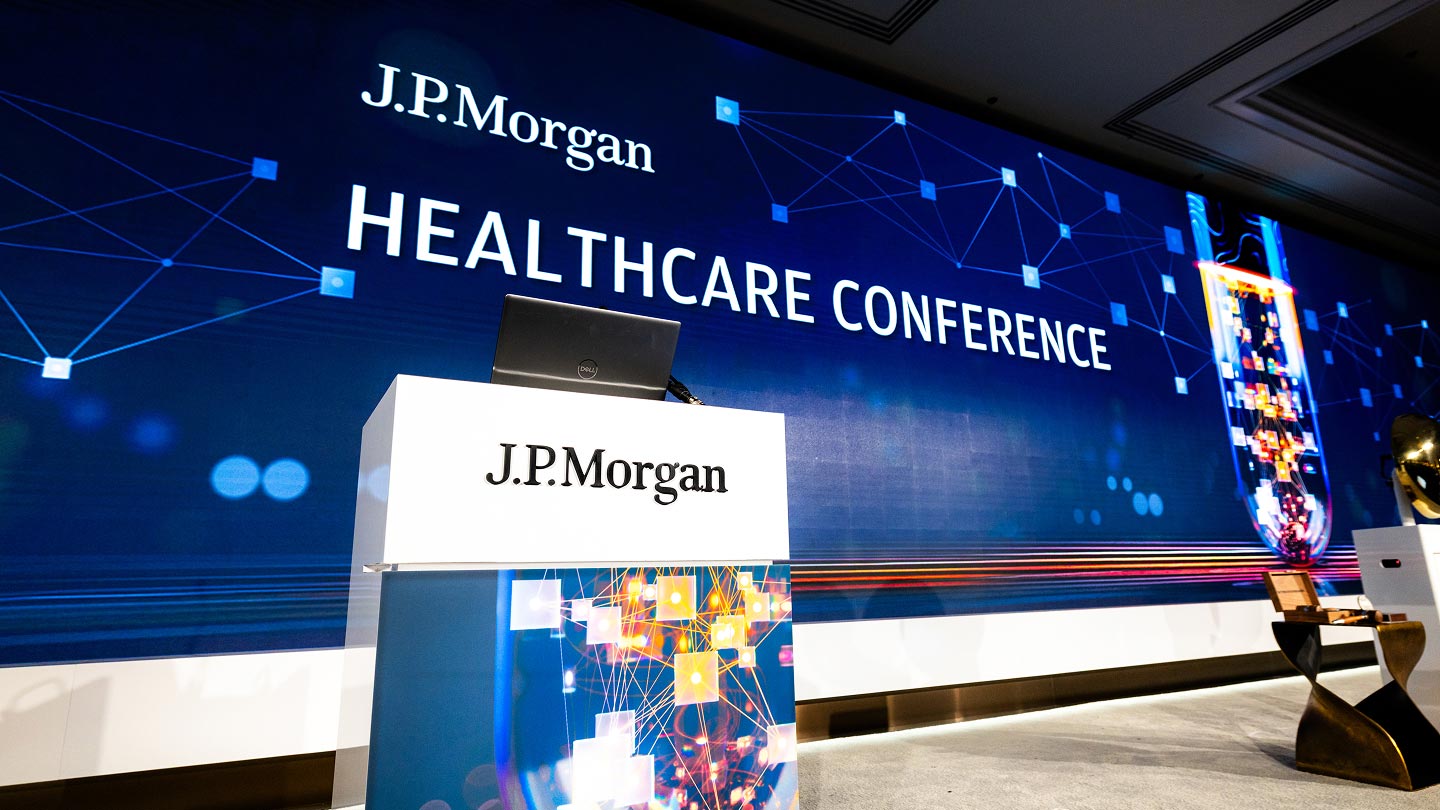
Five trends shaping healthcare in 2026
February 05, 2026
What healthcare’s largest global conference tells us about the road ahead.
-

0:30 - Banking
Midi: Proving women’s health is big business
January 28, 2026
See how Midi raised Series D funding with access to investors and strategic support from J.P. Morgan Startup Banking.
-

18:17 - Banking
This material (including market commentary, market data, observations or the like) has been prepared by personnel in the Investment Banking Group of JPMorgan Chase & Co. and/or its affiliates and subsidiaries worldwide (“J.P. Morgan”). It has not been reviewed, endorsed or otherwise approved by, and is not a work product of, any research department of J.P. Morgan.
Any views or opinions expressed herein are solely those of the individual authors and may differ from the views and opinions expressed by other departments or divisions of J.P. Morgan. This material is for the general information of our clients only and is a “solicitation” only as that term is used within CFTC Rule 1.71 and 23.605 promulgated under the U.S. Commodity Exchange Act.
RESTRICTED DISTRIBUTION: This material is distributed by the relevant J.P. Morgan entities that possess the necessary licenses to distribute the material in the respective countries. This material is proprietary and confidential to J.P. Morgan and is for your personal use only. Any distribution, copy, reprints and/or forward to others is strictly prohibited.
This material is intended merely to highlight market developments and is not intended to be comprehensive and does not constitute investment, legal or tax advice, nor does it constitute an offer or solicitation for the purchase or sale of any financial instrument or a recommendation for any investment product or strategy.
Information contained in this material has been obtained from sources believed to be reliable but no representation or warranty is made by J.P. Morgan as to the quality, completeness, accuracy, fitness for a particular purpose or noninfringement of such information. In no event shall J.P. Morgan be liable (whether in contract, tort, equity or otherwise) for any use by any party of, for any decision made or action taken by any party in reliance upon, or for any inaccuracies or errors in, or omissions from, the information contained herein and such information may not be relied upon by you in evaluating the merits of participating in any transaction. All information contained herein is as of the date referenced and is subject to change without notice. All market statistics are based on announced transactions. Numbers in various tables may not sum due to rounding.
J.P. Morgan may have positions (long or short), effect transactions, or make markets in securities or financial instruments mentioned herein (or options with respect thereto), or provide advice or loans to, or participate in the underwriting or restructuring of the obligations of, issuers mentioned herein. Any transactions presented herein are for illustration purposes only. J.P. Morgan does not make representations or warranties as to the legal, tax, credit, or accounting treatment of any such transactions, or any other effects similar transactions may have on you or your affiliates. You should consult with your own advisors as to such matters.
The use of any third-party trademarks or brand names is for informational purposes only and does not imply an endorsement by J.P. Morgan or that such trademark owner has authorized J.P. Morgan to promote its products or services.
J.P. Morgan is the marketing name for the investment banking activities of JPMorgan Chase Bank, N.A., J.P. Morgan Securities LLC (member, NYSE), J.P. Morgan Securities plc (authorized by the Prudential Regulation Authority and regulated by the Financial Conduct Authority and the Prudential Regulation Authority), J.P. Morgan SE (Authorised as a credit institution by the Federal Financial Supervisory Authority (Bundesanstalt für Finanzdienstleistungsaufsicht, BaFin) and jointly supervised by the BaFin, the German Central Bank (Deutsche Bundesbank) and the European Central Bank (ECB)), J.P. Morgan Securities Australia Limited (ABN 61 003 245 234/AFS Licence No: 238066 and regulated by Australian Securities and Investments Commission) and their investment banking affiliates. J.P. Morgan Securities plc is exempt from the licensing provisions of the Financial and Intermediary Services Act, 2002 (South Africa).
For Brazil: Ombudsman J.P. Morgan: 0800-7700847 / ouvidoria.jp.morgan@jpmorgan.com
For Australia: This material is issued and distributed by J.P. Morgan Securities Australia Limited (ABN 61 003 245 234/ AFS Licence No: 238066) (regulated by ASIC) for the benefit of “wholesale clients” only. This material does not take into account the specific investment objectives, financial situation or particular needs of the recipient. The recipient of this material must not distribute it to any third party or outside Australia without the prior written consent of J.P. Morgan Securities Australia Limited.
© 2026 JPMorgan Chase & Co. All rights reserved.