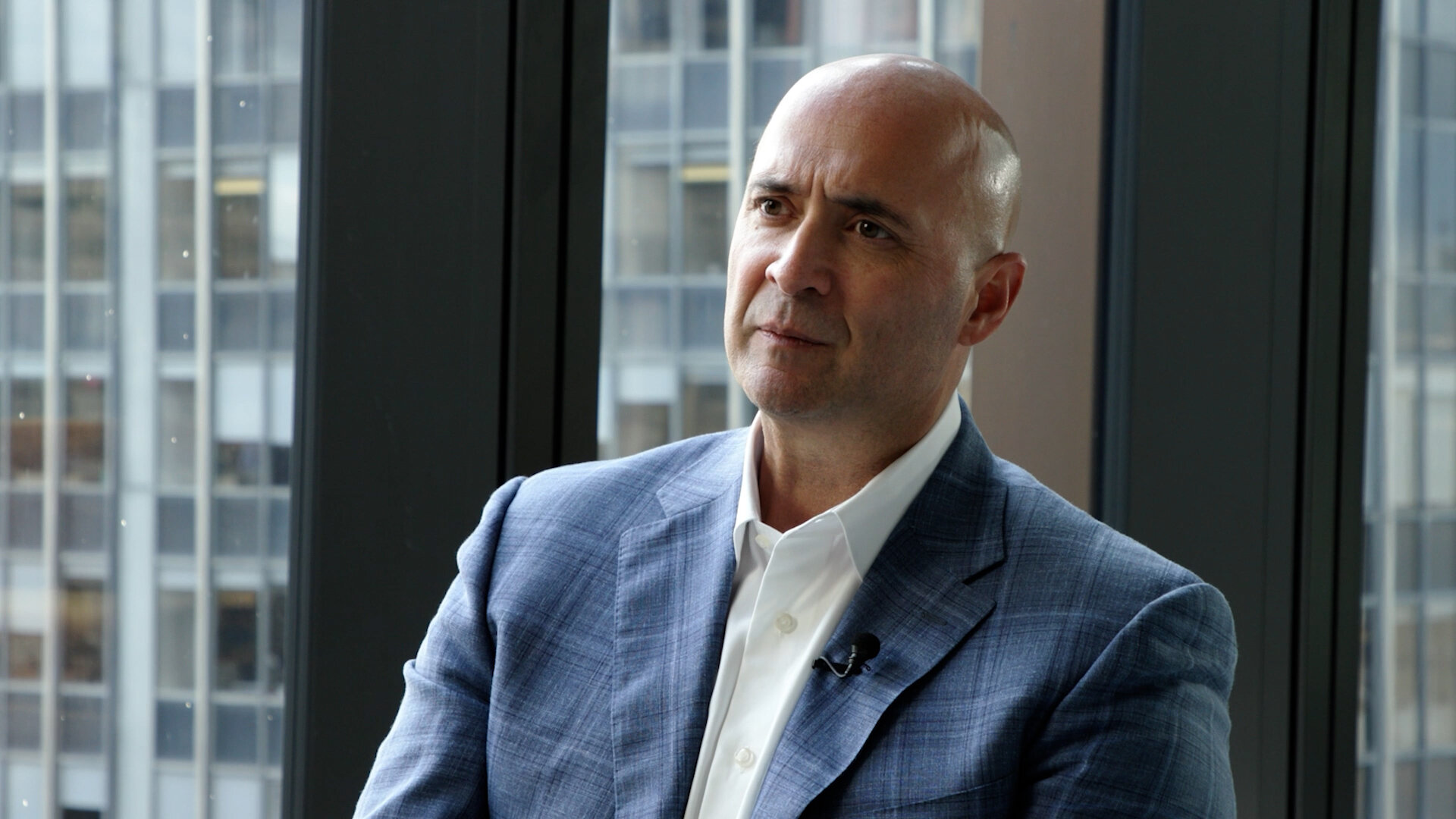
In 2019, Dylan Taylor was a first-time founder with a plan big enough to make most investors hesitate. And often, they did. But one yes can change the trajectory of a company built for frontier-scale ambition.
“We’re at choke points here on Earth for some of the infrastructure we need to build out. Space provides an opportunity to look beyond that,” Taylor said. “I really romanticize the notion of people living and working on the moon.”
In the beginning of his journey, that kind of ambition was risky. Taylor was going up against the industry's largest, most established players—companies with decades of experience, deep pockets and government-earned trust. His plan was to build something that could compete at scale while still moving with the speed and imagination of a small, founder-led team.
That idea morphed into a public company building some of the most consequential technology in space and defense today.
Voyager's path to growth
Problem: As a first-time founder, Dylan Taylor needed a bank that could support Voyager Technologies from an early-stage space business to a public offering with expanded capabilities in national security and defense.
Solution: J.P. Morgan provided early venture debt, a Series B equity raise, sector expertise from both its aerospace and defense and technology banking teams, and execution support through the IPO and a convertible bond offering.
Outcome: Voyager went public on the NYSE in June 2025, raising roughly $440 million in an offering oversubscribed more than 20 times. It has since grown into a company with more than 1,200 employees and a $2 billion market cap.
From blueprint to orbit
Voyager Technologies designs and builds the technology that must work flawlessly before any larger mission can happen, including the navigation systems, communications and propulsion that get a spacecraft where it needs to go and keep it there.
Its signature project is Starlab, a commercial space station designed to replace the International Space Station (ISS). Voyager's presence in orbit runs deep. The company has completed more than 1,400 missions on the ISS through its commercial airlock, giving it the in-space experience most competitors can’t match.
Initially, Voyager was purely a space company. But the technology Taylor's team was building and acquiring turned out to be just as valuable to national security as it was to space exploration, so the business followed the demand.
That shift also happened during a period of rapid growth that included acquisitions and organic expansion. Within a few years, Voyager had grown from a handful of employees to a company with more than 1,200 people and a $2 billion market cap.
Voyager went public on the New York Stock Exchange (NYSE) in June 2025. The IPO raised $440 million and was oversubscribed more than 20 times, with demand coming from aerospace, defense and technology investors.
Getting there took help. For Voyager, that help came from J.P. Morgan.
J.P. Morgan steps up with a dedicated team
Voyager's relationship with J.P. Morgan started when the company was looking for a lender.
“J.P. Morgan initially stepped up, frankly, when other banks weren't willing to,” Taylor said.
The first move came in 2021, when J.P. Morgan put a venture debt facility in place—early capital that gave Voyager room to build. As Voyager scaled, what mattered most was having a single point of contact.
“Sometimes you don't know what you don't know. And having a key person within the bank who can help you navigate that is super important.”
Dylan Taylor
Founder and CEO, Voyager Technologies
From venture debt to sector expertise
In 2022, the relationship expanded. J.P. Morgan led a Series B equity raise for Voyager, moving from a lender to a broader financial relationship.
As Voyager’s national security and defense business grew, J.P. Morgan brought in sector specialists to match. Taylor worked with both the aerospace and defense banking team and the technology banking team, each of which brought different skill sets and viewpoints.
“They have their views on those particular industry sectors, so they’re able to better shape our narrative around our capabilities in those areas,” Taylor said.
The work paid off. When Voyager went public, eager demand came from both sides—aerospace and defense investors and technology investors alike—and built on years of groundwork and institutional expertise from J.P. Morgan.
“That dual expertise was really meaningful in terms of the investors you attract. A lot of that had to do with the demand that we built both on the aerospace and defense side, but also on the technology investor side,” Taylor said.
Beyond IPO: The next destination
By the time Voyager was ready to go public, it had momentum—and years of trust and respect on its side.
“J.P. Morgan was tremendous in terms of non-deal roadshows, test the waters meetings and the actual roadshow itself. So that was all super successful,” Taylor said.
Not long after the IPO, Voyager returned to the market with a convertible bond offering, also led by J.P. Morgan.
“They did a tremendous job again, helping us get it done fast, build strong investor demand and land favorable terms,” Taylor said.
Voyager's ambitions extend well beyond where it operates today.
“One of our key strategies, we call the three L's. The first L is low-Earth orbit, that's where the International Space Station is. The second is lunar. But the third is quite interesting: Lagrange. These are stable orbits well beyond the moon, about a million miles from Earth. Once you've cracked deep space, then you can talk about doing things like Mars and Titan and Saturn,” Taylor said.
Build your future with J.P. Morgan
Whether you're scaling a growth-stage company to the moon and a $440M IPO or preparing for your next capital markets milestone, we can help you get there. Connect with J.P. Morgan Innovation Economy Banking today and explore our Innovation Economy content hub for more insights.
JPMorgan Chase Bank, N.A. Member FDIC. Visit jpmorgan.com/commercial-banking/legal-disclaimer for disclosures and disclaimers related to this content.