Both volatile geopolitics and economic disruption are inflationary forces, and central banks remain cautious about lowering interest rates as a result. “Governments are waking up to the fact that this isn’t going away,” adds Marks. “And if anything, it is getting worse.”

Key takeaways
- Geopolitics is increasingly influencing commodity pricing, volatility, and investor behavior.
- Strategic stockpiling and supply chain security are becoming governmental priorities.
- Investors are looking beyond fundamentals as tariffs, conflict, and policy disruption reshape markets.
The global race to secure and stockpile commodities, such as rare earth minerals and precious metals for technology use, is creating a bullish market – alongside potential problems for those countries with the highest amounts of natural commodity reserves.
Findings from the latest J.P. Morgan Markets’ e-Trading survey data show that emerging and ongoing geopolitical tensions and risks are expected to have the biggest impact on markets in 2026, according to 41% of institutional traders and investors surveyed.
Meanwhile, data from 10 years of the e-Trading survey makes it clear that institutional traders’ concerns have grown significantly in recent years. Back in 2017, market volatility was thought to be a risk by just 17% of traders, while global political uncertainty and global economic uncertainty were each thought to be major risks by just 15% of traders. By 2021, just 8% of traders felt that global trade tensions would have the biggest impact on markets the following year.
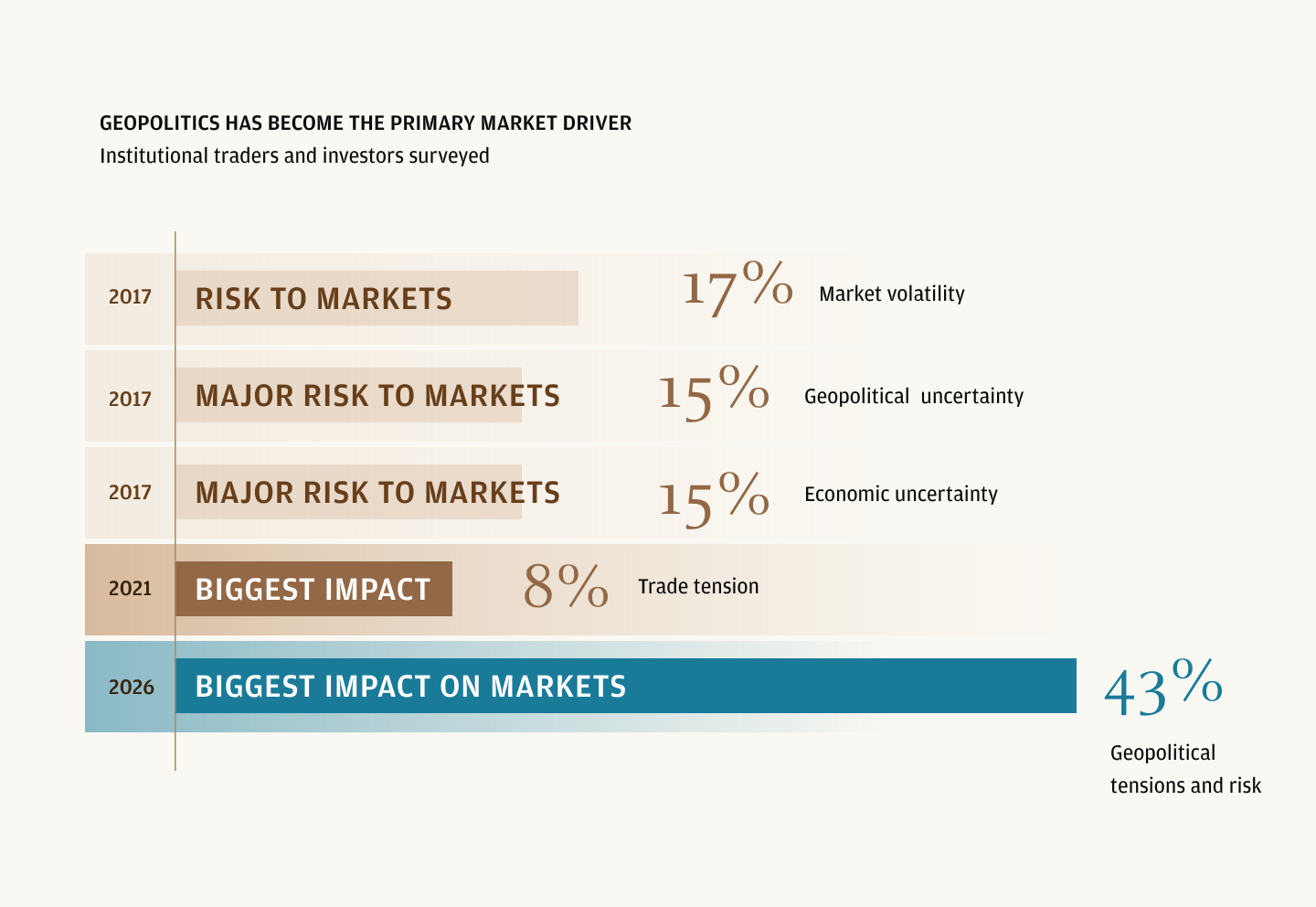
Infographic titled “Geopolitics Has Become the Primary Market Driver,” showing survey results from institutional traders and investors. Historical results indicate that in 2017, market volatility was cited by 17% as the top risk to markets, while geopolitical uncertainty and economic uncertainty were each cited by 15% as major risks. In 2021, trade tension was identified by 8% as having the biggest impact on markets. By 2026, geopolitical tensions and risk became the dominant market concern, cited by 43% of respondents as having the biggest impact on markets. A horizontal bar chart highlights the sharp increase in concern about geopolitical risk over time.
The combination of economic weight and foreign policy is a heady mix and, when executed by major powers, has far reaching consequences. A new dynamic, driven by an ‘America First’ shift in foreign policy since the inauguration of President Donald Trump for his second term in January 2025, has caused ripples – and in some cases threatened a tsunami – in the commodities markets.
Industries such as energy and technology have been identified by the administration as being just as important to U.S. national security as defense. This policy pivot has resulted in a reprioritization of resource gathering to secure U.S. supply chains.
Carolyn Kissane, clinical associate professor and academic director of global affairs at New York University, says:
“We have seen a very resource-centric state craft coming out of the U.S. specifically related to critical minerals and rare earths.”
This includes policies such as the new critical minerals initiative FORGE (Forum on Resource Geostrategic Engagement), which are designed to turn co-ordination on prices, trade and investment into competitive advantage. Project Vault, which was announced by the U.S. administration in February 2026, is designed to challenge China’s market power, and will co-ordinate the stockpiling of key resources. We have also seen an ambition for the U.S. to take control of mineral-rich Greenland, and the actions taken against the Venezuelan government to secure access to its oil reserves.
“Under the Biden administration there was a growing realization that the United States was at risk due to a dependency on China,” says Kissane. “But this [current administration] is much more state interventionist than we have seen in the past across different commodities.”
What’s the rush?
There’s nothing new about forging links with nations with precious natural resources.. But in recent decades, China has been willing to invest in countries with higher government risk, including some emerging market economies.
While China secured rare resources, the U.S. – along with the rest of the global west – was left behind and is now playing catchup, says Greg Shearer, Head of Base and Precious Metals Research at J.P. Morgan.
He adds: “The Chinese have essentially weaponized some of these supply chains such as gallium, germanium or other rare earth minerals and it has been a shock to the system.”
Protection against such ‘weaponization’ of supply chains was the reason for the U.S. launching Project Vault. Also, the overt desire of the U.S. administration to secure mineral rights in Greenland, and its moves to secure oil supplies from Venezuela, for example, demonstrate how far it is prepared to go to achieve its objective.
One channel being used to secure the supply of critical minerals is the U.S. Export-Import Bank. This has resulted in unprecedented U.S. investment in the ‘copper belt’ in the Democratic Republic of Congo, and other regions that have valuable resources, says Shearer.
“This has awakened a push that is moving very quickly and is quite exciting for the investment landscape,” he adds.
Copper and steel – the mainstays of transport, infrastructure and defense industries – have been joined by technology, as chips lie at the heart of every product. AI, the next great technological frontier, also relies on chips and energy. This means technology has been elevated into the select group of industries that require government support and protection.
Degrees of separation
However, the imposition of tariffs has been the U.S. administration’s primary policy tool over the past year, which has brought its own challenges.
The J.P. Morgan Markets e-Trading survey shows that for 13% of respondents, interest rate policies are expected to have the biggest impact on markets in 2026. And tariffs are, by their nature, inflationary instruments. One of the previous times inflation was such a major issue for traders was back in 2021, when there was a surge in prices after the pandemic, which was also exaggerated by the low base they were compared to in 2020, which prompted 48% of traders to cite it as a main concern.
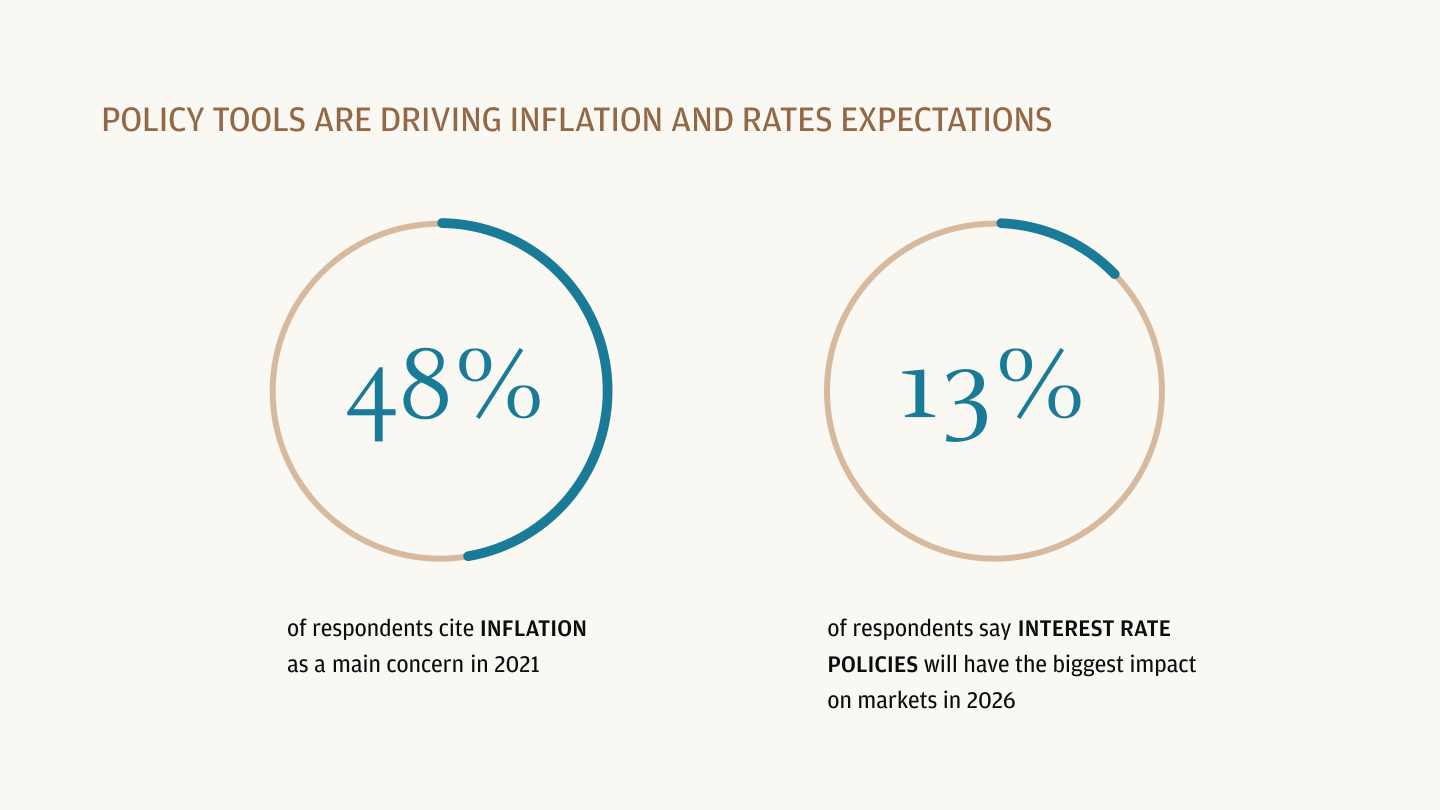
Infographic titled “Policy Tools Are Driving Inflation and Rates Expectations.” Two circular data visuals highlight survey responses. The first shows that 48% of respondents cited inflation as a main concern in 2021. The second shows that 13% of respondents say interest rate policies will have the biggest impact on markets in 2026. The graphic emphasizes a shift in market focus from inflation concerns toward interest rate policy expectations.
Even though the U.S. Supreme Court ruled in February 2026 that the imposition of tariffs by a president, as opposed to Congress, is unlawful, fears of further tariffs and the very real dislocation of assets caused by their imposition creates uncertainty, which leads to further volatility. Then came the U.S. and Israeli attacks on Iran, which took things to a new level.
“Until the actions against Iran, “there was not a lot of significant volatility risk in the market.” says NYU’s Kissane. However, it has increased significantly since.
Dan Marks, research fellow for energy security at RUSI.org, says the policies imposed by the U.S. administration have made conditions more difficult for some industries, particularly for the oil and gas industry.
“The biggest negative is the impact on the global economy, as tariffs have been very disruptive. The U.S. was the big growth engine, as China was going slow, as was Europe. In 2024, the U.S. was not only the largest, but the fastest growing economy in the OECD. Growth means higher oil demand and gas as well.”
Volatility is not only impacting decision making for investors, but is, to some extent, undermining the understanding they have of fundamental fair value, says Mischa-Von-Derek Aikman, Head of Commodities Institutional Sales for the Americas at J.P. Morgan.
Aikman says it is increasingly difficult to assess the true fundamentals of commodities due to policy-induced dislocations. When inventory is hit so heavily, it makes it increasingly difficult to ‘look through’ the noise to determine “true fundamentals of what really should dictate the fair value of a commodity.”

That said, fundamentals still matter, says Aikman, and people are holding on to the belief that they will ultimately hold true.
“Oil is a great example of a market that is so well telegraphed to be incredibly oversupplied and structurally bearish, and that has been the consensus for almost two years. Yet the market isn't trading as such, because of the geopolitical risk that people are doing their best to assess.”
For instance, shorting oil may in 2025 have been the ‘sensible’ trade, but it would have ultimately been the wrong call.
Commodities: The battleground for future flashpoints?
Not all disruption is about what you do, sometimes it is about where you do it. The assertion that “whoever rules the waves rules the world” may be a cliché, but like all clichés, it holds more than a grain of truth.
The current U.S. administration’s ambition to obtain rights to Greenland was not only about local minerals, but also overseeing the Bering Strait, which is becoming more easily traversed as the polar ice caps melt.
Commodities rely on global trade, as their location is dictated by the Earth’s geology. Suez and Panama present a great opportunity as superhighways, but they also have an Achilles heel. These choke points may be controlled by those with naval superiority, but they may just as easily be disrupted. This has been seen during the U.S. action against Iran and the blockading of the Strait of Hormuz.
“The worst-case scenario actually happened, where the most important economic waterway on Earth is closed,” says Dan Marks, Research Fellow for Energy Security at RUSI.org.
Greg Shearer, Head of Base and Precious Metals Research at J.P. Morgan, believes there will be an increased focus on these important channels.
“Where I see the biggest potential intersection between geopolitics and commodities, with the result being more military activity, is in these choke points,” says Shearer.
“The world may be moving away from American hegemony into a more multipolar environment that still requires naval dominance over these choke points.”
Not sharing but stockpiling
When something becomes scarce – or may at a moment’s notice – it’s human nature to start stockpiling it. However, stockpiling is not the reserve of private business, as it has been adopted as an official part of U.S. government policy.
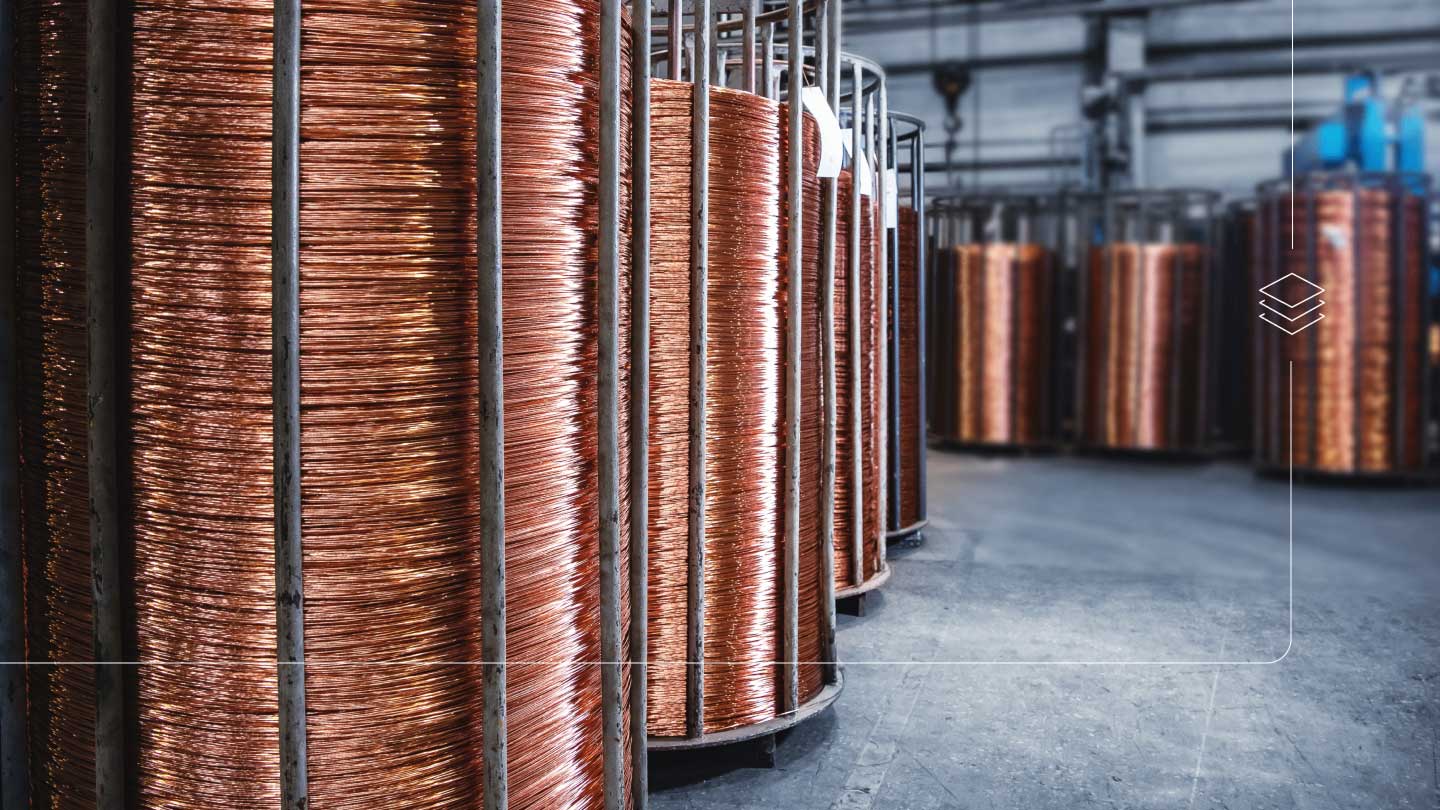
Tariff dislocations have already created an unintentional stockpile of more than 1 million metric tonnes of refined copper in the U.S. The European Union is also considering a policy to stockpile critical minerals.
Shearer says that “inflationary pressures from metals” will be a “headache for policymakers,” because unlike during the Cold War, the U.S. – and other western economies – do not have significant strategic reserves of these different minerals.
However, he points out, “if everyone tries to stockpile at the same time, that provides a massively bullish push to prices.”
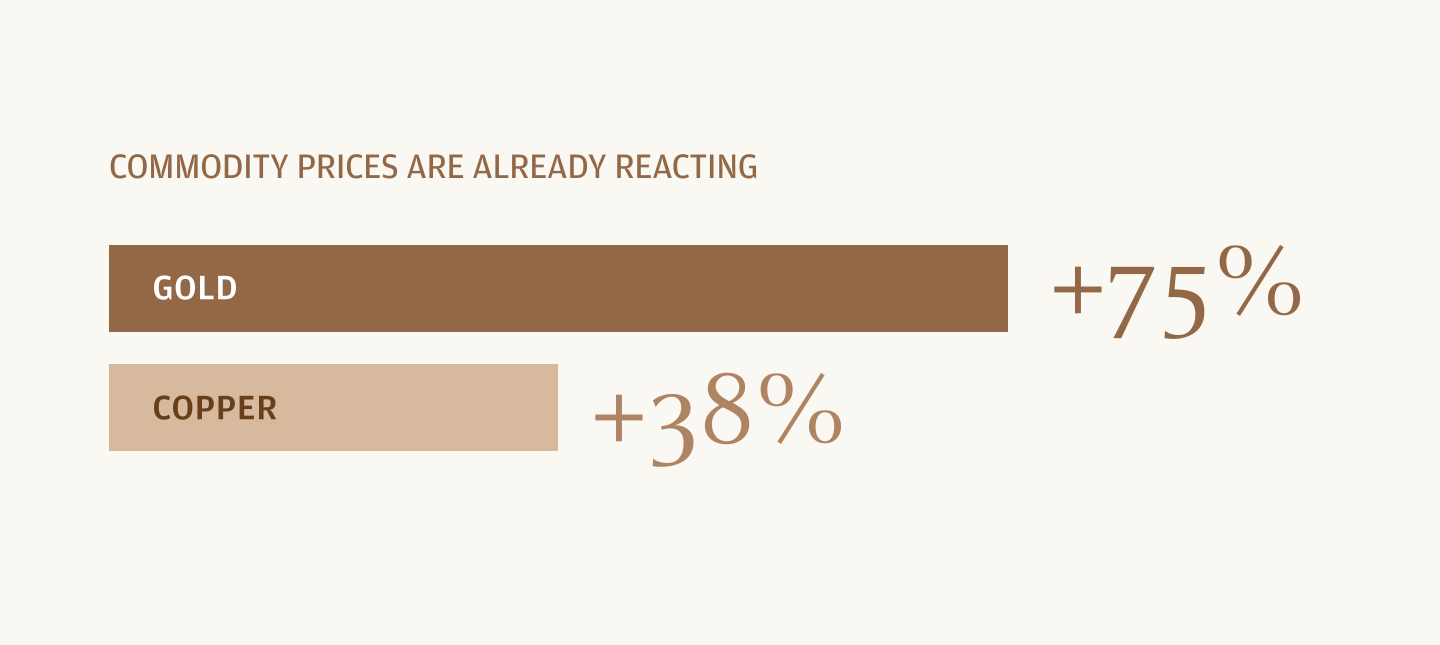
Infographic titled “Commodity Prices Are Already Reacting.” A horizontal bar chart compares price increases for two commodities. Gold shows a 75% increase, represented by the longer bar, while copper shows a 38% increase, represented by a shorter bar. The graphic highlights that gold has experienced a substantially larger price increase than copper.
These inflationary pressures have been self-evident and, in the 12 months to the end of January 2026, the copper price rose by around 38%, while the gold price increased by almost 75%. Central banks have more than doubled purchases of gold – 860 tonnes in 2025 compared to between 400 and 500 before 2022 – in a trend of ‘reserve diversification’.
The French government even went so far as to ‘repatriate’ 129 tonnes of gold by selling its deposits with the Federal Reserve and purchasing gold in Europe. Thanks to the rising price of gold, the transaction resulted in a €12.8 billion ($15 billion) profit.
Commodity stockpiling globally will raise prices
There are a number of ways we can protect against disruption to the global economy from aggressive neighbors, global threats, and adversaries with a very long reach, says Dan Marks, research fellow for energy security at RUSI.org.
“Stockpiling is one way. Europe has some proposals and the UK is considering it, too. The U.S. and Japan are both looking to follow this route. But China has been doing it for years.”
China has policies on extraction, managing the amount it is taking out of the ground while maximizing imports in peacetime. That is what the U.S. is trying to catch up with.
“Rare earths are undoubtedly a national security threat for the U.S., I’m not sure that Europe could fight a war for a prolonged period without China being willing to supply materials.”

Adapting to the new world order
The rapidly changing landscape is forcing institutional investors and their advisers to adapt fast. Above all, they are broadening their scope. For example, energy specialists are being forced to become more expert in other commodity markets, such as gold.
Aikman says, “It is important for investors to pay more attention to trend and momentum, mean reversion, and technicals in markets where those probably carried less weight historically.”
Although fundamentals still work, the constant ebb and flow of new participants and marginal investors in particular markets is “creating two-way volatility on the back of sustained runs due to momentum chasing or trying to become a little bit more systematic.”
Amid the rise in dislocations that policies have caused, the details are becoming more critical in the markets for these physical assets, says Shearer.
“It’s getting very, very micro, and that is influencing a macro price performance – a unique situation that I haven’t experienced before. And it is very challenging.”
“That means a lot of work is required to understand this, and there is a vast amount of potentials that you need to chase down to understand exactly what your risk profile looks like when you’re buying an asset or call options.”
Kissane warns of possible cross contamination of risks, that there may be some “underappreciated risk that doesn’t necessarily get the attention that it deserves until you disentangle, deconstruct and disaggregate what you are facing.”
Ultimately, the world order has changed, says Kissane. Energy stocks may have a good year, and other critical materials may be viewed as safe havens. But there will be considerable volatility that investors must be prepared for.
“We are seeing some very significant structural change,” she says. “But that doesn’t alter the fact that commodities remain critical for the global economy.”
Do. More.
on J.P. Morgan Markets
Direct access to market leading liquidity harnessed through world-class research, tools, data and analytics.
Explore more themes
No results found
Adjust your filter selections to find what you’re looking for
FOR INSTITUTIONAL & PROFESSIONAL CLIENTS ONLY – NOT INTENDED FOR RETAIL CUSTOMER USE
This material has been prepared by J.P. Morgan Sales and Trading personnel and is not the product of J.P. Morgan’s Research Department. It is not a research report and is not intended as such. This material is provided for informational purposes only and is subject to change without notice. It is not intended as research, a recommendation, advice, offer or solicitation to buy or sell any financial product or service, or to be used in any way for evaluating the merits of participating in any transaction. Please consult your own advisors regarding legal, tax, accounting or any other aspects including suitability implications, for your particular circumstances or transactions. J.P. Morgan and its third-party suppliers disclaim any responsibility or liability whatsoever for the quality, fitness for a particular purpose, non-infringement, accuracy, currency or completeness of the information herein, and for any reliance on, or use of this material in any way. Any information or analysis in this material purporting to convey, summarize, or otherwise rely on data may be based on a sample or normalized set thereof. This material is provided on a confidential basis and may not be reproduced, redistributed or transmitted, in whole or in part, without the prior written consent of J.P. Morgan. Any unauthorized use is strictly prohibited. Product names, company names and logos mentioned herein are trademarks or registered trademarks of their respective owners. The products and/or services mentioned herein may not be suitable for your particular circumstances and may not be available in all jurisdictions or to all clients. Clients should contact their salespersons at, and execute transactions through, a J.P. Morgan entity appropriately licensed in the client’s home jurisdiction unless governing law permits otherwise. Past performance is not indicative of future results. All services are subject to applicable laws, regulations and service terms. This material is a “solicitation” of derivatives business only as that term is used within CFTC Rule 1.71 and 23.605. Where this material is an “investment recommendation” as that term is defined in MAR visit: www.jpmm.com/#mardisclosures. This material is subject to terms at: www.jpmorgan.com/salesandtradingdisclaimer.
© 2026 JPMorgan Chase & Co. All rights reserved.
J.P. Morgan is a marketing name for investment banking businesses of JPMorgan Chase & Co. and its subsidiaries and affiliates worldwide. Bank products and services, including certain lending, derivative and other commercial banking activities, are offered by JPMorgan Chase Bank N.A. (JPMCB), including through its authorized branches and other global affiliates registered with local authorities as appropriate. Securities products and services, including execution services, are offered in the United States and in other jurisdictions worldwide by J.P. Morgan Securities LLC (JPMS LLC), in EMEA by J.P. Morgan Securities plc (JPMS plc) and J.P. Morgan SE (JPM SE) and in other regions by other appropriately licensed global affiliates. JPMCB, JPMS LLC, JPMS plc and JPM SE are principal subsidiaries of JPMorgan Chase & Co. For information on which legal entities offer investment banking and securities products and services in each jurisdiction, please consult: https://www.jpmorgan.com/disclosures/investment-bank-legal-entity-disclosures#securities-transactions
For additional regulatory disclosures, please consult: www.jpmorgan.com/disclosures.