For Companies and Institutions
-
Commercial Banking
We provide tailored credit, financing, treasury and payment solutions for businesses of all sizes and commercial real estate. Backed by the strength and stability of J.P. Morgan, our dedicated experts deliver industry-specific guidance and services, empowering you to manage cash flow, seize growth opportunities and achieve your strategic goals. -
Global Corporate Banking
We help clients achieve their long-term strategic goals through financing, liquidity, payments, risk management and investment banking solutions. -
Investment Banking
Providing investment banking solutions, including M&A, capital raising and risk management, for a broad range of corporations, institutions and governments. -
Payments
Your partner for commerce, receivables, cross-currency, working capital, blockchain, liquidity and more.
Key Links
For Institutional Investors
-
Asset Management
Putting our long-tenured investment teams on the line to earn the trust of institutional investors.
-
Markets
Direct access to market leading liquidity harnessed through world-class research, tools, data, and analytics.
-
Securities Services
Helping institutional investors, traditional and alternative asset and fund managers, broker dealers and equity issuers meet the demands of a rapidly evolving market.
-
Global Research
Leveraging cutting-edge technology and innovative tools to bring clients industry-leading analysis and investment advice.
-
Prime Services
Helping hedge funds, asset managers and institutional investors meet the demands of a rapidly evolving market.
-
Global Liquidity Solutions
Global short-term fixed income strategies designed to help clients manage liquidity through the cycle.
Key Links
For Individuals
-
Wealth Management
With J.P. Morgan Wealth Management, you can invest on your own or work with an advisor to design a personalized investment strategy. We have opportunities for every investor.
-
Private Bank
A uniquely elevated private banking experience shaped around you.
-
Personal Investing (UK only)
Invest with J.P. Morgan Personal Investing, a platform for UK-based clients with the human expertise, intuitive app and tools to help you work towards your long-term goals.
For Employers
-
Workplace Solutions
Enhance your equity compensation offering with solutions designed to empower your employees and bring your reward strategy to life.
Key Links
Who We Serve
Key Links
All Insights
Explore a variety of insights.
Key Links
Insights by Topic
Explore a variety of insights organized by different topics.
Key Links
Insights by Type
Explore a variety of insights organized by different types of content and media.
Key Links
About Us
We aim to be the most respected financial services firm in the world, serving corporations and individuals in more than 100 countries.
Key Links
From: Making Sense
Making Sense brings you insights across our Investment Banking, Markets and Research businesses. In each episode, J.P. Morgan leaders discuss the latest market trends and key developments that impact our complex global economy. Learn more about the series, by accessing the episodes below.
Subscribe
.svg)



CPI, inflation & IMAX: Why “fun” still feels expensive
[Music]
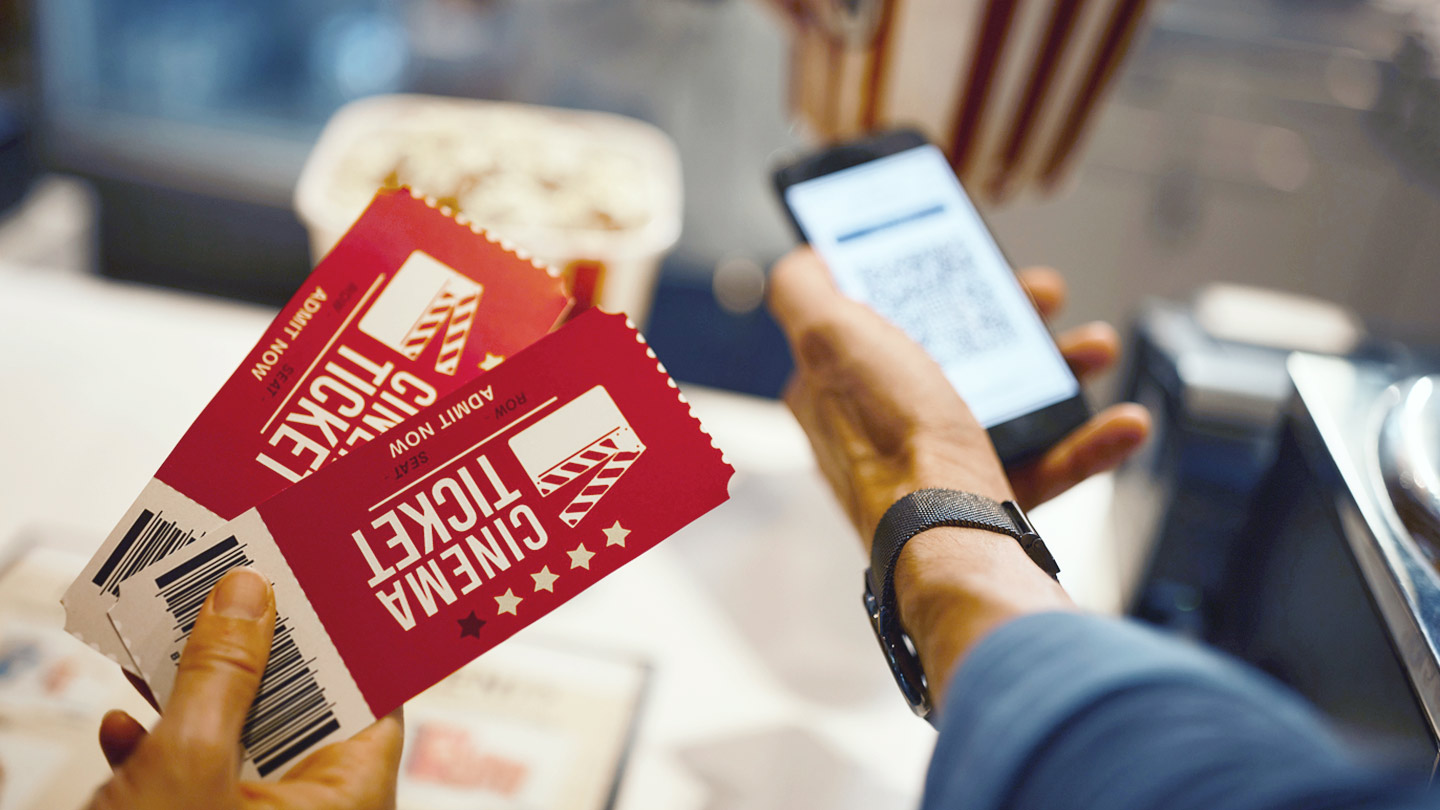
Harry Downie: Welcome to JP Morgan's Making Sense. I'm Harry Downie, US rate strategist. The latest CPI report is out today, and it's given us a fresh read on where inflation stands in the US, but we know for a lot of consumers, it can still feel expensive to do the things they enjoy. So in today's episode, we're digging into the idea of funflation or rising prices in leisure and entertainment, and what that says about the strength of the consumer, pricing power, and the broader inflation story. And if you felt like a night out is getting pricier, I certainly have. I went to see The Odyssey just a couple of weeks ago, cost me $66 for two tickets, which seems extortionate, but we luckily have two guests who can break this down into the real drivers behind it. First, Mike Hanson, senior economist at JP Morgan Global Research to walk us through the key CPI takeaways from today and what the data suggests about the path for inflation from here on out. And then we turn to David Karnovsky, head of the US Media Entertainment and Advertising Team at JP Morgan Global Research, to discuss what we're seeing in premium entertainment. And we'll use IMAX and the current blockbuster moment as an example of consumers' willingness to pay for standout experiences. Mike, David, thanks so much for being here. Mike, let's start with you. CPI today, what were your main takeaways and what do you think they tell us about the trend in inflation right now?
Mike Hanson: Yeah, thanks a lot for having me here. Good to speak with you all. So this morning's CPI was pretty much in-line with consensus expectations amongst economists and what market participants were looking for. You averaged prices in the CPI index about a 10th of a percentage point higher in July than in June. It's worth noting they did actually decline in June as energy prices had come down. But because of that jump in energy prices over the last couple of months, you've been running a fair bit higher, probably on the, the order of five to nine tenths per month. If you look over the last 12 months, which is how people often talk about inflation, consumer prices as measured by the CPI, the Consumer Price Index, have risen 3.4% annually. Now that's slowed down from where we were a little bit earlier this year. In May, we peaked at 4.2%. And of course, we got as high as 9% back in 2022, right, with the aftermath of the pandemic. But relative to what inflation has run, you know, say pre-pandemic, when it was more around 2%, we're still quite elevated. We think inflation is still gonna remain above 3% into year-end, quite honestly. And it reflects, I think, a combination of factors, including, of course, demand still seems to be holding up. People apparently are willing to pay $66 to go to see a movie. But also some other factors that we'll get into in a little more detail as we go forward. If I just think very quickly about the details of the report, you did have a continued decline in energy prices. They're down about one and a half percent between June and July. But over the last 12 months, they are up nearly 15%. So I think people are still feeling that. That obviously has an impact on affordability and perceptions about what's happening with prices. Food was up slightly June over July, and they're running at about 3% over this time last year. Outside of food and energy, a couple sectors that were notable, hotel and motel prices actually declined more than 3% on the month. That was the biggest decline over a year. Airfares, though, were up about 2% over the month and are up more than 25% over the last year. And then prescription drug prices, interesting, fell eight tenths on the month, and they're actually down about 3% over the last 12 months.
Harry Downie: Thanks, Mike. It's obvious inflation's cooling. We're not at the 9% rate, but why and how can you explain why it still feels expensive for people when they talk and look at prices versus inflation?
Mike Hanson: Yeah. I mean, without getting into calculus, it's really the difference between inflation measures, the change in prices. And so as long as inflation is positive, prices are going up, and that's what they did this last month. So the price level has jumped significantly since the pandemic. The, uh, overall CPI since the pandemic began, right, since early 2020, is up about 28%. So that's obviously a pretty significant rise. And people can still remember five, six years ago what price levels were relative to what they are today. But I think it's important to recognize the price level reflects accumulated inflation. So past inflation still leaves prices high today. To get prices to actually go down, we would need deflation. And deflation typically is accompanied with economic outcomes we don't really like, like deep recessions or even depressions. Fundamentally, what is gonna have to happen to address affordability is real wages, that is wages after inflation, will need to increase to allow people to afford these higher prices. But the other thing I think it's worth pointing out is the CPI basket is nobody's consumption. Nobody listening to this podcast actually consumes the CPI, right? The CPI is an average across everybody in the economy. Your consumption basket, so to speak, is different than someone else's. Depending upon your own personal situation, you may, for example, be spending a lot of money on daycare or tuition or no money at all. You may be spending a lot of money on travel or on medical expenses or very little at all. Or you may be willing to spend a lot of money for experiences like travel or concerts, although some of us haven't seen The Odyssey yet, so some of us apparently are not.
Harry Downie: Thanks, Mike. I'm obviously one of the people who've seen The Odyssey and willing to pay for funflation. You are not. What, does it stand out in the data for funflation across the aggregate? Are we seeing it in the economy? Which parts of CPI are best capturing any rise in the cost of experiences?
Mike Hanson: Yeah, I mean, I think there are other experiences I'm willing to pay for, and perhaps I'll see The Odyssey at some point, but there's not really an IMAX theater close to me, so I'm not sure I wanna drive as well as incur the $66. But look, full disclosure, funflation, not a technical term, not a term economists often use. But recreation is obviously an important category that is within the CPI. And what's interesting is recreation is up less than the overall CPI since the pandemic. It's only up about 19%. Now, recreation has two important categories within it. It has stuff, what we call recreation commodities, right? Televisions, pet supplies, sporting goods, toys and games, you name it. And then services, which I think is what really the f- the focus is here, right? So going out to concerts and movies and the like. On the commodity side, prices are up since the beginning of the pandemic, about 9%. That's obviously a fair bit less than what the overall CPI is up. What's really interesting there is for the decade preceding the pandemic, prices of recreational commodities declined 2 to 3% year after year, right? Televisions got cheaper. Anything electronic got cheaper. And that really reflects the advances in technology, but also reflects the fact that a lot of that stuff came from abroad through cheaper imports. And we are now in a world we don't have cheaper imports. In fact, we have tariffs. And so that has put those prices up. On the services side, it's interesting that in July, the, despite these movies opening, recreation services are actually unchanged over June. And they're only up about 2.2% over the past year. But they are up about 26% since the pandemic, which is basically in-line with what we talked about for the overall increase in the CPI. So if I dig into the details, cable and satellite TV up about 24%. Internet services up 12%. Movies, concerts, theaters are up about 29%. Sporting events only up 6%. So obviously much cheaper to do that. And I have seen several baseball games recently for what that's worth. But to put it another way, really, funflation is just inflation, right? Prices of everything are up a lot over the last several years.
Harry Downie: Okay. So maybe not so much evidence that funflation is contributing to increased inflation overall, but some micro-examples of where funflation is going at a quicker pace than before. Moving a little bit broader and thinking about services in general, what are some of the main forces which could keep them stickier? And which ones are the ones which matter most right now?
Mike Hanson: Yeah. So I think an important thing to recognize if you're thinking about services, particularly vis-a-vis goods, goods prices tend to be more flexible. There's more competitions, perhaps from abroad. Services prices tend to be what economists do call technical term, stickier, which they adjust more sluggishly. And some of that is reflection of the fact that a major input into services prices is labor. And probably very few people listening to the podcast, certainly none of us in this room, adjust our labor prices on a weekly or monthly basis, right? And so that imparts some real stickiness to services prices. The labor market in the most recent report doesn't look quite as strong as it was, but the unemployment rate's still fairly low at 4.1%. So I don't think we're in a world where inflation or the prices for services are gonna come down significantly because of a soft labor market, right? In fact, that's typically not very common unless you're in a recession. But it's also the case, you talked about earlier, demand still remains very strong. Particularly, I think that's true as you think about households who might be in the upper portion of the income distribution. There's a lot of anecdotal evidence that younger households also are very much into experiences. And so I think that will continue to likely support the kinds of price increases that we've talked about and that you and Dave will talk about in a few minutes.
Harry Downie: Okay. Thanks, Mike. That's obviously the past on what's happened in prices. What about for upcoming CPI prints? What would you need to say about funflation or inflation in general in order to imply a decision about the Fed's reaction function?
Mike Hanson: Yeah, so the Fed's reaction function is an interesting question these days because a recently appointed Fed share, Kevin Warsh, decided he doesn't wanna talk about it. So we know a lot less in some sense than we might have in the past. And I do think that fundamentally, what the Fed is monitoring is obviously not funflation, right? In fact, there's a classic quip from a prior Fed chair many years ago who said that the job of the Fed is to take away the punchbowl once the party gets going. So the Fed is very much not a funflation-promoting institution. But I think realistically, they're not focused on any particular sector, right? The Fed's job is to keep prices low generally. They don't have the tools, interest rates, and bond holdings are very blunt instruments. You can't really differentially change the price of movie tickets versus the price of healthcare or automobiles or anything else. And so the Fed, I think, is very much focused on trying to bring inflation down. It's obviously been elevated really since the pandemic. And I think that if the inflation reports come in a bit firmer than what we saw today, the Fed will likely raise rates sooner.
Harry Downie: Amazing. Thank you, Mike. That's really helpful. So let's bring this CPI data into the real world. An example people, a lot of people are experiencing right now, premium movie-going. David, you cover the media and entertainment space, so you're the perfect person for us to talk to. Quick icebreaker before we get to the pricing and demand side. Have you seen The Odyssey like I have? And if you did see it, did you see it in the IMAX 70-millimeter category?
David Karnovsky: So I did see the, uh, Odyssey, and I did see it on the Upper West Side of Manhattan in the IMAX 70-millimeter film format. And on a personal level, I endorsed the film. I thought it was excellent.
Harry Downie: Wow. Pretty tough ticket to get. I'm impressed. Does this feel like the kind of event that people are gonna pay up for?
David Karnovsky: Well, look, as it pertains to the IMAX film format in particular, I think there's a natural constraint in the sense that there's 41 of these locations on a global basis. It was mentioned earlier that, you know, they're not always conveniently located. So there's a, there is a natural constraint. I think if you look at the IMAX film demand though, and it's actually something that when we're looking at IMAX generally, sometimes if we wanna know how well the film will do, we'll look at, say, the Lincoln Center location. If there's very high demand for the film format, we think sometimes that's a proxy for how well the film is gonna do. But yeah, I mean, if you look at available movie times over the next several weekends, you'll see that's booked up. The film format has done extremely well so far, and at least for this particular film, uh, it's really resonating.
Harry Downie: Amazing. At a high level, what are you seeing in terms of consumers' willingness to pay for entertainment in general right now? What's holding up? Um, what's starting to show some strain?
David Karnovsky: Yeah. I mean, look, we cover stocks across a broad number of sub-sectors, in the live entertainment space, sports, concerts, movie exhibition. In general, we're seeing strong demand. Companies reported better-than-expected results in the second quarter. Outlooks for the year were strong. Look, this is 2026. I don't think anyone would put this up to post-pandemic demand like they did in '23 or even 2024. Consumers are choosing experiences over goods. I think there's data potentially that bears that out. There's various reasons to explain that. I think one that we sometimes default to is that consumers are watching a tremendous amount of live content on their phones, right? They're watching sports highlights. They're watching people at concerts. They're discovering more music. They're discovering more things to do outside the home. They're doing that digitally. But when they see their friends doing that and having a great time, that creates a sense of FOMO, and it makes them wanna go out and have some of those moments for themselves. And I should say, as far as a potential point of weakness, one of the only areas we're seeing it right now is not necessarily in the United States. So some companies have flagged, particularly in like the theme park space, softness as it relates to the APAC region. That's a region that has disproportionately seen higher oil prices relative to, say, the United States and the rise that we've seen here. But otherwise, the demand has been strong across entertainment types and, and markets.
Harry Downie: And how do you separate inflation in general? The aggregate prices of, say, cinemas going up versus premiumization, people specifically wanting to go to the 70-millimeter format, which is costing more? Are people choosing those more premium experiences or are we seeing prices rise?
David Karnovsky: Yeah. I mean, funflation's a term that you've seen used in the press. It's kind of a misnomer, right? I mean, yes, I think when it comes to live experiences, there is a favorable supply and demand dynamic and prices have gone higher. I think the cost of labor and materials to put on some of these events has gone up. And so the content owners have had to raise prices as a result. I think most of the pricing power that we've observed across the sector over the past few years though, has really come in the premium space, right? And somewhere along the way, I think venues, content owners, exhibitors kind of figured that there were cohorts of guests that wanted to spend more and were willing to spend more. And you couldn't just necessarily outright raise price on these cohorts, but it was a matter of kind of spinning up offerings in order to kind of meet that demand. I'll give you an example, right, I know we're gonna talk exhibition in a minute, but take music festivals, right? Maybe historically 100,000 people were coming to a festival and they were all just sitting on a field and enjoying the show. But maybe there were 25,000 people that, in addition to buying that ticket on a hot day, wanted to sit in an air-conditioned space. And maybe there was a subset that not only wanted an air-conditioned space, but they wanted a private bar and a private bathroom. And maybe there's a cohort within that that wants a bathroom and a bar, but they also want high-end food amenities, right, and closer access to maybe some of the front rows when the best artists are playing. And so you can segment this and segment this and segment this and find that there's cohorts that are willing to pay more and more. You do kind of hit a natural limit on doing this because it gets harder to scale up these offerings the more bespoke that they come. But there's examples of this across different live experiences, not just in movies, but sports teams have embraced this. And an example that we'll talk about in a second, I'm sure, is yes, exhibitors have seen greater traction when it comes to what we call premium large formats. And that can take several forms. Probably the best well-known is IMAX, but there's also ScreenX, there's D-BOX, and then some of the leading exhibitors also have their own premium formats.
Harry Downie: Amazing. So a lot of options on where people can go and how you can segment the consumers. Using premium movie-going as an example, can we break down the drivers of that higher in spend ticket pricing, scarcity, capacity, premium formats?
David Karnovsky: Yeah, sure. So movie theater owners are generally sensitive about raising prices as a rule, especially in the post-pandemic era when box office was slow to recover. And if you survey moviegoers, generally prices is one of the considerations that they're sensitive about. I think exhibitors broadly though have had a lot of success in pushing what they call premium large formats. And you've seen moviegoers kind of embrace formats like IMAX, but also D-BOX, ScreenX, and then a lot of the major exhibitors, the Cinemarks, AMCs and Regals of the world offer their own kind of proprietary premium formats. And look, in general, I think these are priced anywhere from, call it three to $8 more, depending on the format of the location. IMAX Film, you mentioned you paid $66. That is a little bit unique in terms of the level of pricing power. And we could talk about the secondary market where supposedly there were prices well in excess of that. Look, audiences are increasingly seeking out these formats when they go to theaters. If you look at IMAX, for instance, as a percentage of the domestic box office, it's somewhere in the range over 5% right now. Pre-pandemic, that was closer to 3%. And I think the indexing is certainly higher for the proprietary formats also. Separate to premium large format screens, we've seen theaters, and this is a kind of a decade-long trend, lean into premium amenities. So not just going to a theater and getting popcorn and a soda, but in a lot of these theaters, you can buy alcohol, you can buy high-end food offerings, and that can vary tremendously depending on the theater and the location. And then very recently, we've seen a real push on the merch side. Probably the best example I can give you recently was when The Devil Wears Prada 2 came out, a lot of theaters were selling pocketbook popcorn bags, which sold, I think, a lot better than some of these exhibitors expected it to. But all those things kind of roll into the premium experience.
Harry Downie: And it's obviously difficult to know ahead of time whether or not one of these premium events will become a true event, like The Odyssey. But if they do, how does that change the pricing and demand for the event? Does it look more like a one-off spike or is it something more durable?
David Karnovsky: There's not necessarily a pricing change that comes as a result of a movie doing well in a premium large format. The pricing is kind of the pricing, and if there's demand for it, you'll see it increase in the following year, for instance. There is such a thing as movie-going momentum though, which you could apply kind of broadly across movies, meaning if you go see a movie and you enjoy it and you see previews, it makes you wanna go see more movies. And yes, if you see a movie in an IMAX experience or a D-BOX experience or ScreenX experience and, you know, you have a good time, then most likely, you're going to seek out that format on a continued basis. In the case of IMAX Film, because I know we've been talking about that today, there's only so many films that get released in that format every single year. So The Odyssey, which came out in July, I think it's gonna probably run in the film format through September. And then you'll have another one coming online with Dune: Part Three later this year in December.
Harry Downie: Okay. So we have a lot of demand at the moment for these premium content and entertainment. But if things were cooling, what would cool this off first? Consumers getting priced out, increased supply competition for attention, or a pushback on pricing fees? What would be the early warning signs you'd look out for?
David Karnovsky: I think if you're a content owner, whether that's in sports or music or really any space, you have to kind of always have a degree of sensitivity about the fan. I think the good thing about premiumization is that it allows for a layer of growth for content owners, uh, on an overall basis, but they can keep sort of that get in price or the value price relatively stable, or at least maybe just benchmarked towards inflation. I think the other thing that content owners have to keep in mind is the longer term. Maybe you're a sports team, maybe you're an artist, and you wanna strike while the moment's hot, and you wanna monetize the fan or the guest at this time, but you also have to think about the long term. Maybe you're building a brand. If you're a sports team, you're thinking about the long-term value of the franchise. And you have to be sensitive to the idea of, are we pricing out certain consumers and is that going to become a problem for us not this year or next year, but somewhere down the line? And we need to make sure that we're expanding our reach and ensuring that the value coming from the guests over the long term stays intact.
Harry Downie: All right, David and Mike, I think that's a great place to wrap up. Thank you so much for both your time and sharing your insights.
Mike Hanson: Thanks for having us.
David Karnovsky: Thanks for having me.
Voiceover: Thanks for listening to JP Morgan's Making Sense. If you've enjoyed this conversation, share your feedback by leaving a comment or review wherever you listen to podcasts and be sure to follow our channel so you don't miss an episode. This communication is provided for information purposes only. Please visit www.jpmm.com/research/disclosures for important disclosures. Copyright 2026 JP Morgan Chase & Co. All rights reserved.
[End of episode]
Inflation is cooling — at least on paper — so why does a night out still feel shockingly expensive? In this episode of J.P. Morgan’s Making Sense, U.S. rates strategist Harry Downie is joined by senior economist Mike Hanson and David Karnovsky, head of the U.S. Media, Entertainment and Advertising research team, to unpack the latest CPI report through the lens of “funflation” — rising costs tied to leisure and entertainment. They discuss what the CPI print says about the broader inflation trend, why prices can remain high even as inflation slows and why services inflation is still sticky. The conversation then shifts to premium entertainment, using IMAX and the current blockbuster hit The Odyssey to explore what’s driving leisure pricing trends today.
This episode was recorded on August 12, 2026.
The podcast’s views do not necessarily reflect those of J.P. Morgan Chase & Co. or its affiliates (together “J.P. Morgan’) and are not from J.P. Morgan’s Research Department. They do not constitute recommendations or offers to buy or sell securities. Intended for institutional and professional investors, not retail use, it is for informational purposes only. Products and services mentioned may not suit all investors or be available in all jurisdictions. The information contained in this podcast shall not form the primary basis of any investment decision. It is the user’s responsibility to independently confirm the information and to obtain any other information deemed relevant to any investment decision. J.P. Morgan makes no representation or warranty (express or implied) regarding the fairness, accuracy, fitness for purpose, correctness or completeness of the statements, opinions, estimates, conclusions and other information contained in this podcast and J.P. Morgan accepts no responsibility whatsoever for any loss, direct or indirect, arising in connection therewith.
J.P. Morgan may make markets and trade in discussed securities and asset classes. Visit www.jpmorgan.com/disclosures/salesandtradingdisclaimer for more disclaimers and regulatory disclosures. External speakers’ opinions are personal and not J.P. Morgan’s views.
@2026 JPMorgan Chase & Company. All rights reserved.
You're now leaving J.P. Morgan
J.P. Morgan’s website and/or mobile terms, privacy and security policies don’t apply to the site or app you're about to visit. Please review its terms, privacy and security policies to see how they apply to you. J.P. Morgan isn’t responsible for (and doesn’t provide) any products, services or content at this third-party site or app, except for products and services that explicitly carry the J.P. Morgan name.