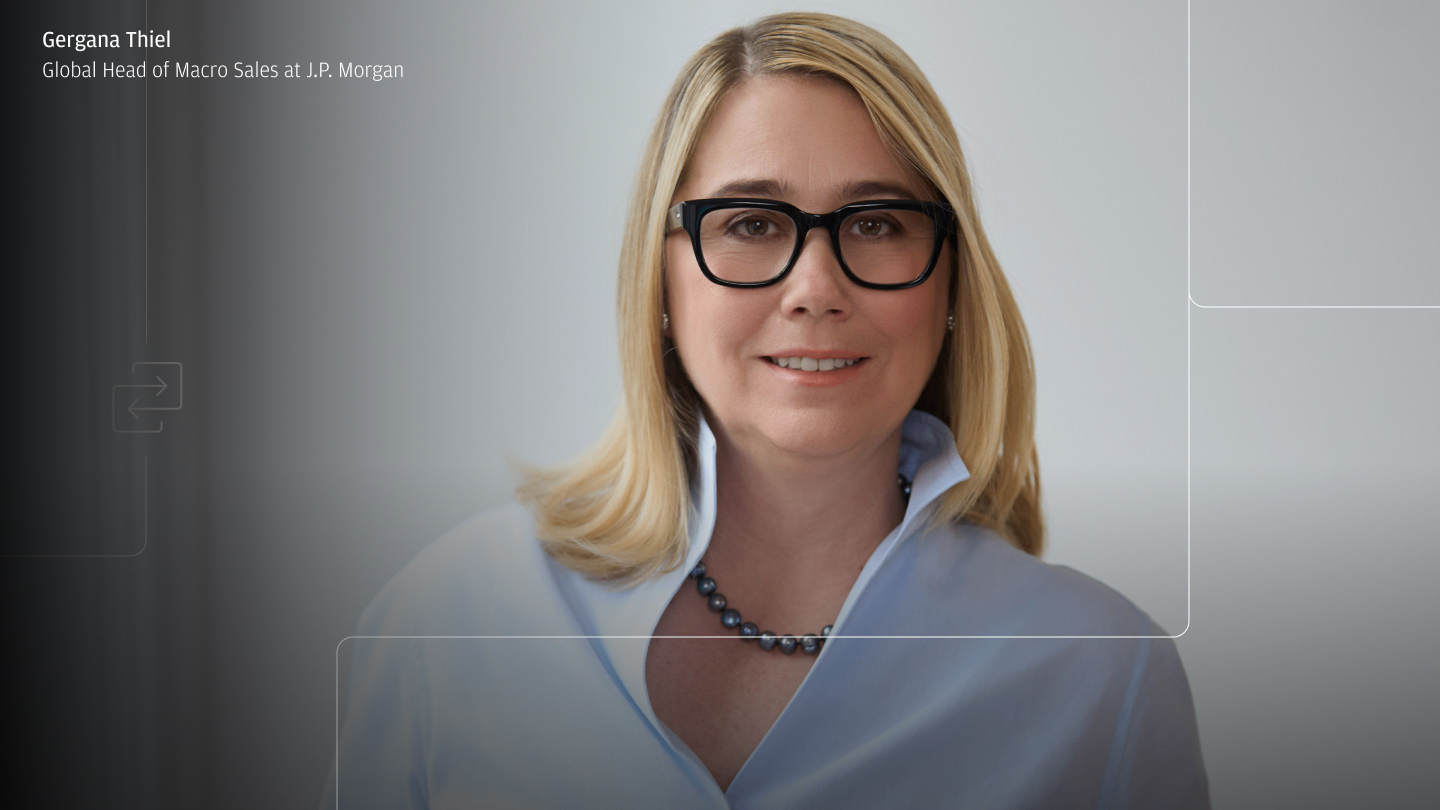
Gergana Thiel

Key takeaways

  • Volatility, now considered a defining feature of today’s markets, is forcing investors to rethink how they manage risk, build resilience, and target opportunities.
  • Geopolitical fragmentation, commodity disruption, and retail participation are making market moves faster, sharper, and harder to read.
  • Technology is helping traders process information and respond more efficiently to changing market conditions, while advances in execution tools, data, and analytics are reshaping how risk is monitored and managed.

The world is changing rapidly. As globalization is reversing, the ensuing economic friction manifests itself through, supply chain disruptions, economic nationalism, and resource protection.

Factors such as U.S. foreign and economic policy, conflicts in the U.S. Congress, EU elections, and broader macro geopolitics are contributing to the climate of uncertainty. And, amid all this, institutional traders are learning to manage the consequences.

Everything is (increasingly) connected

The inevitable outcome of the constant stream of economic and geopolitical upheavals is increased volatility across multiple asset classes, not least commodities. OPEC policy optionality, recurrent supply shocks, and the blocking of the Strait of Hormuz have disrupted oil since the start of the military action against Iran. Meanwhile, optionality, the impact of weather, and intermittency in renewables have affected natural gas.

When it comes to metals, gold has shown real-rate dynamics and persistent central bank demand. Energy transition capex requirements, extensive permit lead times, and a scarcity premium caused by geopolitics have influenced copper. Stockpiling policies in a number of countries, such as Project Vault in the U.S. are also having an impact on supply chains.

Commodity assets periodically dominate the macro volatility narrative—with oil and gas feeding into the Consumer Price Index (CPI), for instance—while other forces like AI-linked equity valuations or private credit defaults are acting as equally important drivers.

The rapid ‘retailization’ of capital markets is also playing an increasingly influential role. Market moves are frequently exacerbated and compounded by retail traders making pockets of market liquidity more tentative and challenging.

“Markets are no longer just reacting to payroll data,” 

says Gergana Thiel, Global Head of Macro Sales at J.P. Morgan. 

“Sensitivity has broadened to include jolts, weekly claims, and inflation prints like PCE (personal consumption expenditure) alongside CPI. Historically, such as in 2022, commodity-fueled inflation acts as a massive driver when it forces global central banks to synchronously alter their reaction functions, causing positive bond-equity correlations and the failure of risk parity.”

Foresight and decision making

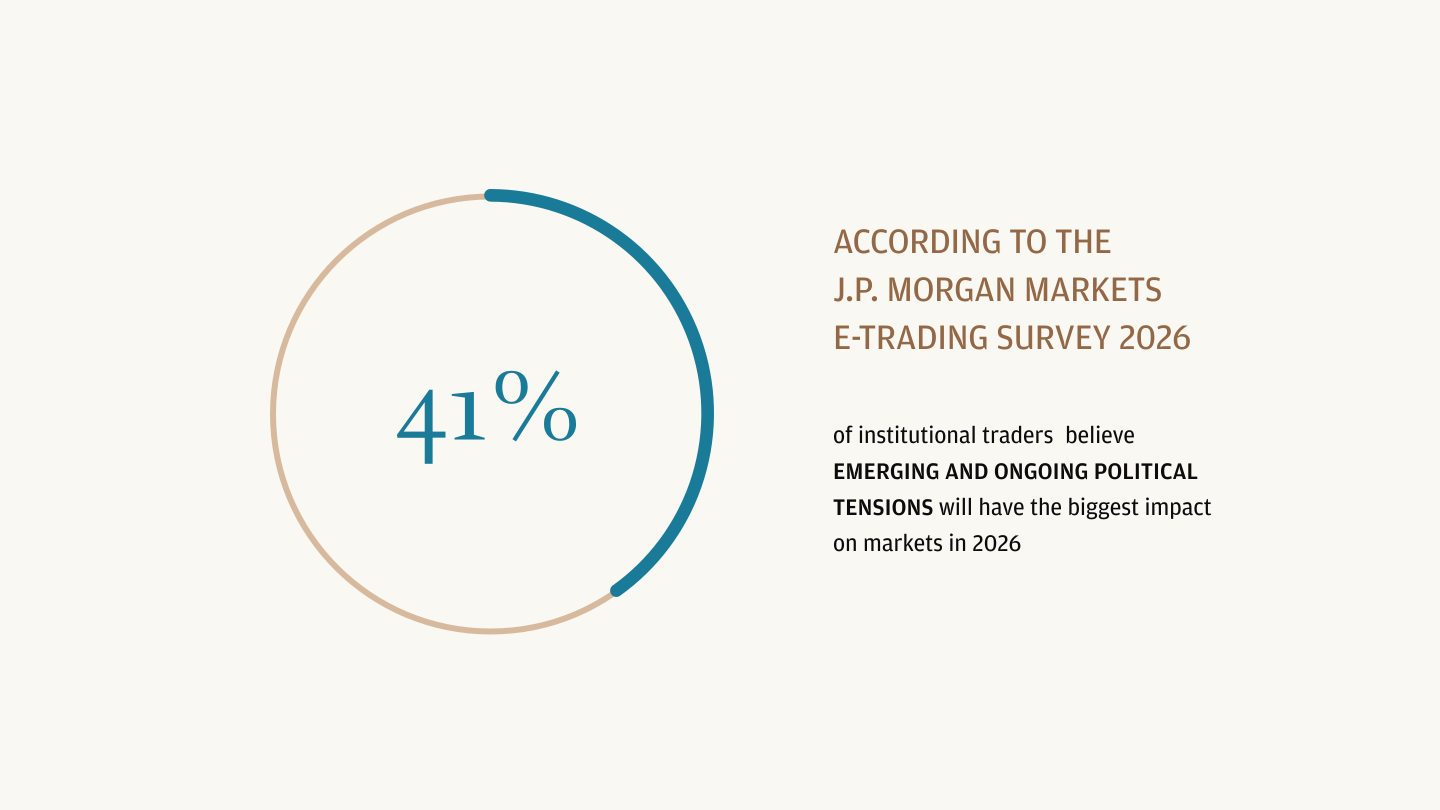
The J.P. Morgan Markets e-Trading Survey 2026 shows that 41% of institutional traders believe emerging and ongoing political tensions will have the biggest impact on markets in 2026.

The results reveal there is an increased focus on the theme of macro volatility. Rather than treating this as a baseline assumption for building a strategic portfolio, sentiment is shaping the landscape around hedging volatility as an elevated risk, says Thiel.

In fact, volatility has established itself as an asset class in its own right. But frequent tail risk events over the last decade have expanded the shock parameters used in risk management frameworks, resulting in lower overall deployment by institutional traders. This has caused the shrinkage of what Thiel considers ‘pure volatility’ assets.

e-trading survey 2026
boats on water

The reasons for this include large losses during the 2008 global financial crisis, resulting in much tighter risk management norms on the buyside, and more frequent tail events. We have seen this in the likes of the EU debt crisis, the oil crash, Brexit, the Trump election victory in 2016, and a regression in terms of pure volatility product innovation as a result of tighter risk management among dealers. Product innovation happens, but much more slowly than it did, and in a

“quasi-directional format intended more for a corporate audience than institutional investors,”

Thiel adds.

In commodities, future trader sentiment is heavily shaped by the anticipation that “fat tails” or extreme market anomalies will persist as globalization continues to reverse, says David Nahmanovici, Head of Global Commodities Sales at J.P. Morgan.

“This expectation of ongoing extreme moves has fundamentally altered the landscape by drawing a wave of new entrants into the commodities asset class over the last four to five years, viewing the inherent risks as a source of strong potential returns,” he adds.

Gold, an asset class previously used largely for tactical asset allocation purposes, is taking on a more permanent role and is “a hedge against de-dollarization, rather than a transitory tactical play.”

He adds that, in markets like natural gas, foresight around volatility has flattened traditional ‘seasonal-only' risk frameworks, 

“shifting trader strategy toward actively monetizing volatility rather than just buying insurance against it.”

collage of gold and factories

Managing the moments of madness

Volatility has, if anything, become more volatile in recent years. There is a high baseline of volatility, and the cycles of spike and crash are faster and more violent than some of the turbulent times of the 1970s.

Things move faster, but recover faster. The onset of global COVID-19 lockdowns in 2020 triggered panic selling across all asset classes and while the Dow fell almost 3,000 points (-12.9%) in its worst day of trading since 1987, just over a week later, it had recovered 2,112 points as money flooded back into equities on the promise of federal stimulus packages.

Similar events occurred as Russian tanks crossed the Ukrainian border in 2022, when the Japanese central bank made an unexpected hike in interest rates in 2023, and when the current U.S. administration announced sweeping global tariffs in April 2025.

This does not mean that volatility has become more predictable. Instead, markets now anticipate that ‘fat tails’ will persist in the near future—or that extreme market events are more common than predicted by standard statistical models—and need to be managed.

“This creates a number of challenges, but opportunities, too.” says David Nahmanovici, Head of Global Commodities Sales at J.P. Morgan.

This is illustrated by the number of entrants in the commodities asset class over the last four to five years, he says. 

“There is an expectation that the asset class, while inherently risky, will continue to experience extreme moves which, if positioned for adequately, could be a source of strong returns.”

Digitalization and product innovation supports investors’ management of these risks, adds Gergana Thiel, Global Head of Macro Sales at J.P. Morgan.

“Whole-of-research and collaborative products that unify analysis across various asset classes into a single product can provide a comprehensive view in a tractable way.”

“Efforts to modernize technology infrastructure, such as AI search, also allow clients to draw upon the broad range of in-house expertise more effectively.”

Computer says “yes"

The rapid development and modernization of technology infrastructure has greatly assisted this, in particular the deployment of AI search tools that enable clients to mine and draw upon broad, multi-asset in-house expertise more effectively.

“Advanced digital engines enable the rapid mapping of sudden commodity shocks directly into cash-flow, collateral requirements, and earnings impacts to support immediate, board-level decision-making,”

says Nahmanovici.

Algorithmic execution and smart order routing deliver ironclad audit trails and precise benchmark metrics when integrated with request for quote (RFQ) systems for over the counter (OTC) structures.

“High-frequency fundamental data, tracking physical flows, real-time inventories, and shipping lanes—combined with macro factor models and option surface analytics—allows traders to dynamically calibrate their hedges,”

says Nahmanovici.

At the same time, algorithmic systems are being used to generate machine summaries that systematically scan the markets to identify structural dislocations. These augment traders’ skills, offering real-time advantages.

While technology has given traders unprecedented flexibility to act in moments of crisis, it has also rapidly improved access to investment markets for the retail investor. This, and the beneficial impact of passive strategies, also has a flip side, says Bob Elliott, Co-Founder, CEO and Chief Investment Officer of asset management firm Unlimited Funds. 

“The ‘retailization’ of speculation creates a lot of challenges, because retail speculators have the ability to meaningfully move markets over timeframes that are economically significant for institutional quality asset managers like hedge funds. This can create meaningful risk in a way that didn’t exist 20 or 30 years ago.”

“If you’re running a long/short strategy today, one of the key risk questions that allocators will ask is how you manage short-term speculative attacks by retail traders,” he says. “That’s a question that no one would have asked 20 years ago.”

Traders need to manage any new uncertainty, he adds, and you can do one of two things: either diversify the risk or reduce exposure to that risk.

When less may be more

Although the investment market is undergoing a process of “retailization”, institutional investors don’t necessarily need to be fleet of foot when things start to move, but be "less on a hair trigger”, says Ben Hunt, co-founder and president at Prescient.

“If you are nervous, you reduce your gross exposure,” says Hunt. “Yet people are participating in this bubble in volatility management products, riding this retail wave.”

He doesn’t suggest this bubble is short term, or even necessarily the wrong thing to do provided you are aware of the direction.

“It does mean that the strategies that you thought worked for volatility management in the past have a real risk of not working in the future, because of the changing basis risk,” 

He adds.

“So, one option is not to do more with volatility management, but to actually do less.”

Hunt acknowledges this might create unbearable internal pressures, in which case reducing gross exposure is the sensible option. But not everyone will choose to do that. 

“The real risk to your business/franchise/seat is not losing money when everyone else loses money,” adds Hunt, “but not participating when everyone else is making money.”

gemstones and rocks

Yoyo economics and market trading

Since the COVID-19 pandemic in 2020, the busiest trading days have been defined by unprecedented levels of trading (see box 1). The last five years have seen the fundamental structure of the market alter. The rise of algorithmic trading and zero commission retail investing has shown that the speed at which markets can crash following bad news is only exceeded by the recovery when governments or central banks intervene.

“These high-volume, volatile days included the occurrence of negative oil prices, massive location premium dislocations in precious metals, the historic nickel market spike, and the catastrophic Texas power grid surge,” 

says Nahmanovici.

“The eruption of the Iran war created intense trading volume, driving prompt moves in crude oil and refined petroleum products to brand-new market extremes.”

This changing paradigm has a number of consequences for investors, says Ben Hunt, co-founder and president at Prescient and author of Epsilon Theory.

The first is that volatility in the real world caused by a shock or bad news does not matter to markets in the way it used to and it can be “faded”.

Alongside this, the volatility — or options trading — market, has changed enormously since retail investors gained broader access to it. Selling volatility to retail investors has created an “invisible bubble”, says Hunt, that is largely being overlooked, despite greatly influencing the markets. 

“This is a real problem for professional options traders or the trading groups at institutional shops,” 

says Hunt. 

“Because the concept that real-world volatility doesn't matter, together with the enormous explosion of options sold to a retail audience at wide spreads, has introduced new forms of basis risk for institutional investors who have a volatility or derivative book. That is huge.”

Hunt argues that investors are increasingly hedging volatility with derivatives and index products rather than reducing gross exposure in their core positions, and this is creating new risks. While it may be an advantage for those who have embraced it as the new normal, it causes problems for those who are counting on the old relationships to persist. 

“Where people hedge by adding exposure to these volatility instruments, rather than by reducing exposure to their core or cash holdings. Nobody's selling their stock. They're just hedging it by buying puts or volatility protection in the medium term.”

While Elliott says investors with concerns about volatility can diversify or derisk, Hunt goes further, saying that investors must be prepared to do their own thing.

There’s no going back

Technology shocks are at the epicentre of every evolutionary stage of human society and today is no different: there is no putting the AI genie back into the bottle.

Traders are no longer only using AI to effect deeper and wider research. They’re using it to develop and execute strategies, because nothing can do that quicker than the emerging technology.

During times of heightened volatility,

“traders have adopted a tactical approach of ongoing, systematic selling of volatility to harvest risk premiums,” 

says Thiel.

Whereas institutional investors are

“modifying strategic asset allocations to favor hedge funds—in particular market-neutral funds—removing carry beta exposure that could be damaged by spikes in risk premiums.”

The ways in which asset classes and strategies are viewed are also changing. Gold has become a tactical portfolio diversifier against debasement, while institutional strategies are increasing allocations to inflation-linked fixed income and real assets, such as infrastructure and real estate, as they have flexible repricing power to counter macro volatility. Whether this is a permanent shift or short-term pivot, only time will tell.

The use of quantitative investment strategies (QIS) has increased significantly, to manage entry timing risk and to systematically capture risk premiums without directional exposure.

Both corporate producers and consumers have altered their tactics since COVID to manage the threat of sudden margin calls during volatility spikes.

“Corporate treasuries now frequently model stress-liquidity for commodity futures/options and heavily utilize ‘liquidity swaps’ to pre-position capital,” 

says Nahmanovici.

He adds that commodity traders have also shifted tactics to manage prolonged uncertainty across curves. Crude clients are explicitly pricing ‘policy risk premiums,’ natural gas players are shifting to vol monetization, and copper producers and consumers are aggressively pricing longer lead-time uncertainty to protect against sudden mine or port disruptions.

At the heart of these strategies lies a greater reliance on technology, and this reliance isn’t going to change any time soon. 
oil barrels

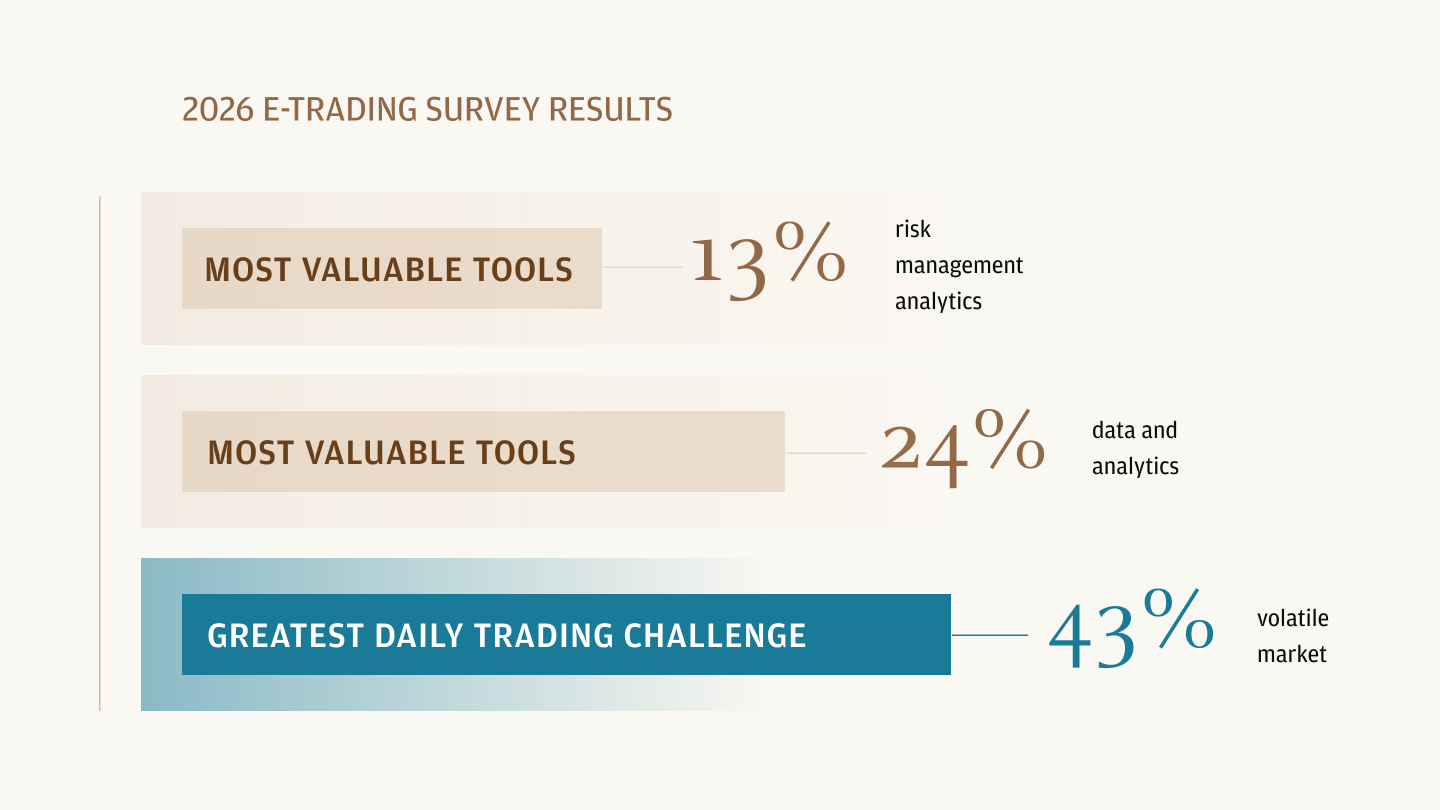
The J.P. Morgan Markets e-Trading Survey 2026 shows that volatile markets remain the greatest daily trading challenge among 43% of respondents, and the most challenging aspect of their role for the fourth consecutive year.

Data and analytics are consistently seen as the most valuable tools by almost a quarter (24%) of respondents, almost double that of risk management analytics (13%).

And traders across every asset class and region predict higher electronic trading in 2027, where it will account for 70% of total trading activity, against 60% this year.

e-trading survey results 2026

 “Institutional traders have increased their reliance on algorithmic execution, smart order routing, and electronic RFQ integration for OTC structures to maintain clear audit trails and combat benchmark slippage during extreme spikes,” 

adds Nahmanovici.

Do. More.
on J.P. Morgan Markets

Direct access to market leading liquidity harnessed through world-class research, tools, data and analytics.


Explore more themes

List View Off List View On

    No results found

    Adjust your filter selections to find what you’re looking for