For Companies and Institutions
-
Commercial Banking
We provide tailored credit, financing, treasury and payment solutions for businesses of all sizes and commercial real estate. Backed by the strength and stability of J.P. Morgan, our dedicated experts deliver industry-specific guidance and services, empowering you to manage cash flow, seize growth opportunities and achieve your strategic goals. -
Global Corporate Banking
We help clients achieve their long-term strategic goals through financing, liquidity, payments, risk management and investment banking solutions. -
Investment Banking
Providing investment banking solutions, including M&A, capital raising and risk management, for a broad range of corporations, institutions and governments. -
Payments
Your partner for commerce, receivables, cross-currency, working capital, blockchain, liquidity and more.
Key Links
For Institutional Investors
-
Asset Management
Putting our long-tenured investment teams on the line to earn the trust of institutional investors.
-
Markets
Direct access to market leading liquidity harnessed through world-class research, tools, data, and analytics.
-
Securities Services
Helping institutional investors, traditional and alternative asset and fund managers, broker dealers and equity issuers meet the demands of a rapidly evolving market.
-
Global Research
Leveraging cutting-edge technology and innovative tools to bring clients industry-leading analysis and investment advice.
-
Prime Services
Helping hedge funds, asset managers and institutional investors meet the demands of a rapidly evolving market.
-
Global Liquidity Solutions
Global short-term fixed income strategies designed to help clients manage liquidity through the cycle.
Key Links
For Individuals
-
Wealth Management
With J.P. Morgan Wealth Management, you can invest on your own or work with an advisor to design a personalized investment strategy. We have opportunities for every investor.
-
Private Bank
A uniquely elevated private banking experience shaped around you.
-
Personal Investing (UK only)
Invest with J.P. Morgan Personal Investing, a platform for UK-based clients with the human expertise, intuitive app and tools to help you work towards your long-term goals.
For Employers
-
Workplace Solutions
Enhance your equity compensation offering with solutions designed to empower your employees and bring your reward strategy to life.
Key Links
Who We Serve
Key Links
All Insights
Explore a variety of insights.
Key Links
Insights by Topic
Explore a variety of insights organized by different topics.
Key Links
Insights by Type
Explore a variety of insights organized by different types of content and media.
Key Links
About Us
We aim to be the most respected financial services firm in the world, serving corporations and individuals in more than 100 countries.
Key Links
Securities Services
Delivering best-in-class asset servicing, continuously investing through the cycle and leveraging the full power of the firm for our clients.

At J.P. Morgan Securities Services, we provide best-in-class asset servicing, continuously investing through the cycle and delivering the full power of the firm for our clients.
We operate at scale, as a market leader in assets under custody held, settling $1 trillion of securities daily in over 100 markets.
We provide operational excellence, timely, accurate service delivery from a highly resilient platform with the highest levels of automation and straight-through-processing.
Our client-centric relationship model ensures that our subject matter experts help clients navigate across the entire trade lifecycle.
We offer complete solutions to support our clients scaling investment strategies in ETFs, private markets or tokenization; supporting outsourcing; addressing data challenges, getting data AI ready.
J.P. Morgan has a leading Markets franchise and thought leaders in AI, Cloud, Cyber and Data, covering clients front to back across our Commercial & Investment Bank.
That’s why the world’s top institutional investors choose J.P. Morgan Securities Services.
About us
Why the world’s top institutional investors choose J.P. Morgan Securities Services.
2026
- Deal of the Year – The California State Treasurer’s Office; Global Custodian
- APAC Deal of the Year – Income Insurance Limited; Global Custodian
- Collateral Management Provider of the Year; Futures & Options World (FOW) International
- Asian Lender of the Year; Securities Finance Times
2025
- APAC Deal of the Year – Employees Provident Fund; Global Custodian
- Industry Leader in ETF Administration – Large Clients; Global Custodian
- ETF Administrator Of The Year; ETF Stream
- Global Lender of the Year; Securities Finance Times
- Asian Lender of the Year; Securities Finance Times
- Outstanding Data Platform (Fusion); Global Custodian
- Best Data Analytics Provider – Fusion; WatersTechnology
Solutions and capabilities


Fund Services
Delivering comprehensive Fund Accounting, Administration, and Transfer Agency services to asset managers and asset owners worldwide.

Trading Services
A strategic partner to help navigate the securities financing ecosystem.

“We’ve built a complete set of capabilities that deliver scale, resiliency, and operating leverage for our clients. We continue growing market share with a unique CIB front-to-back offering of pre- and post-trade solutions. Our strategy of through-the-cycle investment in Digital and AI positions us as an end-game industry winner.”

Tim Fitzgerald
Global Head of Securities Services, J.P. Morgan
Latest insights

Securities Services
Custody industry and regulatory developments report
Sep 29, 2026
Read the latest report on key regulations and market and industry developments shaping the custody industry.
Read more
Securities Services
Future of Superannuation 2026: Retirement in Transition – Decumulation, Advice and Trust
Sep 14, 2026
Australia’s superannuation system stands at a pivotal crossroads, as the industry tackles the transition from saving to spending, builds trust, and shapes the future of retirement.
Read more| 42:04
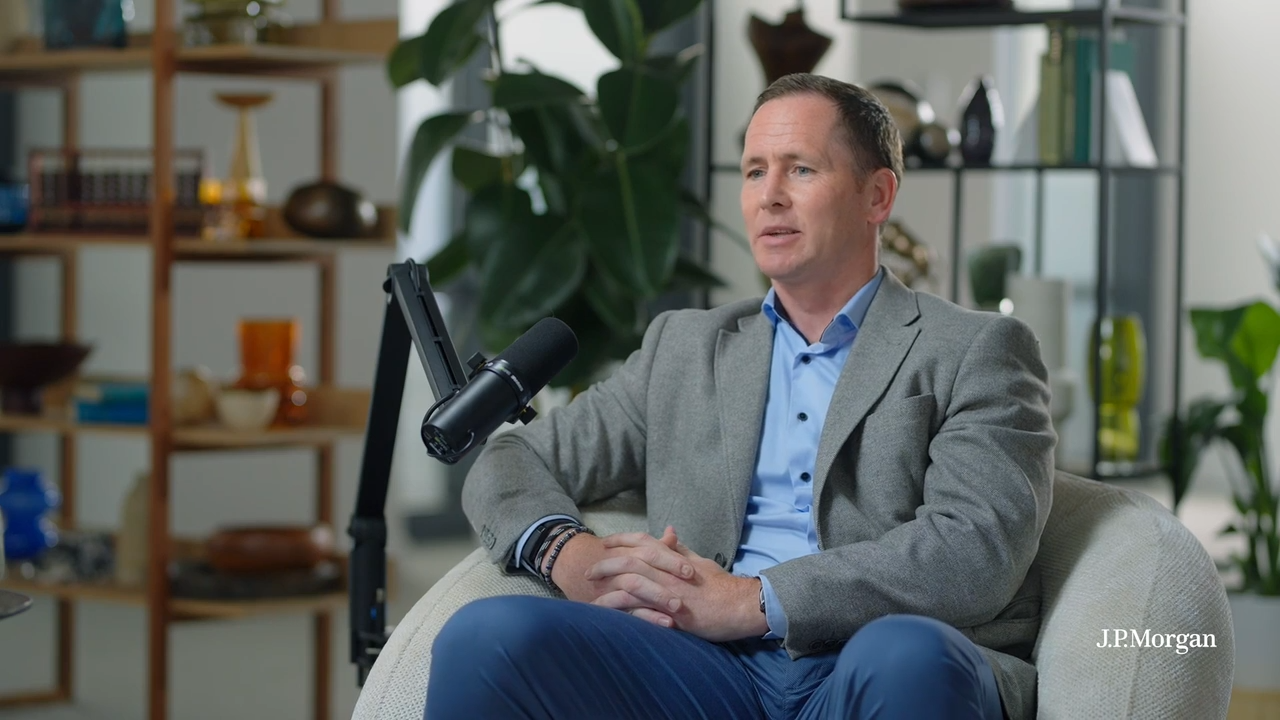
Matthew Legg & Ciarán Fitzpatrick
Discuss the rapid evolution, growth drivers, and future trends shaping the global ETF industry
| 42:04
Matthew Legg & Ciarán Fitzpatrick
Discuss the rapid evolution, growth drivers, and future trends shaping the global ETF industry
Matthew Legg: Hi, my name's Matthew Legg and I'm the Global Head of Delta One and ETF Sales.
Ciaran Fitzpatrick: Hi, I'm Ciaran Fitzpatrick, and I'm the Global Head of ETF Product at JP Morgan Security Services.
Matthew Legg: Ciaran, it's been a pleasure working with you. Can you tell me a little bit about your career ahead of getting to JP Morgan?
Ciaran Fitzpatrick: Yeah, absolutely. In the financial services industry just over 22 years. Started out with Investors Bank and Trust, which was a relatively small organization. Obviously an American company, but I'm based in Dublin, so came straight out of university and started there 2003. That company was then bought out by State Street in 2007, so I changed job without having to change job. I was with State Street for 17 years. I decided it was a great opportunity, came up at JP Morgan to take on the global role from an ETF perspective. So yeah, no, it's been a phenomenal 13 months. I suspect your term in the organization has been a bit longer than mine, so what brought you to the firm?
Matthew Legg: So yeah, it has. I've been at JP for eight years now. I was 10 years at another bank before that. My core role is Delta One, and that's all synthetic combinations of equities. So ETFs are just one part of that. But what's been interesting, and I mean of course you've had a front row seat to this, but it's been interesting over the last 10 years, the external demand for time spent on the ETF portion of the business, the volumes going through, the flows, the focus internally and externally in ETFs have just become so big that it's become a standalone role in itself. So what started as a Delta One role with ETFs as a component has now become Delta One and ETFs.
Ciaran Fitzpatrick: What areas do you think have been, over the past decade, the growth areas of exchange traded funds, and maybe even what is an exchange traded fund?
Matthew Legg: Well, yeah, I mean to start out an exchange traded fund is like any other fund except for, and very obviously by its name, it can be traded on the exchange, so it has intraday liquidity. It can be market made or it is market made and it can be accessed throughout the day on a live public exchange. So whilst that is a simple difference, it makes quite a significant difference for what it could be used for, the ecosystem, the risks around it, and lots of other things, which is what really differentiates it as a product.
Ciaran Fitzpatrick: And from a product, it's only what, 35 years old in and around?
Matthew Legg: I guess in the US and then less in Europe.
Ciaran Fitzpatrick: Yeah, Europe was just 25 years celebrated this year. So 2000 was the first product launched. If you look at know an ETF as a way to buy the return on, is it 50, 100, 200, 1,000 stocks or bonds by placing one trade. So the concept itself sounds like someone should have come up with a long time before that, but-
Matthew Legg: It makes a lot of sense.
Ciaran Fitzpatrick: Yeah, yeah. That grow to the product from '90s, 2000s, it started out passive, then we're seeing active come into it and different variations of that, be it thematic. What's your experience been through that and the different product sets? Where do you think the biggest growth has been and will continue to be?
Matthew Legg: Well, I mean obviously you mentioned it there, The growth in passive was the core start of... That's when the ETF product really became big, and what are we now $17 trillion, over a trillion inactive maybe nearly a trillion and a half.
Ciaran Fitzpatrick: Nearly 1.5, yeah.
Matthew Legg: But that passive component is obviously huge, and I feel comfortable saying we've got to a point where for passive exposure, ETF is wrapper of choice. You can see the outflows from passive mutual funds into passive ETFs. Very consistent, very significant for a good number of years now. So I feel like within that passive space, the market has developed, it's become super efficient, it's provided really low cost access to passive returns for a broad range of investors. And that's been a really interesting portion of the journey.
But where things have really taken off is this expansion into active. And obviously you can break down the two different regions. I think it has happened in the US, and obviously there's so much more to go, but it has occurred. And then we're a little bit more at the start of that journey in Europe, and obviously a lot of the stuff that we worked on together is just a huge number of issuers, whether they be European mutual fund issuers or whether they be US ETF issuers looking to start up that platform, in Europe, a UCITS wrapper. But the huge wave of those issuers coming to market and the huge expansion in the type of exposures that people are putting into the ETF wrapper, that's what's really been interesting for me in the last few years.
Ciaran Fitzpatrick: Yeah, and that's what I was saying earlier about the product just evolves continuously. Passive was probably a 15, 20 year journey of the market growing and growing well into double digits every year. You're talking 10, 15 up to I think even 2024, was it 24, 25% of growth from a European perspective. But yeah, no, I kind of agree with the view. Passive, it's still... Of that 16 trillion, it's a majority of it, and that will continue to be. But what's really excited me now in the latest evolution, so we've had the passive, then we had smart beta and thematic is... Not that it ever went away, but it's starting to make a return as well. We're seeing a lot of growth in thematic products and you're probably seeing them from a trading perspective.
But active is really bringing the opportunity for... It's that continuation of the mutual fund, but in a different wrapper. Look, I don't see an ETF as being a different asset class. It's nearly a piece of technology. It's a way to offer your strategy in a different structure, and that's what we're seeing active managers doing. I do find it funny, it's gone from... It was always the active to passive debate and now it's active to active, but just a different wrapper. But it's definitely a way for new issuers or very successful mutual fund managers to offer their product in a different distribution category, by able to offer it on exchange. But I think that's the managers we're actually seeing coming to us now.
Matthew Legg: And to a different audience.
Ciaran Fitzpatrick: Yeah, well, exactly, yeah.
Matthew Legg: One of the most common discussions we have with issuers is their desire to market to or be able to market to that whole new generation of wealth coming through.
Ciaran Fitzpatrick: Yeah, it's not the whole concept of cannibalization of assets. Well, if I launch an ETF of the same strategy, will I actually end up losing investors or am I moving investors out of one product into the other? But at worst, that's a defensive play more than anything else. If you don't have an ETF strategy, and we're seeing the flows... I mean if you look at the ETF flows in Europe in 2023, I think it was, there was probably net new inflows into ETFs of about 160, 170 billion. Whereas what went out of mutual funds was that and more, and the graphs are nearly offsetting. It's not new money, it's money coming from one product into the other. So it's definitely showing that having an ETF strategy is number one, protection, but also hitting a different distribution channel and also expanding the target for your product.
Matthew Legg: Yeah, I think the ability to access the retail audience is... Clearly when you talk about US and ETFs, you naturally put together that... You think about retail.
Ciaran Fitzpatrick: Yeah, absolutely.
Matthew Legg: And the way retail has really embraced the model portfolios and the huge scale of assets that track those, I mean, honestly, it always blows my mind when I hear that the raw figures for that segment of the market. In the multi trillions and expected to go 6 trillion now, expected to go to 10 trillion by... Well, it depends on who you ask, but 2030, something like that. And they're constant increase in use of ETFs, it's such a huge driver for for AUM into the ETF wrapper. And then thinking about Europe, we're just starting to see that happen with the digital platforms now and the technology, you mentioned technology earlier, the technology making it really simple for retail to access these funds, and the simpler that becomes, the more you reduce those hurdles.
Ciaran Fitzpatrick: Yeah, we've heard that for the retail element of the US, the split is probably, what, 60 retail, 40 institutional, whereas Europe's probably 85 institutional, 15 retail, something like that. So we've heard there's been different opportunities for when will the retail investment come? It was always said to be education, you need to educate investors. But I think I read something in the region, though, like $11 trillion or euros sitting in deposit accounts across the European countries, so earning next to no interest. If you could even tap into like 5, 10% of that, the industry just continues to grow, people have a better product. But I think regulation has had a go with method two as well, always trying to make sure retro sessions were removed and brokers were offering the best product to the end investor. And I think not a lot of good probably come out of COVID, but one good thing was people were investing the money that they were actually building up.
And we saw that in the likes of Germany, Switzerland, France, a lot of those countries, they were actually opening savings plans accounts, and I think renaming or the rebranding of model portfolios to savings accounts sits a little bit easier with the retail investors and they understand how that product will work. And I think there's been significant flow. As you say, we've seen a lot of the retail brokers actually coming into play.
Matthew Legg: It's really driving net new asset gains for issuers these days. We're hearing that.
Ciaran Fitzpatrick: And any of the issuers we talked on the security servicing side, be it a new issuer or very established, they either have a platform strategy, how they'll engage with platforms, or we explain to them you need to have it nowadays, and it really is really starting to take off, which just goes back to what I was saying. You had your passive, you had your active, there was the smart beta products, and now we just have this whole new range of investors starting to come to the product.
Matthew Legg: And we're definitely seeing an expansion of the strategies that get incorporated into an ETF. And I think a lot of the industry is very focused on that thinking. There's a huge growth in this as a wrapper and a technology. There's huge asset inflows. What is the right strategy to fit into an ETF? And that comes back to that transparency question as well, so that's a really common question within ETFs, of does a semi-transparent or non-transparent wrapper work within ETFs?
Ciaran Fitzpatrick: And that's pretty the active and passive, how far do you push into active? So the success of passive products has been around full transparency, daily reporting, and the optionality exists in the US, to have semi-transparent, and it's got like 15, 16 billion of assets. But some products have done well, but in the grand scheme of things of over 10 trillion of assets in the US. But I think we did see the Luxembourg regulator recently changing their stance on transparency. It was daily for the European ETFs or Luxembourg domicile. They've then shifted to say, "Okay, you can offer it on a monthly lag." And then the Central Bank of Ireland reacted by saying, "Okay, you can have transparency on a quarterly lag." But it's not taking transparency away from the capital market. And that's I think one of the most important part. How can you price a product or what are the key elements to pricing an ETF that you need? And if you take the transparency of the portfolio away, obviously makes your job and your team's job infinitely more difficult.
Matthew Legg: Well, if you ask me that question of what do you need, the answer would be transparency. So if you take that away from the AP, just by definition we're having to estimate and guess and proxy hedge, and that's going to widen spreads and it's going to increase the cost of access and just the transactional cost of accessing those funds. The great thing, as you said, with the European semi-transparent model is that the AP service, whichever select group of APs the issuer is happy to have as an AP on that product and provide transparency to, can see what's in those ETFs, which means we can price them exactly like we would fully transparent products. It's just the external reporting which is delayed, as you said, and that stops the concern for some of these more concentrated high IP strategies that there may be IP leakage, that if they're holding concentrated or less liquid positions, that when they start to sell that will be signaled to the market.
They get protection from that. And I think from a lot of discussions with a lot of asset managers, it just increases hugely the spectrum of potential strategies that they might consider putting in an ETF. And I think for Europe, that's going to be really important. And I think that's one of the areas... So often we look at the US and we say... We can see because it's just a more mature market, we can often see trends that are going to come to Europe because they've realized in the US. This is one where there might be a slight difference, and I think just based on the fund requirements in the US, the restrictions on that same process, so who is able to see the composition and who isn't, and also the preference of those model portfolios that we mentioned earlier that I think highly value transparency. That's slightly different in Europe.
And it comes back to a common question that people ask, you mentioned it already, the tax advantage of US ETFs. That's often cited as the core reason why assets have grown so much. But then when we look at... And you mentioned there's some tax advantages in Europe, but I think we'd agree it's not the same scale of advantage. But then when you look at the growth in Europe, it's very similar on a smaller scale to the growth of the US. So do you have views on why ETFs are such a popular app outside of that tax advantage, because-
Ciaran Fitzpatrick: Yeah, I think the tax was probably a starting point. And I think we're seeing that on the addition of the share classes now to mutual funds as well in the US, which I can touch on in a second. But I think the availability of the product is another piece. And we touched on that. How do you buy an ETF? Well now you can just buy it on your phone, there's really low commissions on it. You're not buying into strategies that you don't understand by and large. And this is where that kind of discussion around, well, what's the right asset to have in an ETF know? Is it just equities, is it bonds? Is it a combination like the multi-asset strategies?
And now we're seeing at a very initial phase of managers looking to put private assets into ETFs, and is that a stretch too far? But honestly, I think the availability of the product, the transparency of it, I think as I said earlier, the ability to get a return of multiple securities by placing one trade is huge. And then if you look at the institutions, ETFs are being used as building blocks in model portfolios. They're being held in mutual funds. They're being held in actually hedge funds, which I saw some pretty impressive numbers recently. I wasn't aware that that amount of hedge funds were actually holding ETFs as well.
Matthew Legg: Particularly in fixed income.
Ciaran Fitzpatrick: Yeah, yeah.
Matthew Legg: Seeing a lot of use in Europe in fixed income. Obviously in the US, heavy users of ETFs.
Ciaran Fitzpatrick: So there's another area starting to grow, and I've even seen to get exposure to markets like India as opposed to a future just by the ETF. So it's...
Matthew Legg: Yeah, market access.
Ciaran Fitzpatrick: Yeah, exactly. And then to go on a bit more of a nuanced area, you've got crypto products. There's a number of crypto products in Europe. And while, again, are they right for retail or institutional? Well, obviously from a usage perspective, you can't hold that asset class, so they're not a usage, but they're in a debt structure, so they're issued as ETPs. But again, it's a way of getting access to crypto without actually having to hold the asset itself. So yeah, I think the popularity is going to continue to increase going back to what I said earlier. Every single twist in the market seems to have some element of the ETF associated with it, which is... As I said, it's been great for the industry and why I've stayed and worked in that kind of product class for the significant portion of my career to date.
Matthew Legg: Yeah, I mean, you mentioned the operational advantages. One of the things that's been really interesting to observe over the whole time that I've worked across all these different Delta One products is the electronification of each of those markets, the extent to which all of the transactions, all of the operational processes naturally need to be scaled, they need to be systematized. And the ETF fits really well into that new more technology-dependent execution structure. So if you think about when we've had all these different... Obviously there's constant change in regulations, restrictions in what you can hold, et cetera. We build all of that and our investors build all of that. Also, our clients build all of that into their, that OMSs and their EMSs, all the controls sit at that platform level.
So having something that fits into that ecosystem becomes vital versus... And we've seen that across all the swap businesses and across futures and across ETFs as well. So think about that versus an allocation to a mutual fund which is not executed or managed within that infrastructure. You can see why it becomes so important for institutions to build it into these scaled trading platforms that they have.
Ciaran Fitzpatrick: And I think that when you look at the... I think there's 60 odd submissions in with the SEC to add ETF share classes of mutual funds. And there's a number of reasons I think why they're doing that as well, which is to put an ETF slant on the successful mutual funds. I think it slowed down the ETF conversion or the mutual fund conversion into ETFs to a lot of managers are now taking a step back and saying, "Well, if I can just add a share class to my structure, my mutual fund structure, that will give me the benefit of an ETF."
Matthew Legg: Is it as simple as that?
Ciaran Fitzpatrick: Well, I've differing views on it, but yeah, my view is it certainly isn't that simple, because the last 30 years of developing an ETF infrastructure has been around, yes, the components of a mutual fund, but then you got to build in some of the key aspects, which are capital markets, absolutely critical for a growth business for an ETF and what's capital markets.
Matthew Legg: And often overlooked.
Ciaran Fitzpatrick: Yeah, well certainly the more and more is mutual fund managers coming into this space. Capital markets is not at the forefront. It's how do I get a product live. And as I've seen, be it the US, be it Australia, AIPAC, Europe, you can have a really good concept for an ETF and launch the strategy. But I genuinely believe the issuer needs to own the capital markets function, which is, as I see it, a bit of a multifunctional role within ETFs. It's knowing how the operations work, it's monitoring bid ask spreads in the primary and secretary market and making sure that market makers are quoting what they should be doing. It's supporting the sales effort with your sales team with that knowledge they have of the product. It's working with your custodian as well.
And then it's really holding the market accountable to make sure that spreads are in line. And obviously you sit on the other side of that where you're dealing... I'm looking at it from a custodian and service provider perspective, but you're on the other side, from an AP perspective. How do you see the importance of capital markets and do I overrate it or... It's becoming quite commoditized at the moment, we're seeing all these new issuers coming to the market, yet not enough capital markets resources seems to be the case.
Matthew Legg: I mean I think it's crucial. So as you mentioned, we sit on the other side from you guys of that capital markets team. So we're the liquidity provider to the street and we're engaging with the capital markets team in terms of getting access to the funds that they're acting as capital markets for. And in terms of understanding exactly what's in those funds, that can take a whole range of different functions. But our ability to understand real time what is in those funds is absolutely crucial. Our ability to interact... I mean we're dealing on the other side. So this is the crux of where it becomes different to a mutual fund. We're dealing in those funds with investors real time in the market, so we need to have instant understanding and access of any nuances around that and the capital markets team provide that.
Ciaran Fitzpatrick: Can't just wait until the end of the day to get an answer.
Matthew Legg: We can't just wait until the end of the day, exactly. It's too late at that point. The capital markets team will regularly take a leading role in fixed income in the negotiated basket or managing that negotiation process, and they're the link through to the PMs who are managing the fund. So of course parts of the roles can be managed by the different functions within the issuer, but I think if you do that, it becomes very challenging to make the product function well. And at the end of the day, ETFs, up until this point has been... It's an extremely competitive market. Where in passive space it's much more commoditized. So the difference in the ETFs and the way that they function and the spreads at which investors can access become a really key part of the success of that ETF. Clearly that's going to carry on into active. There'll be more differentiation because they'll be selling the IP, but to the same extent, people will anticipate that they can have the same experience, the same positive experience that have passive and active in capital markets is really key for that.
Ciaran Fitzpatrick: I think the IP point you made there is quite important as well. And I think when it is coming to active, you get a lot of high conviction strategies or concentrated active mutual funds and issuers or managers are talking to us and saying, "Is that what you're seeing in an active product?" And it's typically not. A lot of the active managers launching ETFs, you may call it massive plus or it's not high conviction active, but what they are doing is they're taking a flagship strategy that they would have in the active space and they maybe water it down a little bit, so they optimize the portfolio, they're not holding as many securities. They might drop some of the derivatives and more complex instruments out of it, although that's changing a little bit as well. We've seen that with CLO products and the buffered option strategies in the US, like the ETF is getting more and more complicated.
Matthew Legg: And in Europe, nonlinear products in Europe are extremely popular now as well.
Ciaran Fitzpatrick: But that's where that expertise and the ETF component comes with cap markets. Another one I think is sales. I think you do need dedicated salespeople selling your ETFs, and I think the US and Europe and Australia differ. I think Europe... The US is largely one market. North America in general, it's one market. Everyone understands the function of it. Whereas Europe is very fragmented. You've got 26 different market exchanges, there's different investor and buyer behavior in each one. That means you typically need sales experts for ETFs in the region you're trying to target. And I think a good thing we've seen with ETFs, it's not a scatter gun approach anymore to selling them. It's looking at the target market in that country, let's say, and does your product fit? And you'll only list and distribute if it suits that market. You're not just going to list it... Because it comes with costs and you got to keep the cost of ownership down as well and a launch of the product.
Matthew Legg: I think to that point on the distribution, one of the really interesting trends we've seen from issuers is I think the drive to amalgamate or to combine the distribution forces that they had for their mutual fund business with their ETF business. And they're kind of doing that across the organization to try to make those two sit together. And I think the end goal of that is what we talked about right at the start, which is that they create IP, they create the strategies, and then they have different distribution wrappers. So I think within that team you need that ETF based expertise in terms of how to distribute as well as the mutual fund. But I do think it's interesting the way the clients that we speak to are trying to pull that all together so that they have a single sales force distributing essentially wrapper agnostic. And if they do, then we really get to the position where it just becomes the wrapper.
Ciaran Fitzpatrick: That just triggers something with me, and it was something I've seen since I've joined JP Morgan, was the capabilities across the firm to offer services to an ETF issuer is... To me it was one of the big drivers why I joined the company. I've come from a custodian and administration background and really focused on that area of the business, but even before I joined JP Morgan, I looked at, well, we've got a markets business, we've got security services, custody, we've got program trading, we've got an AP desk, we have a Delta One desk, we've got a really good FX capabilities and a lot of restricted markets and developed markets. And it was like, how can we hang that together?
And it was just when you were talking about new managers coming to the market, having seen some of the detail and expertise that you have in your... How do you support new managers coming to the market? Obviously on my side of security servicing, it's how do you service the fund? How do you structure it? But from what you're seeing on the market side, what level of support are you providing or what do you think the key offering you have for new issuers is?
Matthew Legg: There's a huge... I think we mentioned before, the key differentiator between the ETF and the mutual fund is really that access to market. So what we sometimes find with new issuers coming to market is that there is a big educational component, as in they really want to consume all the information around the market structure, how the market operates, and how all of those processes occur. So for the really newer managers that are extremely familiar with mutual fund platform, just that component-
Ciaran Fitzpatrick: I love that conversation, isn't it? It's like...
Matthew Legg: Right from the start.
Ciaran Fitzpatrick: Yeah, it's breaking down their understanding of what they think the ETF does to make sure they do understand it, and then you've got the regional nuances as well.
Matthew Legg: Exactly. And there's so much to that component. So in more tangible terms, what are we providing? Well, we will be an AP, so the ETF will need a range of APs. So they need people who are providing liquidity. When investors look for quotes on the... They want to access the fund, they want to buy the fund, they're going to go out to APs. And if people are nonresponsive, if the fund doesn't have sufficient APs, or if the APs aren't pricing the products, they won't get anything back. And that's obviously a really bad experience for the investor. So they need people pricing their funds and we obviously need that. They'll need on-screen market making, so we can guide them in the right direction around what they need, what level of spreads investors are going to expect, what time on screen is required, et cetera. Commonly they'll meet seed, seed capital. So that's a super common request we get. Now seed capital comes at a cost and it's becoming an increasingly finite resource because just the sheer scale and number-
Ciaran Fitzpatrick: That's just seed to get a new ETF off the ground, right?
Matthew Legg: Yeah, exactly. And each fund needs to launch with some assets. And then what is interesting about the ETF market, and is probably the case for most fund asset building businesses, but obviously as the fund gets bigger in terms of AUM, the amount that investors can invest becomes bigger, because many of them would be restricted in terms of a percentage of fund. So that seed helps them immediately access a bigger range of clients and grow assets. Another portion is on distribution. We spoke before about the nuances of the European market. If a lot of the new managers maybe coming over from the US, the European market may be different to them and as you said, much more fragmented, or they're maybe from mutual fund background. So understanding who is buying ETFs and where and what client type, what the regional differences are will help with that.
Ciaran Fitzpatrick: When I was sitting down with you and your team and saw some of that data, I've used the word gold dust quite a lot when we talk about it, but from looking at the capabilities of the firm, that's just one of the key areas. I think on your side of the business, and on my side, we've very much gone all in on ETFs. There's a huge focus from the top of the firm to make sure that we can service our clients and it's building strategic partnerships. We've got a very significant investment budget. We're at the start of a three-year journey on the security servicing side, and a large part of what I focused on when I joined and will continue to do is making it sure it's not just security services but it's markets with yourselves. It's the program trading team that sits right next to you.
I was talking to the sec-lending team about what opportunities we have there, and currency hedging, we've got a really good platform. The overall package, and we're seeing this more and more in the industry, is asset managers and issuers coming to their partner looking for a strategic partnership. Not just custody administration anymore, but as you said, the access to capital to get a product off the line is huge. And then expertise across the globe at servicing the products. But to be able to offer nearly the full package and then the ETF issuer themselves can focus on the cap markets, the distribution, and the sales, and the fact that we're catering for everything. That's more gold dust. So I think that's been a huge benefit and a huge way to expand our offering.
Matthew Legg: So just thinking on your side of the fence, the asset servicing side, how different is it to look after an ETF platform or service an ETF platform versus a mutual fund platform? Is there a significant... Have you had to build significant technology, other significant differences? Your side in terms of what you provide?
Ciaran Fitzpatrick: I've said it for years, it's people, it's experience, and it's technology, and until you can wrap the three of them together, there's going to be a gap. And I think that's... If you look at where we focused, we brought people in, we've a significant investment in technology and we've got good experience. And where do I mean on top of the mutual fund. So you've got your mutual fund product, an ETF, in the US it's a '40 Act, in Europe it's a UCITS. So it's still in the same umbrella. That's what I was saying earlier on. It's not a separate asset class. But then it's the technology to produce the reporting we were talking about to allow you to price in the secondary market. It's those portfolio composition files. Being able to build that ETF specific, you need to produce forward looking reporting. What does the fund look like tomorrow? That's effectively what we construct.
And it's being able to link that. So we've obviously got global proprietary technology that we use, so we control our own destiny when it comes to our capability in that space. But yeah, there's a huge step up from just mutual fund servicing to then adding the ETF layer on top of it. So what I always focus on is use the depth of expertise and fund accounting and custody and depository, et cetera, transfer agency, and layer the ETF expertise on top of that. So that's the people and expertise. And then the investment of technology you just have to have. And we're seeing that become more and more competitive. And I think one of the big shifts from passive to active, active is bringing more complex assets into the products, as you said. The nonlinear structures.
We just launched a CLO product, the first passive CLO in Ireland. We've launched a number of buffered strategies in the US which are holding options which have that downside protection, which have been hugely popular. And servicing all these complex assets within an ETF, it really pushes on the technology and that's why you just got to be looking around corners all the time for what you need to do next. So it's not just what we do, it's we work with obviously the ETF market, the overall ecosystem. And it's that ETF element of it, that talking to authorized participants, talking to legal firms, talking to the settlement depositories, the Euroclears, Clearstreams, et cetera, and understanding what they're doing to make sure that our systems connect with theirs. And also that our clients have an understanding. I'm big into best practice solutions, not having bespoke all over the place because if you build bespoke for one client and then for another one, no one's leveraging the overall capability, you're doing something different each time. I very much like to focus on having a best practice solution that's global, but with regional nuances.
Matthew Legg: I mean, we've already seen the importance of scale in the market just aside from the actual quantity of assets and the turnover that you're servicing. But now this huge increase in the issuers coming to market, whether it was passive, it was dominated by obviously a range of very large players. In active that just opens up to so many more and we're seeing that scale requirement and almost some bottlenecking in so many portions of the ecosystem. So on one hand I look at the whole industry and the way everything is connected, how you described the way we're connected with all the different components of the ecosystem and the level of automation that's been built into our pricing and into everything we do, the consumption of the PCS and the calculations of fair value. On one hand it's really impressive how far that's come, but then you can look through so much of that and you see so much more efficiency that could be unlocked. And I think that will only be a function of the continued platform build, which obviously you guys are a big part of building out.
Ciaran Fitzpatrick: And you mentioned bottlenecking actually there. Where do you see that on your side of the business given the expansion? I think there's talk of getting to like 12, 14,000 ETF lines given the share class model that may come about in the US. Where do you see the bottlenecks coming?
Matthew Legg: So I see the bottlenecks coming in a few places. One and most obviously just is in terms of the quantity of pricing that's required and the speed of developing that pricing infrastructure. So as you mentioned, as the asset classes continue to expand, just the quant resource to be able to automate that whole process is very significant. There's also quite a significant bottleneck just in terms of onboarding as an AP. So we have long AP onboarding queues, we work through them as quickly as possible, but of course there's new issuers coming all the time, and that's not always the shortest process.
And then there's other elements, just... We mentioned it before, but use of balance sheet either through custom in kind basket trades or through seed capital. All of these new issuers are looking for servicing, really, in those kind of spaces, and there really is just a finite amount of that that can be provided across the street, and the demands on that are becoming very significant. And you mentioned before about strategic partnerships, but I think that's where the value of strategic partnerships really starts to grow because as these resources all become more in demand and more scarce, the ability to be able to access them will be key to success for ETF issuers.
Ciaran Fitzpatrick: We could just start cloning you and your team, actually, and it'll probably help with moving along. Where do you think the industry is going to go in the next... What's the wave from your perspective?
Matthew Legg: I think within active, we're just starting. I mean, depending on how you classify that segment of assets, it could be 35 trillion, 40 trillion, some number, just depending on your classification. We're about 1.25 trillion in or 1.5 trillion in, so there's so much road to run in that space. The way I think about that evolution is to say we think about the ETF wrappers being the wrapper of choice for passive, and passive clearly has zero active risk. As you move down the active risk spectrum, or along it, and you get more and more active risk in a strategy, you start to move further away from that passive model where ETFs were clearly the preferred wrapper. I don't think mutual funds become the preferred wrapper at 1% or 5%, but as you move down that spectrum at some point in terms of concentration and liquidity and the other... Maybe the constraints or the issues you might find as you wrap something in an ETF, they will start to outweigh the benefits.
So at some point on that spectrum we'll get the tipping point. We don't know where that point on the spectrum is, and it'll obviously be a gray area in between, but I think we continue to move down that active risk spectrum for a period of time as issuers launch more and more and more complex strategies. I then think we expand outside of traditional, let's say, single asset class strategies to multi asset strategies and to nonlinear strategies. And we're already obviously seeing some of that happening, but I just think all of that expands. And as you do that, I mean really the possibilities around this...
Ciaran Fitzpatrick: There's a lot of talk about tokenizing ETFs. We're seeing a lot of tokenization and money market products, which obviously can be used for intraday collateral. So a really good use case. Obviously JP Morgan have a digital platform through Connexus, so certainly looking at proof of concepts around ETFs from a tokenization perspective. But I find it interesting, what's out there today for tokenized ETFs is like an add-on to a traditional ETF. So all the standard processes take place and then shares are issued in the standard model, and then there's a one-for-one tokenization. So there's a token issued off the back of the traditional share.
Matthew Legg: Can tokenize intermediate that? Can tokenization replace the ETF wrapper in that process?
Ciaran Fitzpatrick: I think that's probably where it's going to start to go. When, I'm not sure, but I think that's a proof of concept that an ETF share can be tokenized and issued, but do you get away from... So you need to put a digital TA in place. You need to have an entity that can actually tokenize the shares and then you've got your digital exchanges or... Like the exchange like cash versus tokenized ETF units makes perfect sense from that perspective. But I suppose what's it fixing unless you're actually reducing costs and taking elements out of it?
And I think a lot of the conversations we have today is you get the new generation buying crypto and holding a digital wallet, and managers are looking at it going, "Well, I want to make sure I hit that target market and I want to make sure I'm on those platforms. And when this does evolve, I want to be able to offer my product in a tokenized version." So I definitely think it will go that way. I'm sure the products will live side by side, but there's a huge amount of focus... I think Singapore is doing a lot of work, the MIS in Singapore, very focused on allowing tokenization and innovation in that space. A lot of these products, innovation is what's driving them, and I think that's been the same for the last 30 plus years. But again, it just goes back to every corner you turn, ETFs are forming a part of the new evolution of the financial industry. And I think the fact that we have capability in traditional, in markets, and now in the digitization and tokenization spaces, it's just one of the huge advantages we have as a firm.
Matthew Legg: So question for you, one of the things we commonly get asked is, will the launch of an ETF or do ETFs come at a lower price point from a TUR perspective? How do you see that? Do you think ETFs inherently price lower than mutual funds? And how do you think that will evolve going forward?
Ciaran Fitzpatrick: Yeah, it's certainly not all about the TUR. So there's obviously additional costs that a new issuer needs to take into account, and I would say when you put mutual fund launch side by side with an ETF launch, the ETF launch is going to be more expensive because you're paying registration costs, you're paying listing costs depending on where you want to put your product. You've typically... If you look from a European standpoint, you've got the CSD costs and the common depository costs. That's a settlement model. In Europe, you pay market makers and APs. In the US you can't do that. So even there's a differential between the US and Europe and Australia where you can pay market makers, but in the US you can't. So I wouldn't just focus purely on TUR when I look at total cost of ownership, I think it's important to look at the other elements that... And we always go through this with new managers coming into the market. We support them trying to build up what their TUR should be, but what are the additional expenses?
But then I flipped that on its head and you look at, well, what are the difference between the ETF and the mutual fund and where can you externalize costs? And you on the authorized participant side know that the AP will typically not only take the cost of the NAV, of the price of the ETF, but also trading costs, slippage costs, and some element of custody and trading custodian costs. So that allows the issuer to outsource some of the costs, which allows them to reduce the fees. So it's not a quick fix. It's not a panacea for poorly performing mutual fund. You've got to be in the ETF game for the long run. We've seen a lot of managers come in, good strategy, but don't have what we talked about earlier, sales, distribution, cap markets, and the products fail.
Or it's like," Oh, this costs more than I actually thought it would to actually build." It's not the point anymore you have to convince an issuer they should be launching ETFs. I think we're at the stage that they can see that that's the way the market is leading. It's just making sure you've got all of the building blocks in place from start... Look, that's part of our job as a service provider and on a markets business to educate and make sure that issuers can get from soup to nuts and understand the whole process at the most aggressive price point, but also making sure that they have the right operating model in place. And I think obviously having... We've touched on the services, but custody business, markets business, and then trading and seeding and capital and all of that that we offer, that's where I see the real benefit.
Matthew Legg: And the more possibilities there are to fund efficiencies, connect, and provide a more seamless service. A client recently said they'd gone from having to having to explain internally why it should be an ETF, to saying why shouldn't it be an ETF?
Ciaran Fitzpatrick: There may be additional costs to launching the strategy from the get-go, but as we're seeing the transition of assets from mutual fund into ETFs, it's... I wouldn't say it's a no-brainer, but it's certainly a decision that's being made more and more on a daily basis by new issuers coming to the market.
| 26:47
Montserrat Serra-Janer & Larry Wise
Discuss the evolving landscape of private markets

| 26:47
Montserrat Serra-Janer & Larry Wise
Discuss the evolving landscape of private markets
Montserrat Serra-Janer: Hi, I'm Montserrat Serra-Janer, global head of private market sales for PFS and SS.
Larry Wise: And I'm Larry Wise, global structuring head of our private fund financing business. Good to see you, Montse.
One of the things that I know you asked today and you thought it'd be good to talk about for our audience is what exactly is a private asset?
Montserrat Serra-Janer: Yes.
Larry Wise: And I think that's relevant, because people have been talking about private assets for a very long time.
Montserrat Serra-Janer: And they don't know what it is.
Larry Wise: Well, and people aren't consistent in what they mean. So let's try to be consistent for our audience for-
Montserrat Serra-Janer: Please tell the audience what private assets are.
Larry Wise: So private asset I think about as something that doesn't trade readily on an exchange, where the information is not easily accessible to the entire market. Now, that doesn't mean that it doesn't trade, that doesn't mean that you can't get information on it. It just means that those things are generally closely held. And most importantly, private assets are across the entire market. Probably the original private asset is real estate, because only one person get on a house.
But today, when people talk about private assets, I think they think private credit, private equity, venture capital, infrastructure, and all those things are private assets. And one of the things that's really been interesting the past few years is there's been an explosion in people actually trading private assets are banks originating private assets. And that's changed the definition, because private assets used to be things that never traded, are things that banks were not involved in, but obviously we're both here because banks are involved now. So have you seen the evolution of private markets in the last few years?
Montserrat Serra-Janer: If you think about private markets originally were just companies, the pharmacies of the world, the cinemas, from an infrastructure perspective, you will have the breaches and like the oil-
We're surrounded by private equity and private markets, and private assets. What I think people get it wrong is the definition around all these things that you just mentioned. So people talk about private markets, but they don't really know what the private markets on its own mean. Private markets can mean private equity, can mean to your point, credit strategies, infrastructure, VCs, venture capital, be leveraged buy out. So it means a lot of things. I remember in the past, to your point when originally you were talking about private assets, people would only refer to the strategy private equity. But we have been evolving. We have now become this amazing hybrid, more complex private markets environment that everything is getting convoluted. Like you and I talk about private equity that now is evolving into getting into credit fund strategies and now real estate, to what you were saying.
Larry Wise: 15 years ago we started lending against private assets and it was a very narrow slice of the world. I think private credit was 150 billion plus or minus. And now depending on who you ask, it's roughly 10 times that big. But people are expanding that to mean IG private credit. And then you see numbers that are 10x that size thrown out. So what's been fun as a bank is we have clients that we've evolved from working with them on private credit, and now we have clients that those same people are buying public assets from us.
And they're not just borrowing against their private credit pools, but we'll work with them on infrastructure or private equity, our fund stakes. But the space is evolving in the bank is definitely evolving with it. And one of the cool things about working with you the past year or so, maybe the last year and a half, is we used to just spend our time talking about GPs, who are managing the assets, but we spent more of our time talking about LPs who are investing in the assets. And I think that's actually where a lot of the evolution is taking place.
Montserrat Serra-Janer: And I agree with you, because when I started on the private markets eight years ago, it was very much the GPs, so the general partners from close ended funds and that was really very much cookie cutter, very defined strategy and it was really the GPs were calling the shots. But now we have been seeing for the past few years that the LPs, the asset owners, the asset managers, all those insurance companies, all those traditional asset managers, they have become very smart looking for alpha and they're demanding more things. And those are the ones that are in a way to, in my opinion, they're shifting the trends that originally was just the private equities, the VCs of the world to evolve into a different animal, to seek for more alpha, because these guys, these LPs are demanding more and more returns.
Larry Wise: And that's hard though in an environment-
Montserrat Serra-Janer: It's incredibly hard.
Larry Wise:... where there's more people investing in private assets and at the same time the real economy has to figure out what to do with them. But one of the bright spots in that for us is we have seen a lot of the things that you're talking about, LPs come in and saying, "Where's my liquidity?"
And we have had found some ways to help with that together in pretty good size. We've also seen some bright spots. I was looking at, we get this weekly note on our private credit business, and a few years ago we thought about what's going to happen when rates go up and defaults going to go back to COVID bubbles or what are we going to see? And things capped out at maybe two and a half percent, not just defaults, but any real stress in the system of people who are having covenant modifications. And that's been, this private credit has been this nice bright spot for us, whereas our private equity clients have been coming up with increasingly creative means to get money back to LPs.
And then, infrastructure is super interesting too. So I think that the reason why I like working there is there's been this focus and you see what's happening in New York airport now. There's so many use cases for that and we work in finance, but at the same time it's nice to be able to see the proceeds of what your clients are doing. So we have clients that are working on building biogas plants, we have clients that are working on pipelines and those kinds of things. Just having the concreteness behind what we're doing is helpful too.
Montserrat Serra-Janer: Yeah, we're seeing things that we never saw before. From our side, we are seeing things like a pure private equity. Now getting into my favorite subject, which is a secondary. To your point, everybody's looking for liquidity or everybody's looking for some type of return back to their LPs. And to me, the secondaries market, which by the way, we should really define what secondaries market means
So I will do that, because I am obsessed with secondaries, but I think that secondaries would be of huge trend because you were just saying we have all these clients that are becoming very smart about what they want to do, working with our bank, looking for financing, looking for liquidity, ways to bring it back to their LPs. But on the other hand, the LPs that are becoming smart, they are also looking into ways to now tap into these saturated markets where portfolio companies are not being exited and trying to buy them at the huge discount rates.
So the LPs are the ones in our opinion that will be driving the secondaries market, not so much to what we have seen before. That was more the GPs. Again, back to who was calling the shots before. Now the asset owners, the asset managers who are really the LPs from a private market's purposes, they are the ones saying, "Okay, let's get into GP stakes, let's get into this portfolio companies."
If you think about in 2008, the assets from exited companies in the world was about $600 billion. And that comes from public information from the Bain Company 2024 report. Now fast-forward, that's 3.7 trillion that is saturated, that is not exited, that there's not going to be any IPOs anytime soon and that's about 30,000 companies. So somebody has to take advantage of this.
Larry Wise: I think that's why the secondary market has raised so much liquidity recently. You spent a lot of time talking about institutional piece and they're definitely the ones who've been calling the shots. My favorite story was a guy who turned up, he I guess works in a public pension, turns up someone's AGM who had fairly low capital set back to investors, and he had a T-shirt that said, "DPI is the new IRR."
And that was the thing in 2023. But I feel like we're back there again, the difference this time is lots of fund managers are funding increasing ways to set up evergreen funds and obviously the helpful part from a fund manager perspective if you have an evergreen fund is the money has to go back when the investors asked for it back, which could be locked up for three years, it could be locked up for 10, but it just gives the manager a lot more flexibility.
So I think we're seeing more of that. And interestingly, it's not just institutional LPs that are investing in evergreen funds. So we see I'd say more retail fund formation than we have previously and we also see that across private markets, and I think that's helpful. I mean, democratization of all, it shouldn't just be that institutions can own these assets. There should also be wrappers and safe ways for retail to invest in them. But again, my favorite is the DPI is the new IRR t-shirt.
Montserrat Serra-Janer: I really like that one. So on the subject of secondaries, you were also mentioned retail and I think that we might argue a little bit on that, because you are coming from the retail perspective that you think it's a very good option for high-end individuals, but not only that more like the pops and the moms to be able to invest, but I'm going to challenge you there. Don't you think that also that's almost putting a band-aid into the big problem, which is what I was saying before, there is a huge saturating issue here? There's like $3.7 trillion that are sitting and they're not being action, they're not being put into any IPOs. There's a huge need for secondaries. And the reason is because mathematically we cannot have almost $4 trillion sitting without doing anything. But I want to know your opinion from the retail space, because I have my two cents of that.
Larry Wise: It's a smaller market and that is true, and I don't think we necessarily need one source of liquidity to help managers out. I think all these companies are operating in the real economy and so as their prospects diverge, and as there's dispersed performance, there will be exits. Why I think this is interesting is what we, going into high networth channels, we typically would see as the more cash-filling type of private asset, very heavily diverse, pretty low leverage, structures that allow the managers to invest for a long period of time and give a little bit of money back.
So I mean, I definitely get challenges on that, but one of them is not it's too small. I think some people come at it from an it's too big and should investors have this perspective? And I don't think anything is going to really bring out the liquidity other than continued sustained performance in the market. The other piece of this is, I think people can just hold their breath a bit, because you're talking about pre-GFC, how much value there was in portfolio companies in the sector. Private equity was sub a trillion dollars until 2007 and now it's almost five.
So it's natural as there's evolution, there are going to be differences in approach and that just goes back to what we were talking about earlier, which is private asset managers not just doing equity, but also doing credit. And the fun things, there's some fun stuff that they're intervening in too. I mean, we've seen more interest in sports teams recently.
Montserrat Serra-Janer: Amazing. It's incredible, because the regulations have changed recently here in the US in Europe. There's already been trends there, but you're right here, it has evolved.
Larry Wise: So we've seen that taking place. So we're seeing capital go in different areas. I mean, ultimately I guess one of the biggest trends has been sponsors turning into insurance companies, which some have done extraordinarily successfully, but others have looked at the space and said, "Well, if we go back to our super expansive definition of a private asset," really anything that's closely held, where information is a little bit tighter, where it's not rarely traded on exchange. Insurance company balance sheets can be full of that kind of stuff. So the evolution of the private asset space to include insurers, and the intersection of sponsors and insurers I think has been a lot of fertile ground for us and our clients
Montserrat Serra-Janer: And even some of our credit fund clients, they are not getting into reinsurance and they're not crossing the ocean and getting into Europe on those type of insurance businesses, which you never saw this. If somebody had asked you five years ago, you would've said absolutely not happening. And I think it goes back to the theme of this conversation, which is every day there's something more evolving. Like you were talking about sports, I am always thinking what else is the sports going to bring? There's going to be other situations.
Larry Wise: Oh, there's so many derivatives of-
Montserrat Serra-Janer: Exactly.
Larry Wise: ... media and stadiums, but just bringing it all out, this conversation started talking about liquidity. There's things that are not kicking off liquidity sufficiently for investor expectations. What's happening is that investors' expectations are being reset. So many of the institutional funds and the retail high net worth funds are evergreen and managers actually think about insurance companies the same way. It's nearly permanent capital. Imagine you're running a life insurance company, how long are your liabilities? Hopefully pretty long. And if you think about all of these things as a quest for more permanent AUM, then I think you're really in the mindset of the GPs that we're talking to.
Montserrat Serra-Janer: Yeah, but also think about another way of saying this. We're kind of merging a lot of worlds at the same time, a lot of strategies and to an extent you are merging the traditional side from the asset owners, the endowments, the insurance, the pension funds with private equities. And that mentality from an illiquid perspective, and that requires a lot of knowledge and there are not that many banks out there that can have or provide those knowledges.
Larry Wise: I think that's why we've set up our teams the way that we have. It's not just that we're agnostic to the specific sector of alternatives that our clients say that they're in, because many of them are in more than one. It's that they're also global. So one of the things I like about working with your team is have some of the same interactions with the folks who sit in London as the folks who sit in New York.
Montserrat Serra-Janer: The way we see it is that we are in sync on how we can provide I what's called the ecosystem of JP Morgan. It's not just one tunnel vision, one service. When we talk, as you just said, we can talk about the manager that is in a three-year vintage or a manager that is just launching, or is a manager that has a credit component in an evergreen fund. There's so many new components that not that many vendors out there or banks out there can get it, because if you think about it's almost, really a full circle of all the things that depending on where you are in the life cycle from a private fund perspective and what you need from that moment, you will need something in that ecosystem.
Larry Wise: Let's go through that life cycle, but I mean, your team is there really at the beginning of a life cycle. That's at least how I think of you guys.
Montserrat Serra-Janer: We're like globally vintage zero, vintage five, vintage ten, but we tend to see the birth of the fund and then we follow, and almost every year we get more babies and all these funds keep getting older. So we get involved in the beginning from a fund admin perspective and then there's the financing aspect that your teams help us with. But then as the fund's life cycle keeps evolving, there's new needs from a markets perspective, from a private markets perspective that at the end of that vintage can become pure liquid markets opportunities.
So think about a vintage seven that they have been investing in great portfolio companies that actually went into IPO and they're sitting with some of those opportunities. Then that private equity has become a markets player and we as a bank, we can do those block tradings for them. It's almost beautiful to see how the private markets is evolving and how we as a bank have evolved with our clients, and we know long markets do one thing for them. We do financing, fund administration, custody, block trading, secondaries intermediation, portfolio administration for the fund of funds and secondaries. It's such a big offering and I'm forgetting a lot of those FX.
Larry Wise: What I like about this is, we thought about corporate bankers as helping clients run their businesses. What we are really doing is helping investors run their businesses. And they ask everything from who is raising the most money now and what channels, how are they setting up their funds to convince clients? Is that appropriate? Can I lever that? What kind of reporting am I going to need? What kind of reg requirements do I have?
They have so many questions about how they need to run their business that that's actually part of the satisfying piece of this. We are there for such a long period of time. I mean, sometimes in your business people talk about the duration of client relationships and the averages are like nine years.
But honestly the bank, that's what the bank is good at. And I think that's how we try to stand up and we try to get people on our team who want to do that. And watching the evolution, it's not quite like watching children, but one of the guys on my team in London got a call the other day from a client who was headed into a meeting, five minutes, "I need to know, I'm launching a US retail fund that buys equity investments. How do I do this?"
And I said, "Dan, this is why you sit on a global team, because we have a tracker of what we've seen." So you can provide generic color on what else is out there in the market, what kind of leverage facilities are used, what kind of redemption rights are offered. I mean, that kind of connectivity is really helpful. That's probably one of the most rewarding things in the job.
Montserrat Serra-Janer: Yeah, I agree with you. To me, it's like almost we're ambassadors of the firm on the private markets, like every day it's the same situation for you. We get a call from a client saying, "I want to invest in India. The LPs are coming from Asia, but the fund is going to be held in Luxembourg. How do I do that?"
And we get all the thinking hats together and then we're like, "Yes, we can do this and this and this, and then let's bring these other components."
So I think that's something very unique from what we're offering and it's something that, to your point, it makes my day. I'm very happy, happy experience. Another thing that I think we should also mention is when clients, to your point, clients are asking us, "How do you do this? How do you do that?"
As part of the evolution from a private market's perspective, think about the illiquid merging with the liquid. So most of these asset managers, asset owners, as well as the pure GPs, they're evolving into having liquid and illiquid positions. And that is when the data consolidation comes into place, that if you didn't think about it when your vintage were five years or seven years, and now you come in 2025 and you don't know how to consolidate your data, you now have a big issue as a GP.
And credit business in particular has made tons of investments in their data. I get these reports at the end of every week on what are trailing default rates looking like? How does that compare to other publicly available pieces of information? What about the assets that clients are putting in? And just that level of information has enabled us to make loads better decisions and just scale up more. So it's going to be fun to see. And it's ironic, because we talked a lot about private markets at the beginning and how you define private markets. We're trying to get enough information to make them clear to us.
No, because I think the theme of this conversation is the evolution, because it's a totally different market space than what it was before. And linked to what I just mentioned and the data, if you think about the fusion offering that we're having now at JP Morgan, our clients come to us saying, "How do we do this? We cannot spend the dollar amounts."
So to your point, any private markets player that needs consolidation of data, it can be either public or private. But now, because everybody's evolving into this hybrid animal, the need to consolidate data. Think about you're a fund manager and you're investing percentages in liquid. So in the market space and you're investing in, it can be portfolio companies, in liquids, so they're not in the market and GP stakes. You have a mix of everything and you've had that for the past, I'm making it up, seven years. So you have each fund, each year. So you have seven funds where you have been investing in all these places. What do you do with all that data? How do you consolidate the data, that you can become smarter as a GP manager, even to the point that if you have that data consolidated in this case through Fusion, you can even think about investors' behavior. You can be ahead of the game.
Larry Wise: Which is the thing that matters the most there.
Montserrat Serra-Janer: If you think about the consolidation from the merge of the liquid component and the illiquid-
Larry Wise: There's so many things that investors want to know about illiquid investments that they don't yet.
Montserrat Serra-Janer: I know.
Larry Wise: And that begets a lot of questions.
Montserrat Serra-Janer: And it gets more complicated if you have old vintages or even from an insurance perspective, or the asset owners that we mentioned before, that they are also investing in liquid and illiquid. So the Fusion platform, think about it's more like a consolidation of data, but it's very interesting for players that have both type of assets.
Larry Wise: Think about how you can use that. You can compare returns, you can compare credit stats, you can compare concentrations, and there's all sorts of things you can do with that.
Montserrat Serra-Janer: And not only compare, you can start thinking of how your investors behave. So like investors' behavior, we think about AI from a consumer's behavior, but Fusion can really down the line will help our clients with investors' behavior, which in a way is going back to what I mentioned before on the life cycle and ecosystem of helping our clients to be more efficient and to be better.
Larry Wise: Which is interesting, because you're talking about the fusion of liquid and illiquid markets. A long time that JP Morgan established this flows in liquidity publication a while ago. And one of the theories that the guy who ran business had was you need to invest where the flows are going. You guys are helping clients figure that out in private markets. And that's one of the things I really like about the platform.
Montserrat Serra-Janer: And not only private markets, also like the traditional players that are getting to the private markets. Back to what we said before, that everybody wants a piece of the private market scene now. When we started the business eight years ago, people didn't understand not even the definition that private markets was this, but now there's this buzz about private markets or secondaries or retail, and everybody knows that there's some alpha involved in any of these names. So people want to hear more, they want to learn more. The investors, the LPs, the asset owners, asset managers, they all want to have a piece of the cake. So tell us more about the insurance.
Larry Wise: I like to think about things in terms of why they exist and we talked at the very beginning of the session about liquidity, and how much actions we've seen from LPs, talking to GPs, talking to banks, this $3.7 billion of unrealized portfolio company value. The industry response has been to create fund types that don't have as much need to return capital in some short period of time. And that's been evergreen funds that we've seen. That's been a theme for I'd say at least six or seven years in private credit, and now increasingly in secondaries.
And part of that's going into high net worth, who should see alts as a permanent part of their allocation. The other place that's happening is GPs who are purchasing, investing in, sourcing assets for insurance companies. All of this is a sector that used to have capital for finite period to invest in a relatively narrow window of opportunities, getting sources of capital from different types of investors. We talked about high net worth good insurers, or ultimately in the broadest population are some companies and then finding more and more things to invest it in. So this is an industry that used to have shorter term capital flows. I mean, remember hedge funds when we started-
Montserrat Serra-Janer: Daily, in and out.
Larry Wise: Daily, monthly. I mean, there's this idea of redemptions that people were afraid of, but it hadn't really happened before. And then it happened obviously in 2006. And that sector's been similarly sized. But I love that evolution of private markets as something that's going to be around for a long period of time. Not just shorter funds, but matching life insurance liabilities that are 30 years long are evergreen funds that will exist perpetually in our portfolios.
Montserrat Serra-Janer: And an insurance subject is both ways. So insurances are getting into the private market space and now the private markets players are buying insurances. So we never saw these before. Before it was just-
Larry Wise: We have all these conversations on categorizing clients and they wind up being very challenging, because is the client more this or are they more that? And I think the response from our team is it doesn't matter what they call themselves. We're going to try to provide the same information, the same types of lending, the same types of advice that we would, irrespective of what they called.
Montserrat Serra-Janer: You're so spot on, because we can no longer call a client a sponsor or a private equity, or this and that. They're just private markets players, because everything has become so blurry, so hybrid, that is fascinating how our bank is able to, depending on the situation or the client type, we're able to act on it. And I think that's something that makes us unique.
Podcast insights J.P. Morgan’s Making Sense
Why tokenization is gaining momentum
Tokenization and digital assets are moving from experimentation to real-world implementation, from hype to measurable outcomes. In this episode of Making Sense, Hannah Elson, global head of Custody and EMEA head of Securities Services, sits down with Oli Harris, global head of Kinexys by J.P. Morgan, to discuss what’s changed over the last 18 months: clearer regulation, growing institutional adoption and the rise of credible “on-chain money” that enables true delivery-versus-payment settlement. They explore where clients are investing first, including 24/7 cross-border payments, liquidity and collateral efficiency and tokenized money market funds, as well as the hurdles still to solve, such as interoperability, privacy and governance and user experience.
Why tokenization is gaining momentum
[Music]
Hannah Elson: Welcome to J.P. Morgan's Making Sense. I'm Hannah Elson. I'm the global head of Custody and the EMEA head of Securities Services. And I'm joined today by Oli Harris who leads Kinexys, J.P. Morgan's comprehensive blockchain offering. Oli, it's great to have you with us.
Oli Harris: Thanks, Hannah. It's great to be here.
Hannah Elson: Oli, today we're going to talk about tokenization and digital assets, and what is seemingly feeling very different, versus, perhaps, where we were a few years ago. Tokenization and digital assets have been a topic of discussion across the industry for a number of years now. But we are starting to see a real shift from pilot programs to much more scalable solutions, with regulatory development happening much quicker and institutional adoption also increasing. I think what feels different now is that institutions are increasingly using tokenization to address real liquidity, settlement, and operational challenges, giving the market stronger foundations for continued growth. So, Oli, I guess if you had to summarize what's fueling the increased adoption and focus on tokenization over the last 18 months or so, what would you point to?
Oli Harris: Yeah, I think the single word I would use is convergence. This time round, it's not about crypto price speculation nor is it about hype around any one asset. It's being driven by genuine market structure transformation, where participants, assets, and cash are finally coming together on the same rails to drive real commercial outcomes. The second driver we're seeing is regulatory clarity. Policy direction has sharpened in several major markets. And that is what gives institutions the confidence, as you rightly said, to stop piloting and start moving into production. The third and the one people underestimate is the cash leg. On-chain money is becoming credible through regulated forms, like tokenized commercial bank deposits, such as our very own J.P. Morgan coin. And that matters enormously, because tokenized assets cannot scale without a trusted settlement asset and true delivery versus payment. No cash leg means no market. And all of this is landing at a moment when higher rates have put a hard price on idle liquidity. Trapped cash, collateral efficiency, settlement timing, and balance sheet optimization are senior management and board level concerns, which is exactly why cross-border, always-on, multicurrency settlement has gone from a niche idea to a commercial imperative. For us at Kinexys, none of this changes our long-term thesis. It just means that the market is validating our ideas faster because the whole ecosystem is now coming on chain at the same time.
Hannah Elson: Thanks, Oli. That all makes complete sense. A couple of other things I would add to that. I think the growth of stablecoins has also been a really strong factor at play here. It's not only fueled some of the growth and development in digital cash and payments that you touched on, but is also a driver now we're seeing of demand for tokenized yield generating products, like money market funds. And then I think the other area of development that we've seen as a bit of a driving force here is the emergence of new players in the ecosystem. So, fintechs that are increasingly getting expanded regulatory approval, so these could be crypto fintechs or crypto native fintechs. And becoming now, again, much more prominent players in the servicing space. And those aren't organizations that we were hearing about or talking about 12 months ago, but most of our clients will now understand what a tokenization or securitization service is. So, I think that emergence of stablecoins have also been really big contributors to that.
Oli Harris: Building on those themes, you know, what are you hearing from clients in the securities
services and custody space? And are there any sort of global or segment trends that would be helpful for our audience?
Hannah Elson: Yeah. Oli, I would say, the main trend we're seeing is really from our asset manager clients who are very much focused on launching tokenized money market funds. And they're seeing that as a means to tap into those blockchain-based investors, effectively a new distribution channel to provide an on-chain yield generating product to target some of those reserve stablecoin asset flows. We're also seeing potential development of use cases through tokenization for funds and money market funds to be used as collateral as well. Of course, we're seeing interest in tokenized equities and bonds, especially given some of the announcements that we've seen over the past year or so. U.S. and DTC sees plans to tokenize securities being one example. Also, here in the UK, the UK government has announced plans to issue a digital guilt. I think that's in quarter one next year. So, we're starting to see markets around the world, of course announce plans. And so, our institutional investor clients are keen to understand the timelines and what they should be doing or how they should be thinking about developing their capabilities and what they can expect from us as their service provider in terms of our own capabilities. Again, touching on liquidities, we're also now seeing some of our investor clients want to connect their custody accounts into blockchain deposit accounts or to have the ability to integrate into tokenized cash, digital cash solutions. And we're also starting to have some conversations as well on tokenized ETFs. Again, thinking about that as a potentially new, more simplified, efficient distribution mechanism. I mean, I would say generally across the board, whether it's our asset owner or asset manager clients, and pretty much anywhere that I go in the world, this is within the top three things that- that clients want to talk about. And for the most part, our clients are really just looking to understand what's going on, what's real, what's noise, what they should be thinking about, wanting to understand what their service providers are delivering for them. And so it's really been more of an education journey, I would say, outside of some of those specific use cases that I mentioned. So, Ollie, I'm going to turn back on you then. What are you hearing from clients and where are they focusing their efforts, particularly in the payment liquidity space? And also, are there any global or segment trends that you're seeing coming through?
Oli Harris: Yeah. I would say, in the payment space, two things come to mind. Clients coming to us for solutions on how to cut pre-funding requirements through smarter liquidity orchestration, netting, and on-demand financing, again, without giving up any resiliency, or risk control on their part. The second is 24/7, 365 cross-border movements of value. This is where clients are coming to Kinexys and looking for the ability to execute and confirm payments outside of local market hours, across both single currency and cross-currency corridors. And then combining that with predictable near real-time execution. And then looking for that full end-to-end transparency through the whole lifecycle of the payment. Then in the asset space we see demand for tokenized money market funds, bonds, and equities, as all areas of real interest. And what's striking is how FMIs in particular are now looking at how do we put in place throughout foundations to scale and evolve their market structure into, as we were saying, production grade systems. Whether it's the DTCC, New York Stock Exchange, its Parent ICE, and also The Clearing House in the U.S. and European CSDs, like Euroclear.
Hannah Elson: So listening to that, liquidity, efficiency, faster settlement, collateral mobility, it all links back to a broader challenge that firms face: Expanding into new markets whilst maintaining control and scalability. As clients grow across jurisdictions, they don't see tokenization as a technology project, but more evaluating how it can help them operate globally at scale, because global expansion exposes fragmented liquidity, differing settlement timelines, more intermediaries, and growing operational complexity. If assets and cash and collateral can move more efficiently across markets, operating models can simplify and capital efficiency can improve and all of that helps firms enter new markets and scale with more confidence.
Oli Harris: Indeed, yeah, building on that, expansion often exposes friction that is far less visible at a domestic level. We see treasury teams may grow internationally, finding themselves managing pre-funding requirements, multiple currencies, and around the clock payment flows all at once. That has always been the vision behind Connexus, is to help solve these pain points. To help clients move value globally with greater speed, transparency, and control. Delivering the infrastructure that can move money assets and information in near real time so that firms can unlock liquidity, reduce friction, and operate seamlessly across borders. So, Hannah, from a securities services and custodian perspective, what are you going to be focused on over the next year or two?
Hannah Elson: Yeah. Our strategy is to extend the services we support today to cover digital versions of the assets that we already service, securities, funds, and cash. We're planning a phase delivery of our digital asset solutions, which are aligned to our client drivers as well as market and regulatory developments. This will involve building out and enhancing our digital custody wallet and tokenization capabilities, as well as connecting to different platforms, including DTCC and relevant blockchains such as Ethereum. And of course, we are also deeply engaged in the various industry pilots, in regulatory consultations, and in working together across the industry to help define standards. So, turning back to you, Oli, where does Kinexys fit into that roadmap?
Oli Harris: Kinexys as J.P. Morgan's digital asset business plays a central role in that roadmap. We effectively run two things, a digital money business out of payments and a firm-wide platform business that supports all the other lines of businesses in delivering their digital asset strategies in one coherent way. Since 2015, J.P. Morgan has been building one of the earliest bank-led blockchain platforms. In production, we have transacted over four trillion to date, and we process approximately seven billion a day. On the payment side, Kinexys supports digital money through on-chain commercial bank money, for example, blockchain deposit accounts and our J.P. Morgan deposit token on public blockchains. We also support near real-time twenty four seven 365 transfers, both through the BDAs, the blockchain deposit accounts, and J.P. Morgan Coin, our deposit tokens. And we pair this with atomic on-chain near real-time FX settlement across eight major currencies, dollar, euro, sterling, Aussie, sing dollar, Hong Kong dollar, yen, and renminbi. On the platform side, Kinexys underpins J.P. Morgan's work on tokenized money market funds, collateral workflows, debt issuance, and other asset workflows where smart contract logic improves the operating model and unlocks commercial value for our clients. Our recent tokenized money market fund launches with asset manager clients show how tokenization is starting to extend what traditional fund structures can do, opening up new opportunities around collateral, liquidity management, operational efficiency, and investor access.
Hannah Elson: Great. So if we look forward, what do you see as the biggest opportunities and the biggest challenges that the industry needs to overcome? And where do you think we'll be in five years’ time?
Oli Harris: The strongest opportunities are in smarter treasury management and payments settlement first, which is where we see product market fit primarily today. Then over time, we do see collateral mobility, liquidity, and select securities workflows being unlocked through tokenization. The common thread is simple. It's making cash and assets work harder, but together by cutting idle time, manual cutoffs, and settlement friction. On the challenges, two things come to mind. The first is the interrelation between privacy, governance, and finality as we move away from only operating on private permissioned infrastructure, but connecting into public blockchains and away from what has historically been blockchain islands. And institutions need to know who can participate, who can see what, when is a transaction truly final, and how does value move across these networks so that we can fix fragmented liquidity? The second challenge is integration and user experience. Aside from a handful of well-built apps, blockchain is still hard to navigate for a traditional user, and connecting it into existing systems is harder still. So my belief is this technology is only going to scale when the user never has to think about the blockchain, and we need to abstract away the technology so that clients are only focused on the commercial outcomes. In five years, success is not going to look like a separate digital asset market. It will look like better financial infrastructure running quietly in the background, resilient, flexible, and largely invisible to the end user. And Hannah, is there anything else to add from a custody and post-trade angle?
Hannah Elson: So Oli, I think I'm going to touch on many of the same themes. But I think the primary opportunity from tokenization and blockchain is the potential for efficiency gains, which of course, are widely talked about, including more efficient use of collateral, programmable payments, a reduced need for separate ledgers and reconciliations to name a few. But to achieve these efficiency gains, there does need to be sufficient environment to enable activity on chain to be done at scale. And I think to get to this point, there are a couple of challenges to overcome. Certainly, we need to see continued improvement in regulatory and legal clarity globally. We also need to see interoperability between the different blockchains and platforms. And then, of course, liquidity, as you've talked about, Oli, we need to really see that cash leg on chain to support and enable true DDP settlement and all of the efficiencies that come from that. So given all of this, I think in five years' time, we are going to see more tokenized funds, securities, and cash than we do today. I do think this will shift in scale over time, but it's going to be dependent on how quickly the industry can overcome some of these challenges that we've discussed. Ultimately, though, I think in the next five years, custodians will be servicing a combination of traditional and digital assets on legacy and blockchain based rails. And our primary role will continue to be to safe-keep and service those assets, to provide liquidity, asset safety, and asset servicing, and ultimately, to still be that central point of connectivity and access to global markets, whether those are on blockchain or traditional rails. So wrapping up here, thank you for the great conversation, Oli, and thank you to our listeners for tuning in to this Making Sense podcast.
Oli Harris: Thanks so much for having me, Hannah.
[Music]
Voiceover: Thanks for listening to J.P. Morgan's Making Sense. If you've enjoyed this conversation, share your feedback by leaving a comment or review wherever you listen to podcasts. And be sure to follow our channel so you don't miss an episode!
This podcast is intended for institutional clients only. The views expressed in the podcast may not necessarily reflect the views of J.P. Morgan Chase & Co, and its affiliates, together J.P. Morgan, and do not constitute research or recommendation advice or an offer or a solicitation to buy or sell any security or financial instrument. Referenced products and services in this podcast may not be suitable for you and may not be available in all jurisdictions. J.P. Morgan may make markets and trade as principal in securities and other asset classes and financial products that may have been discussed. For additional disclaimers and regulatory disclosures, please visit www.jpmorgan.com/disclosures.
Copyright 2026 JPMorgan Chase & Co. All rights reserved.
[End of episode]
The interplay between liquidity and collateral
In this episode, three J.P. Morgan executives address the intricate connection between liquidity and collateral management. Eileen Herlihy, Head of Trading Services Sales , chats with O’Delle Burke, Global Head of Margin Services, and Michael Wynn, J.P. Morgan’s Global Head of FX and Liquidity for Securities Services, about the evolution of financing solutions as institutional investors raise and preserve cash. They discuss the importance of intraday liquidity, the rise of non-cash collateral, FX considerations, the increased attention to available cash with a shortened T+1 settlement cycle, and the tokenization of collateral. In this conversation, they explore how increasingly sophisticated firms are innovating to enhance alpha and preserve cash -- protecting it or deploying it as needed.
Navigating the hedge fund frontier: Insights on early-stage investing
[Music]
Voiceover: Welcome to Market Matters, our markets podcast on Making Sense, the hub for J.P. Morgan Corporate & Investment Bank podcasts. In each episode of Market Matters, we discuss the latest news and trends shaping markets today.
Kumar Panja: Welcome back to our market series here on J.P. Morgan's Making Sense podcast. I'm Kumar Panja, EMEA head of Capital Advisory Group, which introduces institutional investors to our hedge fund clients, as well as consulting with our hedge fund clients on all aspects of running their business. Joining me today is Sam Diedrich, a Managing Director and Head of Absolute Return at Partners Capital Investment Group. Sam, thanks for joining us.
Sam Diedrich: Thank you so much. It's really a pleasure to be here. I'm very excited to speak with you about early-stage managers.
Kumar Panja: So in the next few minutes, we're going to cover a lot of ground about investing in early-stage managers, both from a perspective of what managers need to do to prepare themselves and think about their place in an early-stage manager program, but also from an LP perspective, those investors that are thinking about expanding their exposure to early-stage managers in their current hedge fund programs. Okay. So Sam, I'm a portfolio manager, I'm sitting in another manager, I think I'm pretty good at what I do. I make money, and more importantly, I make money in a good risk-adjusted way. I believe that I can do this in a different construct and have my own fund and management company, but I need an anchor investor. And you have a new manager program. You can do a deal with me and I can do a deal with you. So what do I need to do for you to take my call?
Sam Diedrich: It's a great question. We get that quite a lot sitting in our seat. I think the first thing to do is really to think through and get great advice from folks like us who are involved in early-stage managers. We're unique as an allocator in that our program is specifically designed to engage with early-stage PMs. There are other early-stage partners that you should seek advice from, including people in investment banks, on the sell side, as well as potential seeders and other anchor-type investors. Before you go to, I'd say, a broader audience of investors, what you really want to have in place is a clear path and understanding in terms of how you're going to build this business. How much time you need, what the working capital requirements are, what the staging is, how long it's going to take to keep people on board, just have a real coherent story there. The second component is a similarly clear articulation of your investment process. There it's really important to understand how you're going to run your portfolio as a whole in the context of a hedge fund business. So, you have to think about drawdown management and what's going to be acceptable as an external hedge fund, versus what may be acceptable inside of your PM shop. It could be more risk, it could be less risk, but just having a clear articulation of how you compare to others and what your edge is. Then finally, I think in terms of the staging of your investment, it's important to have a clear view about will you use anchor investors? Will you use seed investors? How will you sequence your investment over time in order to build your firm? And there I think it's really important to think about and consider the value of an anchor investor in that early-stage launch because they can make a real difference in helping you build a sustainable and successful business.
Kumar Panja: Okay great. If I continue with this analogy of a portfolio manager who's thinking of setting up their own fund, I would speak to, as you said earlier, just a number of market stakeholders, some of them might be banks, some of them might be capital introduction teams at J.P. Morgan, they might be telling me that there are several early-stage investors that I should be speaking with or at least engaging with. So I have several choices. Now, it strikes us what you are doing is it's very much like a multi-PM platform expressed through using early-stage managers to build and achieve that. How do you think about the early-stage investment process?
Sam Diedrich: Well, first of all, absolutely, I agree. Managers should be speaking with reputable capital introductory teams, such as J. P. Morgan, where you have access to, really what’s going on and the pulse of what investors are looking for, what kind of products are resonating, what’s in vogue. How to structure investments, how to structure teams, how to structure the pitch. All sorts of good advice as well as access to tools like Edge, for example, the tool you have for connecting managers with investors, that really, they can leverage and get access to some of the connections they’re looking for. In addition to your second point, in terms of using early stage manager investments to build a multi-PM platform. That’s exactly right. That’s essentially what we’re doing in our structure. I've been investing in early-stage managers for really my entire career on this side of the table. There's a lot of key advantages as an investor for engaging with early-stage managers. Studies have shown, for example, that it's during the first few years of a hedge fund's life that you see the most outperformance. I think that can be driven both by capacity constraints that appear later in a hedge fund's life, as well as just the motivation and hunger that we really tend to see in an early-stage manager's lifecycle. Another key advantage is just terms and being able to structure things that make sense for an investor. And one of the key advantages there is structuring. When we're investing in early-stage managers, what we really focus on is investing through an SMA structure. What that allows us to do is maximize the outperformance in early-stage investing that we see while minimizing a lot of the additional risks that go along with early-stage investing. Those additional risks are usually in the form of operational, business, access to preferential terms from their counterparties, given that they're small and new. That's where our SMA structure can really solve for a lot of those things. We have access to a great counterparty term given our scale. We have the operational framework that we can put in place, or manage, or help managers put in place. Given our transparency, risk controls, and the risk guidelines and framework, we can really control some of the downside that could appear within that early-stage program. So our early-stage program uses SMAs as a way to manage a lot of those additional risks.
Kumar Panja: It's like very much this old adage of, you're happy to underwrite investment risk, not happy to underwrite business risk.
Sam Diedrich: Exactly. And with early-stage hedge funds as well as more established hedge funds, there can be significant business risk. Hedge funds are a vulnerable business model. If we can add some ways to mitigate some of those risks, both parties we think are better off.
Kumar Panja: Let's pick back up this SMA because our observation has been that SMAs have been in existence for decades, but the driver behind investors using SMAs has changed over time. Initially, it was control or transparency, now we see there to be a proliferation of SMAs usage, especially also in the early-stage manager environment. Do you see that as well?
Sam Diedrich: I do. Thinking even prior to the crisis when I was using SMAs for early-stage investing, there really wasn't a lot of other competitors out there using SMAs in that same way. Some of the key advantages that we were really focused on at the time were control and transparency, as you said. That has definitely evolved over time. Not only have they become more prevalent on the LP side, but now we see that the majority of hedge funds out there are either running SMAs or willing to run SMAs. Just the breadth of opportunity set is much higher, and to the point that even most multi-PM platform hedge funds now are using SMAs to complement their internal programs.
Kumar Panja: When we speak with a lot of managers, they have more than a reticence about taking on a separately managed account because they feel that, particularly in the early-stage of a manager, they feel as if they want to reduce complexity in their business. They have either heard or they observe that having a minimum of two pools of capital if not more, adds to complexity. Has that changed? Do you want to challenge that thinking that managers might have?
Sam Diedrich: I think that is a common misconception really out there. When you think about launching a hedge fund, the sequencing of investors is really important to think about. If you could launch a single vehicle, have hundreds of different clients all at full fees, that's clearly profit maximizing. What we often find is that is not the case and people actually have to stage their building of their business over time. Often in the early-stage involves anchor investors, seed investors, strategic investors. In that strategic investing landscape that used to be dominated by traditional fund of hedge funds, and they would engage early in hedge funds as a way to differentiate themselves to their end clients. Those business models have really been vastly reduced in the last 10 years to the point now where they really are not able to anchor in the way that they traditionally did. A new class of investors has appeared, which is the SMA investor, which are increasing in number, sophistication. As that investor class has increased, the support around that, and the willingness, and the ease of which those SMAs can be implemented and executed has also increased. For example, banks, J.P. Morgan has really been one of the ones leading the way there in terms of making it easy for SMAs to be operated both by the manager and by the LP. When you're a manager, and you're launching a new hedge fund, and you're looking at all these different anchor investing options, I think the SMA investor is a great option because one is they typically do not take part of your economics as opposed to a seeder. That can be a great benefit. Second, the SMA investor is going to be committed to your business just because it's going to cost them time and effort to set up these SMA accounts and to maintain them. For these relationships not to work out in short order is very costly for your investor. They're therefore committed to the relationship. The SMA investor through owning the positions has full transparency of what's going on. They understand what you're doing and are therefore more likely to be able to see past small hiccups that could occur as you execute your investment strategy. Then finally, it does take a certain level of sophistication and size to have a successful SMA program. The class of investors that you're accessing when allowing for SMAs, generally you're going to be with a more sophisticated end of investors. Again, that likely is going to lead to a little bit more resiliency for that relationship should you encounter any unforeseen challenges.
Kumar Panja: Then just going back to one of the things we mentioned before, the portfolio manager is thinking of engaging. When is the right time for them to engage? Do we get this question all the time? Again, some managers will instinctively have a view themselves before they come to us, others will be seeking advice for the optimum time for them to start a conversation. As you would advise, how would you advise managers in that position?
Sam Diedrich: Sure. We're a little bit unique as a manager focused on early-stage opportunities in that we welcome these conversations even before the idea is fully formed. A lot of times, we are helping strategise with them. How do I build this business? What are the key things that I need to be thinking about? How do I stage this? Before you go to a broader audience, though, I think what you really want to have is a clear business plan where you can articulate who I'm going to hire, how they're going to come on board, timing details, when I'm going to launch, et cetera. The second thing is having a clear articulation of your investment process and edge. I think those are the bare minimums before you really start to engage with a broader audience.
Kumar Panja: Some of this approach is a reflection of your own early background not in finance, but in engineering. How much has that informed you and shaped your decision-making and the process that you have been able to bring?
Sam Diedrich: I think my background in engineering has really prepared me well for managing risks and creating portfolios that meet different mandates. That very much colors our approach to investing in hedge funds and in early-stage hedge funds. I spent some time doing engineering research principally focused on signal processing, communications, signal detection, estimation theory, control theory. One of the first places I was fortunate enough to work for some period of time was the Jet Propulsion Laboratory in Pasadena, California, when I was very much starting out in my career. It was super exciting. I really enjoyed being part of a greater mission and working alongside all these esteemed and smart colleagues. At the time, we had just come as an organization, come off some incredible successes with the Pathfinder mission, which was a mission to Mars that was one of the first of its kind and was incredibly successful. While I was there, we had some unsuccessful follow-up missions that I think were an important lesson to me. Thinking through that experience, what it really ingrained on me is that failure is proof that you are doing something that is cutting edge. If you're 100% success rate of everything you're doing, you're extremely successful for, it means you're probably not taking enough risk. What's the excitement in that? Those years were definitely formative, as well as in the way that I view the world and the frameworks that I bring to investing.
Kumar Panja: That’s a really interesting early start to your career, Sam. So, how do you apply this rocket science, this engineering framework to manager selection?
Sam Diedrich: When trying to decide whether or not to include a certain return distribution strategy, a PM, a manager within a portfolio, what I'm trying to do in that assessment is try to decide and get an intuitive sense for what that distribution of return looks like in a forward-looking way. Certainly there's some characteristics that I look for. What's the volatility? What are some of the risk-adjusted returns I can expect? What is the drawdowns? That is informed by historical track record, but also trade structure, market structure, behavioral elements to how these strategies are managed over time, trading strategies, et cetera. What I'm really trying to do is map out with a high degree of confidence what this distribution of returns looks like in a forward-looking way. Similarly, when I'm making decisions around exiting a strategy, trade, PM, manager, what I'm really thinking about is in what ways could I have been wrong in my mental map of that distribution? When I go into a strategy, I recognize that I'm buying the distribution. I'm not buying the half of the distribution that I want, I'm buying the full distribution. Just because I'm seeing a drawdown, just because I'm seeing some challenges is not necessarily an indication that there's been a mistake or something like that. What I'm really trying to map out is are the observations, the P&L is one of them, but there can be other changes in trade structure, changes in characteristics of the portfolio, am I still within the realm of the distribution that I underwrote or is it now something different?
Kumar Panja: This is interesting. This is picking up this point about probabilistic thinking or Bayesian thinking because it allows you to, as you say, accommodate the return profile, which may not be positive or as positive through time, and managers will necessarily obsess about having a constantly positive and increasingly positive return stream over time. It gives you the ability to look at a portfolio and be accommodative of a strategy's or a portfolio manager's variance in performance over time. I guess what we're saying is the thinking leads you to be rather than trying to be right, you strive to be less wrong with time. Is that right?
Sam Diedrich: I think so. You have to acknowledge that you're going to have a failure rate in the process, and you're trying to design an overall process and approach that acknowledges that, and embraces that, and manages that. Don't get me wrong, this is a performance business and we have to perform for our clients. When we make investments, we expect that on average, they will outperform and perform over time. That being said, as I mentioned before, just because something has having a hard time, it doesn't necessarily mean that we're doing the wrong thing or we've made the wrong decisions. In fact, the converse is true where if everything is going right, that's also a warning sign because it means that maybe you don't have a differentiation. You're really relying on one type of return driver in your portfolio. If the market conditions change, if the environment changes, you could really be vulnerable.
Kumar Panja: I'm sure that's a huge relief to many managers or aspiring managers who are listening to that kind of view of the expected return profile of managers. Just looking at then the program itself because obviously the fuel behind the program is your LP base, can you talk to us a little bit about how LP should be thinking about if they want to incorporate new managers into their program? They perhaps are not large enough and not resourced enough to do it themselves, how should they be thinking about putting this into their hedge fund portfolio?
Sam Diedrich: The business model that we've built here at Partners is really focused on partnering with early-stage PMs and helping them build a business that's sustainable and successful. By doing so, what we get out of it is we get access to differentiated returns, we get access to high-quality risk-adjusted returns on terms that suit our overall program, and using structures, specifically SMAs that allow us to maximize cash efficiency and maximize our risk-adjusted returns, our risk management frameworks, and do so in the most cost-efficient way. We do see many other LPs following this approach. SMAs are becoming increasingly popular, as I mentioned before. It does take a lot of sophistication and operational heft. There's complications involved in managing these programs. You have to think about this holistically. It comes down to what's your differentiated pull on talent, how are you differentiated versus other early-stage investors, to managing the portfolio as a coherent portfolio that will meet the objectives and returns of your clients. The way that we've structured that is we use a multi-PM hedge fund structure in order to maximize our probability of achieving that mandate. To our clients, our portfolio looks as though it is a well-diversified, low beta, multi-strategy hedge fund. We're able to use that structure in order to provide early-stage trading capital and working capital to managers.
Kumar Panja: What about then the value proposition to managers?
Sam Diedrich: I think when you're a manager and you're looking through that early-stage pipeline of investors, you have a few choices. One is a traditional seeder, and they can be a really important partner for you. Seeders are really important if you need working capital to get to the starting line. If you need someone to come in and invest in the business and get you to the registration, get the people hired, get the operations in place before you accept external capital. Anchor investors can come in typically after the business is set up. The advantage of working with an anchor investor is they don't typically take part of the economics. We would fall into the anchor investor camp. Our goal in partnering with early-stage managers is to gain access to those strategies at what we feel is an ideal time in order to maximize our risk-assist returns and access premier talent within our SMA program. We differentiate our offering in the philosophical approach, I suppose, that we take with that early-stage relationship in that we don't require a revenue share, we don't require part of the economics. We don't demand exclusivity, we embrace the fact that a PM is going to want to build a hedge fund business that has multiple clients and is more sustainable over time. We do what we can to help and really partner with those PMs in that phase.
Kumar Panja: Thank you, Sam. This has been really helpful. I know that it's been very positive in terms of the message to those early-stage managers or those that are looking to perhaps start their own business in the coming months or years. Very, very helpful. Thank you for your time, Sam Diedrichs. Thank you.
Sam Diedrich: Thank you so much for allowing me to be here. I really enjoyed it.
Kumar: Thanks very much for listening. Tune in for further podcasts. My thanks, again, to Sam Diedrich for his time and insights. Until next time.
Voiceover: Thanks for listening to Market Matters. If you’ve enjoyed this conversation, we hope you’ll review, rate, and subscribe to J.P. Morgan’s Making Sense to stay on top of the latest industry news and trends – available on Apple Podcasts, Spotify, and YouTube. The views expressed in this podcast may not necessarily reflect the views of J.P. Morgan Chase & Co and its affiliates (together “J.P. Morgan”), they are not the product of J.P. Morgan’s Research Department and do not constitute a recommendation, advice, or an offer or a solicitation to buy or sell any security or financial instrument. This podcast is intended for institutional and professional investors only and is not intended for retail investor use, it is provided for information purposes only. Referenced products and services in this podcast may not be suitable for you and may not be available in all jurisdictions. J.P. Morgan may make markets and trade as principal in securities and other asset classes and financial products that may have been discussed. For additional disclaimers and regulatory disclosures, please visit: www.jpmorgan.com/disclosures/salesandtradingdisclaimer. For the avoidance of doubt, opinions expressed by any external speakers are the personal views of those speakers and do not represent the views of J.P. Morgan.
© 2024 JPMorgan Chase & Company. All rights reserved.
[End of episode]
Is AI the solution to data analytics challenges?
As portfolios increase in complexity, measuring performance can prove all the more difficult. In this episode, Jason Mirsky, head of Data Solutions for Securities Services, chats with Anthony Booth, head of Fusion Analytics and Reporting at J.P. Morgan. They examine the hurdles institutional investors must clear to access high-quality data and the ways in which AI may prove helpful in ascertaining actionable performance analytics to improve their operating model and results.
Navigating the hedge fund frontier: Insights on early-stage investing
[Music]
Voiceover: Welcome to Market Matters, our markets podcast on Making Sense, the hub for J.P. Morgan Corporate & Investment Bank podcasts. In each episode of Market Matters, we discuss the latest news and trends shaping markets today.
Kumar Panja: Welcome back to our market series here on J.P. Morgan's Making Sense podcast. I'm Kumar Panja, EMEA head of Capital Advisory Group, which introduces institutional investors to our hedge fund clients, as well as consulting with our hedge fund clients on all aspects of running their business. Joining me today is Sam Diedrich, a Managing Director and Head of Absolute Return at Partners Capital Investment Group. Sam, thanks for joining us.
Sam Diedrich: Thank you so much. It's really a pleasure to be here. I'm very excited to speak with you about early-stage managers.
Kumar Panja: So in the next few minutes, we're going to cover a lot of ground about investing in early-stage managers, both from a perspective of what managers need to do to prepare themselves and think about their place in an early-stage manager program, but also from an LP perspective, those investors that are thinking about expanding their exposure to early-stage managers in their current hedge fund programs. Okay. So Sam, I'm a portfolio manager, I'm sitting in another manager, I think I'm pretty good at what I do. I make money, and more importantly, I make money in a good risk-adjusted way. I believe that I can do this in a different construct and have my own fund and management company, but I need an anchor investor. And you have a new manager program. You can do a deal with me and I can do a deal with you. So what do I need to do for you to take my call?
Sam Diedrich: It's a great question. We get that quite a lot sitting in our seat. I think the first thing to do is really to think through and get great advice from folks like us who are involved in early-stage managers. We're unique as an allocator in that our program is specifically designed to engage with early-stage PMs. There are other early-stage partners that you should seek advice from, including people in investment banks, on the sell side, as well as potential seeders and other anchor-type investors. Before you go to, I'd say, a broader audience of investors, what you really want to have in place is a clear path and understanding in terms of how you're going to build this business. How much time you need, what the working capital requirements are, what the staging is, how long it's going to take to keep people on board, just have a real coherent story there. The second component is a similarly clear articulation of your investment process. There it's really important to understand how you're going to run your portfolio as a whole in the context of a hedge fund business. So, you have to think about drawdown management and what's going to be acceptable as an external hedge fund, versus what may be acceptable inside of your PM shop. It could be more risk, it could be less risk, but just having a clear articulation of how you compare to others and what your edge is. Then finally, I think in terms of the staging of your investment, it's important to have a clear view about will you use anchor investors? Will you use seed investors? How will you sequence your investment over time in order to build your firm? And there I think it's really important to think about and consider the value of an anchor investor in that early-stage launch because they can make a real difference in helping you build a sustainable and successful business.
Kumar Panja: Okay great. If I continue with this analogy of a portfolio manager who's thinking of setting up their own fund, I would speak to, as you said earlier, just a number of market stakeholders, some of them might be banks, some of them might be capital introduction teams at J.P. Morgan, they might be telling me that there are several early-stage investors that I should be speaking with or at least engaging with. So I have several choices. Now, it strikes us what you are doing is it's very much like a multi-PM platform expressed through using early-stage managers to build and achieve that. How do you think about the early-stage investment process?
Sam Diedrich: Well, first of all, absolutely, I agree. Managers should be speaking with reputable capital introductory teams, such as J. P. Morgan, where you have access to, really what’s going on and the pulse of what investors are looking for, what kind of products are resonating, what’s in vogue. How to structure investments, how to structure teams, how to structure the pitch. All sorts of good advice as well as access to tools like Edge, for example, the tool you have for connecting managers with investors, that really, they can leverage and get access to some of the connections they’re looking for. In addition to your second point, in terms of using early stage manager investments to build a multi-PM platform. That’s exactly right. That’s essentially what we’re doing in our structure. I've been investing in early-stage managers for really my entire career on this side of the table. There's a lot of key advantages as an investor for engaging with early-stage managers. Studies have shown, for example, that it's during the first few years of a hedge fund's life that you see the most outperformance. I think that can be driven both by capacity constraints that appear later in a hedge fund's life, as well as just the motivation and hunger that we really tend to see in an early-stage manager's lifecycle. Another key advantage is just terms and being able to structure things that make sense for an investor. And one of the key advantages there is structuring. When we're investing in early-stage managers, what we really focus on is investing through an SMA structure. What that allows us to do is maximize the outperformance in early-stage investing that we see while minimizing a lot of the additional risks that go along with early-stage investing. Those additional risks are usually in the form of operational, business, access to preferential terms from their counterparties, given that they're small and new. That's where our SMA structure can really solve for a lot of those things. We have access to a great counterparty term given our scale. We have the operational framework that we can put in place, or manage, or help managers put in place. Given our transparency, risk controls, and the risk guidelines and framework, we can really control some of the downside that could appear within that early-stage program. So our early-stage program uses SMAs as a way to manage a lot of those additional risks.
Kumar Panja: It's like very much this old adage of, you're happy to underwrite investment risk, not happy to underwrite business risk.
Sam Diedrich: Exactly. And with early-stage hedge funds as well as more established hedge funds, there can be significant business risk. Hedge funds are a vulnerable business model. If we can add some ways to mitigate some of those risks, both parties we think are better off.
Kumar Panja: Let's pick back up this SMA because our observation has been that SMAs have been in existence for decades, but the driver behind investors using SMAs has changed over time. Initially, it was control or transparency, now we see there to be a proliferation of SMAs usage, especially also in the early-stage manager environment. Do you see that as well?
Sam Diedrich: I do. Thinking even prior to the crisis when I was using SMAs for early-stage investing, there really wasn't a lot of other competitors out there using SMAs in that same way. Some of the key advantages that we were really focused on at the time were control and transparency, as you said. That has definitely evolved over time. Not only have they become more prevalent on the LP side, but now we see that the majority of hedge funds out there are either running SMAs or willing to run SMAs. Just the breadth of opportunity set is much higher, and to the point that even most multi-PM platform hedge funds now are using SMAs to complement their internal programs.
Kumar Panja: When we speak with a lot of managers, they have more than a reticence about taking on a separately managed account because they feel that, particularly in the early-stage of a manager, they feel as if they want to reduce complexity in their business. They have either heard or they observe that having a minimum of two pools of capital if not more, adds to complexity. Has that changed? Do you want to challenge that thinking that managers might have?
Sam Diedrich: I think that is a common misconception really out there. When you think about launching a hedge fund, the sequencing of investors is really important to think about. If you could launch a single vehicle, have hundreds of different clients all at full fees, that's clearly profit maximizing. What we often find is that is not the case and people actually have to stage their building of their business over time. Often in the early-stage involves anchor investors, seed investors, strategic investors. In that strategic investing landscape that used to be dominated by traditional fund of hedge funds, and they would engage early in hedge funds as a way to differentiate themselves to their end clients. Those business models have really been vastly reduced in the last 10 years to the point now where they really are not able to anchor in the way that they traditionally did. A new class of investors has appeared, which is the SMA investor, which are increasing in number, sophistication. As that investor class has increased, the support around that, and the willingness, and the ease of which those SMAs can be implemented and executed has also increased. For example, banks, J.P. Morgan has really been one of the ones leading the way there in terms of making it easy for SMAs to be operated both by the manager and by the LP. When you're a manager, and you're launching a new hedge fund, and you're looking at all these different anchor investing options, I think the SMA investor is a great option because one is they typically do not take part of your economics as opposed to a seeder. That can be a great benefit. Second, the SMA investor is going to be committed to your business just because it's going to cost them time and effort to set up these SMA accounts and to maintain them. For these relationships not to work out in short order is very costly for your investor. They're therefore committed to the relationship. The SMA investor through owning the positions has full transparency of what's going on. They understand what you're doing and are therefore more likely to be able to see past small hiccups that could occur as you execute your investment strategy. Then finally, it does take a certain level of sophistication and size to have a successful SMA program. The class of investors that you're accessing when allowing for SMAs, generally you're going to be with a more sophisticated end of investors. Again, that likely is going to lead to a little bit more resiliency for that relationship should you encounter any unforeseen challenges.
Kumar Panja: Then just going back to one of the things we mentioned before, the portfolio manager is thinking of engaging. When is the right time for them to engage? Do we get this question all the time? Again, some managers will instinctively have a view themselves before they come to us, others will be seeking advice for the optimum time for them to start a conversation. As you would advise, how would you advise managers in that position?
Sam Diedrich: Sure. We're a little bit unique as a manager focused on early-stage opportunities in that we welcome these conversations even before the idea is fully formed. A lot of times, we are helping strategise with them. How do I build this business? What are the key things that I need to be thinking about? How do I stage this? Before you go to a broader audience, though, I think what you really want to have is a clear business plan where you can articulate who I'm going to hire, how they're going to come on board, timing details, when I'm going to launch, et cetera. The second thing is having a clear articulation of your investment process and edge. I think those are the bare minimums before you really start to engage with a broader audience.
Kumar Panja: Some of this approach is a reflection of your own early background not in finance, but in engineering. How much has that informed you and shaped your decision-making and the process that you have been able to bring?
Sam Diedrich: I think my background in engineering has really prepared me well for managing risks and creating portfolios that meet different mandates. That very much colors our approach to investing in hedge funds and in early-stage hedge funds. I spent some time doing engineering research principally focused on signal processing, communications, signal detection, estimation theory, control theory. One of the first places I was fortunate enough to work for some period of time was the Jet Propulsion Laboratory in Pasadena, California, when I was very much starting out in my career. It was super exciting. I really enjoyed being part of a greater mission and working alongside all these esteemed and smart colleagues. At the time, we had just come as an organization, come off some incredible successes with the Pathfinder mission, which was a mission to Mars that was one of the first of its kind and was incredibly successful. While I was there, we had some unsuccessful follow-up missions that I think were an important lesson to me. Thinking through that experience, what it really ingrained on me is that failure is proof that you are doing something that is cutting edge. If you're 100% success rate of everything you're doing, you're extremely successful for, it means you're probably not taking enough risk. What's the excitement in that? Those years were definitely formative, as well as in the way that I view the world and the frameworks that I bring to investing.
Kumar Panja: That’s a really interesting early start to your career, Sam. So, how do you apply this rocket science, this engineering framework to manager selection?
Sam Diedrich: When trying to decide whether or not to include a certain return distribution strategy, a PM, a manager within a portfolio, what I'm trying to do in that assessment is try to decide and get an intuitive sense for what that distribution of return looks like in a forward-looking way. Certainly there's some characteristics that I look for. What's the volatility? What are some of the risk-adjusted returns I can expect? What is the drawdowns? That is informed by historical track record, but also trade structure, market structure, behavioral elements to how these strategies are managed over time, trading strategies, et cetera. What I'm really trying to do is map out with a high degree of confidence what this distribution of returns looks like in a forward-looking way. Similarly, when I'm making decisions around exiting a strategy, trade, PM, manager, what I'm really thinking about is in what ways could I have been wrong in my mental map of that distribution? When I go into a strategy, I recognize that I'm buying the distribution. I'm not buying the half of the distribution that I want, I'm buying the full distribution. Just because I'm seeing a drawdown, just because I'm seeing some challenges is not necessarily an indication that there's been a mistake or something like that. What I'm really trying to map out is are the observations, the P&L is one of them, but there can be other changes in trade structure, changes in characteristics of the portfolio, am I still within the realm of the distribution that I underwrote or is it now something different?
Kumar Panja: This is interesting. This is picking up this point about probabilistic thinking or Bayesian thinking because it allows you to, as you say, accommodate the return profile, which may not be positive or as positive through time, and managers will necessarily obsess about having a constantly positive and increasingly positive return stream over time. It gives you the ability to look at a portfolio and be accommodative of a strategy's or a portfolio manager's variance in performance over time. I guess what we're saying is the thinking leads you to be rather than trying to be right, you strive to be less wrong with time. Is that right?
Sam Diedrich: I think so. You have to acknowledge that you're going to have a failure rate in the process, and you're trying to design an overall process and approach that acknowledges that, and embraces that, and manages that. Don't get me wrong, this is a performance business and we have to perform for our clients. When we make investments, we expect that on average, they will outperform and perform over time. That being said, as I mentioned before, just because something has having a hard time, it doesn't necessarily mean that we're doing the wrong thing or we've made the wrong decisions. In fact, the converse is true where if everything is going right, that's also a warning sign because it means that maybe you don't have a differentiation. You're really relying on one type of return driver in your portfolio. If the market conditions change, if the environment changes, you could really be vulnerable.
Kumar Panja: I'm sure that's a huge relief to many managers or aspiring managers who are listening to that kind of view of the expected return profile of managers. Just looking at then the program itself because obviously the fuel behind the program is your LP base, can you talk to us a little bit about how LP should be thinking about if they want to incorporate new managers into their program? They perhaps are not large enough and not resourced enough to do it themselves, how should they be thinking about putting this into their hedge fund portfolio?
Sam Diedrich: The business model that we've built here at Partners is really focused on partnering with early-stage PMs and helping them build a business that's sustainable and successful. By doing so, what we get out of it is we get access to differentiated returns, we get access to high-quality risk-adjusted returns on terms that suit our overall program, and using structures, specifically SMAs that allow us to maximize cash efficiency and maximize our risk-adjusted returns, our risk management frameworks, and do so in the most cost-efficient way. We do see many other LPs following this approach. SMAs are becoming increasingly popular, as I mentioned before. It does take a lot of sophistication and operational heft. There's complications involved in managing these programs. You have to think about this holistically. It comes down to what's your differentiated pull on talent, how are you differentiated versus other early-stage investors, to managing the portfolio as a coherent portfolio that will meet the objectives and returns of your clients. The way that we've structured that is we use a multi-PM hedge fund structure in order to maximize our probability of achieving that mandate. To our clients, our portfolio looks as though it is a well-diversified, low beta, multi-strategy hedge fund. We're able to use that structure in order to provide early-stage trading capital and working capital to managers.
Kumar Panja: What about then the value proposition to managers?
Sam Diedrich: I think when you're a manager and you're looking through that early-stage pipeline of investors, you have a few choices. One is a traditional seeder, and they can be a really important partner for you. Seeders are really important if you need working capital to get to the starting line. If you need someone to come in and invest in the business and get you to the registration, get the people hired, get the operations in place before you accept external capital. Anchor investors can come in typically after the business is set up. The advantage of working with an anchor investor is they don't typically take part of the economics. We would fall into the anchor investor camp. Our goal in partnering with early-stage managers is to gain access to those strategies at what we feel is an ideal time in order to maximize our risk-assist returns and access premier talent within our SMA program. We differentiate our offering in the philosophical approach, I suppose, that we take with that early-stage relationship in that we don't require a revenue share, we don't require part of the economics. We don't demand exclusivity, we embrace the fact that a PM is going to want to build a hedge fund business that has multiple clients and is more sustainable over time. We do what we can to help and really partner with those PMs in that phase.
Kumar Panja: Thank you, Sam. This has been really helpful. I know that it's been very positive in terms of the message to those early-stage managers or those that are looking to perhaps start their own business in the coming months or years. Very, very helpful. Thank you for your time, Sam Diedrichs. Thank you.
Sam Diedrich: Thank you so much for allowing me to be here. I really enjoyed it.
Kumar: Thanks very much for listening. Tune in for further podcasts. My thanks, again, to Sam Diedrich for his time and insights. Until next time.
Voiceover: Thanks for listening to Market Matters. If you’ve enjoyed this conversation, we hope you’ll review, rate, and subscribe to J.P. Morgan’s Making Sense to stay on top of the latest industry news and trends – available on Apple Podcasts, Spotify, and YouTube. The views expressed in this podcast may not necessarily reflect the views of J.P. Morgan Chase & Co and its affiliates (together “J.P. Morgan”), they are not the product of J.P. Morgan’s Research Department and do not constitute a recommendation, advice, or an offer or a solicitation to buy or sell any security or financial instrument. This podcast is intended for institutional and professional investors only and is not intended for retail investor use, it is provided for information purposes only. Referenced products and services in this podcast may not be suitable for you and may not be available in all jurisdictions. J.P. Morgan may make markets and trade as principal in securities and other asset classes and financial products that may have been discussed. For additional disclaimers and regulatory disclosures, please visit: www.jpmorgan.com/disclosures/salesandtradingdisclaimer. For the avoidance of doubt, opinions expressed by any external speakers are the personal views of those speakers and do not represent the views of J.P. Morgan.
© 2024 JPMorgan Chase & Company. All rights reserved.
[End of episode]
Securities taxation: Why custodians must adapt
Explore the securities taxation landscape in Europe from a custodian’s perspective and understand the rapidly transforming tax regulatory environment, requiring a heightened focus on data, technology and risk management. With increased demand for tax services in new jurisdictions given heavier compliance obligations, now is the time to focus efforts and adapt. How can global custodians strengthen their partnerships with both tax authorities and clients to continue delivering an optimal service? Learn more with Rebecca Wilmott from J.P. Morgan’s EMEA Custody Product team and Dennis Burgers, co-head of EMEA Securities Services Sales at J.P. Morgan.
Navigating the hedge fund frontier: Insights on early-stage investing
[Music]
Voiceover: Welcome to Market Matters, our markets podcast on Making Sense, the hub for J.P. Morgan Corporate & Investment Bank podcasts. In each episode of Market Matters, we discuss the latest news and trends shaping markets today.
Kumar Panja: Welcome back to our market series here on J.P. Morgan's Making Sense podcast. I'm Kumar Panja, EMEA head of Capital Advisory Group, which introduces institutional investors to our hedge fund clients, as well as consulting with our hedge fund clients on all aspects of running their business. Joining me today is Sam Diedrich, a Managing Director and Head of Absolute Return at Partners Capital Investment Group. Sam, thanks for joining us.
Sam Diedrich: Thank you so much. It's really a pleasure to be here. I'm very excited to speak with you about early-stage managers.
Kumar Panja: So in the next few minutes, we're going to cover a lot of ground about investing in early-stage managers, both from a perspective of what managers need to do to prepare themselves and think about their place in an early-stage manager program, but also from an LP perspective, those investors that are thinking about expanding their exposure to early-stage managers in their current hedge fund programs. Okay. So Sam, I'm a portfolio manager, I'm sitting in another manager, I think I'm pretty good at what I do. I make money, and more importantly, I make money in a good risk-adjusted way. I believe that I can do this in a different construct and have my own fund and management company, but I need an anchor investor. And you have a new manager program. You can do a deal with me and I can do a deal with you. So what do I need to do for you to take my call?
Sam Diedrich: It's a great question. We get that quite a lot sitting in our seat. I think the first thing to do is really to think through and get great advice from folks like us who are involved in early-stage managers. We're unique as an allocator in that our program is specifically designed to engage with early-stage PMs. There are other early-stage partners that you should seek advice from, including people in investment banks, on the sell side, as well as potential seeders and other anchor-type investors. Before you go to, I'd say, a broader audience of investors, what you really want to have in place is a clear path and understanding in terms of how you're going to build this business. How much time you need, what the working capital requirements are, what the staging is, how long it's going to take to keep people on board, just have a real coherent story there. The second component is a similarly clear articulation of your investment process. There it's really important to understand how you're going to run your portfolio as a whole in the context of a hedge fund business. So, you have to think about drawdown management and what's going to be acceptable as an external hedge fund, versus what may be acceptable inside of your PM shop. It could be more risk, it could be less risk, but just having a clear articulation of how you compare to others and what your edge is. Then finally, I think in terms of the staging of your investment, it's important to have a clear view about will you use anchor investors? Will you use seed investors? How will you sequence your investment over time in order to build your firm? And there I think it's really important to think about and consider the value of an anchor investor in that early-stage launch because they can make a real difference in helping you build a sustainable and successful business.
Kumar Panja: Okay great. If I continue with this analogy of a portfolio manager who's thinking of setting up their own fund, I would speak to, as you said earlier, just a number of market stakeholders, some of them might be banks, some of them might be capital introduction teams at J.P. Morgan, they might be telling me that there are several early-stage investors that I should be speaking with or at least engaging with. So I have several choices. Now, it strikes us what you are doing is it's very much like a multi-PM platform expressed through using early-stage managers to build and achieve that. How do you think about the early-stage investment process?
Sam Diedrich: Well, first of all, absolutely, I agree. Managers should be speaking with reputable capital introductory teams, such as J. P. Morgan, where you have access to, really what’s going on and the pulse of what investors are looking for, what kind of products are resonating, what’s in vogue. How to structure investments, how to structure teams, how to structure the pitch. All sorts of good advice as well as access to tools like Edge, for example, the tool you have for connecting managers with investors, that really, they can leverage and get access to some of the connections they’re looking for. In addition to your second point, in terms of using early stage manager investments to build a multi-PM platform. That’s exactly right. That’s essentially what we’re doing in our structure. I've been investing in early-stage managers for really my entire career on this side of the table. There's a lot of key advantages as an investor for engaging with early-stage managers. Studies have shown, for example, that it's during the first few years of a hedge fund's life that you see the most outperformance. I think that can be driven both by capacity constraints that appear later in a hedge fund's life, as well as just the motivation and hunger that we really tend to see in an early-stage manager's lifecycle. Another key advantage is just terms and being able to structure things that make sense for an investor. And one of the key advantages there is structuring. When we're investing in early-stage managers, what we really focus on is investing through an SMA structure. What that allows us to do is maximize the outperformance in early-stage investing that we see while minimizing a lot of the additional risks that go along with early-stage investing. Those additional risks are usually in the form of operational, business, access to preferential terms from their counterparties, given that they're small and new. That's where our SMA structure can really solve for a lot of those things. We have access to a great counterparty term given our scale. We have the operational framework that we can put in place, or manage, or help managers put in place. Given our transparency, risk controls, and the risk guidelines and framework, we can really control some of the downside that could appear within that early-stage program. So our early-stage program uses SMAs as a way to manage a lot of those additional risks.
Kumar Panja: It's like very much this old adage of, you're happy to underwrite investment risk, not happy to underwrite business risk.
Sam Diedrich: Exactly. And with early-stage hedge funds as well as more established hedge funds, there can be significant business risk. Hedge funds are a vulnerable business model. If we can add some ways to mitigate some of those risks, both parties we think are better off.
Kumar Panja: Let's pick back up this SMA because our observation has been that SMAs have been in existence for decades, but the driver behind investors using SMAs has changed over time. Initially, it was control or transparency, now we see there to be a proliferation of SMAs usage, especially also in the early-stage manager environment. Do you see that as well?
Sam Diedrich: I do. Thinking even prior to the crisis when I was using SMAs for early-stage investing, there really wasn't a lot of other competitors out there using SMAs in that same way. Some of the key advantages that we were really focused on at the time were control and transparency, as you said. That has definitely evolved over time. Not only have they become more prevalent on the LP side, but now we see that the majority of hedge funds out there are either running SMAs or willing to run SMAs. Just the breadth of opportunity set is much higher, and to the point that even most multi-PM platform hedge funds now are using SMAs to complement their internal programs.
Kumar Panja: When we speak with a lot of managers, they have more than a reticence about taking on a separately managed account because they feel that, particularly in the early-stage of a manager, they feel as if they want to reduce complexity in their business. They have either heard or they observe that having a minimum of two pools of capital if not more, adds to complexity. Has that changed? Do you want to challenge that thinking that managers might have?
Sam Diedrich: I think that is a common misconception really out there. When you think about launching a hedge fund, the sequencing of investors is really important to think about. If you could launch a single vehicle, have hundreds of different clients all at full fees, that's clearly profit maximizing. What we often find is that is not the case and people actually have to stage their building of their business over time. Often in the early-stage involves anchor investors, seed investors, strategic investors. In that strategic investing landscape that used to be dominated by traditional fund of hedge funds, and they would engage early in hedge funds as a way to differentiate themselves to their end clients. Those business models have really been vastly reduced in the last 10 years to the point now where they really are not able to anchor in the way that they traditionally did. A new class of investors has appeared, which is the SMA investor, which are increasing in number, sophistication. As that investor class has increased, the support around that, and the willingness, and the ease of which those SMAs can be implemented and executed has also increased. For example, banks, J.P. Morgan has really been one of the ones leading the way there in terms of making it easy for SMAs to be operated both by the manager and by the LP. When you're a manager, and you're launching a new hedge fund, and you're looking at all these different anchor investing options, I think the SMA investor is a great option because one is they typically do not take part of your economics as opposed to a seeder. That can be a great benefit. Second, the SMA investor is going to be committed to your business just because it's going to cost them time and effort to set up these SMA accounts and to maintain them. For these relationships not to work out in short order is very costly for your investor. They're therefore committed to the relationship. The SMA investor through owning the positions has full transparency of what's going on. They understand what you're doing and are therefore more likely to be able to see past small hiccups that could occur as you execute your investment strategy. Then finally, it does take a certain level of sophistication and size to have a successful SMA program. The class of investors that you're accessing when allowing for SMAs, generally you're going to be with a more sophisticated end of investors. Again, that likely is going to lead to a little bit more resiliency for that relationship should you encounter any unforeseen challenges.
Kumar Panja: Then just going back to one of the things we mentioned before, the portfolio manager is thinking of engaging. When is the right time for them to engage? Do we get this question all the time? Again, some managers will instinctively have a view themselves before they come to us, others will be seeking advice for the optimum time for them to start a conversation. As you would advise, how would you advise managers in that position?
Sam Diedrich: Sure. We're a little bit unique as a manager focused on early-stage opportunities in that we welcome these conversations even before the idea is fully formed. A lot of times, we are helping strategise with them. How do I build this business? What are the key things that I need to be thinking about? How do I stage this? Before you go to a broader audience, though, I think what you really want to have is a clear business plan where you can articulate who I'm going to hire, how they're going to come on board, timing details, when I'm going to launch, et cetera. The second thing is having a clear articulation of your investment process and edge. I think those are the bare minimums before you really start to engage with a broader audience.
Kumar Panja: Some of this approach is a reflection of your own early background not in finance, but in engineering. How much has that informed you and shaped your decision-making and the process that you have been able to bring?
Sam Diedrich: I think my background in engineering has really prepared me well for managing risks and creating portfolios that meet different mandates. That very much colors our approach to investing in hedge funds and in early-stage hedge funds. I spent some time doing engineering research principally focused on signal processing, communications, signal detection, estimation theory, control theory. One of the first places I was fortunate enough to work for some period of time was the Jet Propulsion Laboratory in Pasadena, California, when I was very much starting out in my career. It was super exciting. I really enjoyed being part of a greater mission and working alongside all these esteemed and smart colleagues. At the time, we had just come as an organization, come off some incredible successes with the Pathfinder mission, which was a mission to Mars that was one of the first of its kind and was incredibly successful. While I was there, we had some unsuccessful follow-up missions that I think were an important lesson to me. Thinking through that experience, what it really ingrained on me is that failure is proof that you are doing something that is cutting edge. If you're 100% success rate of everything you're doing, you're extremely successful for, it means you're probably not taking enough risk. What's the excitement in that? Those years were definitely formative, as well as in the way that I view the world and the frameworks that I bring to investing.
Kumar Panja: That’s a really interesting early start to your career, Sam. So, how do you apply this rocket science, this engineering framework to manager selection?
Sam Diedrich: When trying to decide whether or not to include a certain return distribution strategy, a PM, a manager within a portfolio, what I'm trying to do in that assessment is try to decide and get an intuitive sense for what that distribution of return looks like in a forward-looking way. Certainly there's some characteristics that I look for. What's the volatility? What are some of the risk-adjusted returns I can expect? What is the drawdowns? That is informed by historical track record, but also trade structure, market structure, behavioral elements to how these strategies are managed over time, trading strategies, et cetera. What I'm really trying to do is map out with a high degree of confidence what this distribution of returns looks like in a forward-looking way. Similarly, when I'm making decisions around exiting a strategy, trade, PM, manager, what I'm really thinking about is in what ways could I have been wrong in my mental map of that distribution? When I go into a strategy, I recognize that I'm buying the distribution. I'm not buying the half of the distribution that I want, I'm buying the full distribution. Just because I'm seeing a drawdown, just because I'm seeing some challenges is not necessarily an indication that there's been a mistake or something like that. What I'm really trying to map out is are the observations, the P&L is one of them, but there can be other changes in trade structure, changes in characteristics of the portfolio, am I still within the realm of the distribution that I underwrote or is it now something different?
Kumar Panja: This is interesting. This is picking up this point about probabilistic thinking or Bayesian thinking because it allows you to, as you say, accommodate the return profile, which may not be positive or as positive through time, and managers will necessarily obsess about having a constantly positive and increasingly positive return stream over time. It gives you the ability to look at a portfolio and be accommodative of a strategy's or a portfolio manager's variance in performance over time. I guess what we're saying is the thinking leads you to be rather than trying to be right, you strive to be less wrong with time. Is that right?
Sam Diedrich: I think so. You have to acknowledge that you're going to have a failure rate in the process, and you're trying to design an overall process and approach that acknowledges that, and embraces that, and manages that. Don't get me wrong, this is a performance business and we have to perform for our clients. When we make investments, we expect that on average, they will outperform and perform over time. That being said, as I mentioned before, just because something has having a hard time, it doesn't necessarily mean that we're doing the wrong thing or we've made the wrong decisions. In fact, the converse is true where if everything is going right, that's also a warning sign because it means that maybe you don't have a differentiation. You're really relying on one type of return driver in your portfolio. If the market conditions change, if the environment changes, you could really be vulnerable.
Kumar Panja: I'm sure that's a huge relief to many managers or aspiring managers who are listening to that kind of view of the expected return profile of managers. Just looking at then the program itself because obviously the fuel behind the program is your LP base, can you talk to us a little bit about how LP should be thinking about if they want to incorporate new managers into their program? They perhaps are not large enough and not resourced enough to do it themselves, how should they be thinking about putting this into their hedge fund portfolio?
Sam Diedrich: The business model that we've built here at Partners is really focused on partnering with early-stage PMs and helping them build a business that's sustainable and successful. By doing so, what we get out of it is we get access to differentiated returns, we get access to high-quality risk-adjusted returns on terms that suit our overall program, and using structures, specifically SMAs that allow us to maximize cash efficiency and maximize our risk-adjusted returns, our risk management frameworks, and do so in the most cost-efficient way. We do see many other LPs following this approach. SMAs are becoming increasingly popular, as I mentioned before. It does take a lot of sophistication and operational heft. There's complications involved in managing these programs. You have to think about this holistically. It comes down to what's your differentiated pull on talent, how are you differentiated versus other early-stage investors, to managing the portfolio as a coherent portfolio that will meet the objectives and returns of your clients. The way that we've structured that is we use a multi-PM hedge fund structure in order to maximize our probability of achieving that mandate. To our clients, our portfolio looks as though it is a well-diversified, low beta, multi-strategy hedge fund. We're able to use that structure in order to provide early-stage trading capital and working capital to managers.
Kumar Panja: What about then the value proposition to managers?
Sam Diedrich: I think when you're a manager and you're looking through that early-stage pipeline of investors, you have a few choices. One is a traditional seeder, and they can be a really important partner for you. Seeders are really important if you need working capital to get to the starting line. If you need someone to come in and invest in the business and get you to the registration, get the people hired, get the operations in place before you accept external capital. Anchor investors can come in typically after the business is set up. The advantage of working with an anchor investor is they don't typically take part of the economics. We would fall into the anchor investor camp. Our goal in partnering with early-stage managers is to gain access to those strategies at what we feel is an ideal time in order to maximize our risk-assist returns and access premier talent within our SMA program. We differentiate our offering in the philosophical approach, I suppose, that we take with that early-stage relationship in that we don't require a revenue share, we don't require part of the economics. We don't demand exclusivity, we embrace the fact that a PM is going to want to build a hedge fund business that has multiple clients and is more sustainable over time. We do what we can to help and really partner with those PMs in that phase.
Kumar Panja: Thank you, Sam. This has been really helpful. I know that it's been very positive in terms of the message to those early-stage managers or those that are looking to perhaps start their own business in the coming months or years. Very, very helpful. Thank you for your time, Sam Diedrichs. Thank you.
Sam Diedrich: Thank you so much for allowing me to be here. I really enjoyed it.
Kumar: Thanks very much for listening. Tune in for further podcasts. My thanks, again, to Sam Diedrich for his time and insights. Until next time.
Voiceover: Thanks for listening to Market Matters. If you’ve enjoyed this conversation, we hope you’ll review, rate, and subscribe to J.P. Morgan’s Making Sense to stay on top of the latest industry news and trends – available on Apple Podcasts, Spotify, and YouTube. The views expressed in this podcast may not necessarily reflect the views of J.P. Morgan Chase & Co and its affiliates (together “J.P. Morgan”), they are not the product of J.P. Morgan’s Research Department and do not constitute a recommendation, advice, or an offer or a solicitation to buy or sell any security or financial instrument. This podcast is intended for institutional and professional investors only and is not intended for retail investor use, it is provided for information purposes only. Referenced products and services in this podcast may not be suitable for you and may not be available in all jurisdictions. J.P. Morgan may make markets and trade as principal in securities and other asset classes and financial products that may have been discussed. For additional disclaimers and regulatory disclosures, please visit: www.jpmorgan.com/disclosures/salesandtradingdisclaimer. For the avoidance of doubt, opinions expressed by any external speakers are the personal views of those speakers and do not represent the views of J.P. Morgan.
© 2024 JPMorgan Chase & Company. All rights reserved.
[End of episode]
Related solutions

Related solutions
Markets
Direct access to market leading liquidity harnessed through world-class research, tools, data and analytics.
J.P. Morgan Markets
Direct access to market leading liquidity harnessed through world-class research, tools, data and analytics.
Kinexys by J.P. Morgan
Supercharge today's financial systems. Fast-forward with Kinexys.
FOR INSTITUTIONAL & PROFESSIONAL CLIENTS ONLY—NOT INTENDED FOR RETAIL CUSTOMER USE
This is not a product of J.P. Morgan Research.
J.P. Morgan is a marketing name for the Securities Services businesses of JPMorgan Chase Bank, N.A. and its affiliates worldwide. JPMorgan Chase Bank, N.A. is regulated by the Office of the Comptroller of the Currency in the U.S.A., by the Prudential Regulation Authority in the U.K. and subject to regulation by the Financial Conduct Authority and to limited regulation by the Prudential Regulation Authority, as well as the regulations of the countries in which it or its affiliates undertake regulated activities. Details about the extent of our regulation by the Prudential Regulation Authority, or other applicable regulators are available from us on request.
J.P. Morgan and its affiliates do not provide tax, legal, regulatory or accounting advice. This material has been prepared for informational purposes only and is not intended to provide, and should not be relied on for, tax, legal, regulatory or accounting advice. You should consult your own tax, legal, regulatory and accounting advisors before engaging in any transaction.
This document is not intended as a recommendation or an offer or solicitation for the purchase or sale of any security or financial instrument. Rather, this document has been prepared exclusively for the internal use of the J.P. Morgan’s clients and prospective client to whom it is addressed (including the clients’ affiliates, the “Company”) in order to assist the Company in evaluating, on a preliminary basis, certain products or services that may be provided by J.P. Morgan. This document is provided for informational purposes only and is incomplete without reference to, and should be viewed solely in conjunction with, the oral briefing provided by J.P. Morgan. Any opinions expressed herein may differ from the opinions expressed by other areas of J.P. Morgan. This document may not be disclosed, published, disseminated or used for any other purpose without the prior written consent of J.P. Morgan. The statements in this material are confidential and proprietary to J.P. Morgan and are not intended to be legally binding. All data and other information (including that which may be derived from third party sources believed to be reliable) contained in this material are not warranted as to completeness or accuracy and are subject to change without notice. J.P. Morgan disclaims any responsibility or liability to the fullest extent permitted by applicable law, whether in contract, tort (including, without limitation, negligence), equity or otherwise, for any loss or damage arising from any reliance on or the use of this material in any way. The information contained herein is as of the date and time referenced only, and J.P. Morgan does not undertake any obligation to update such information.
J.P. Morgan is the global brand name for JPMorgan Chase & Co. and its subsidiaries and affiliates worldwide. All product names, company names and logos mentioned herein are trademarks or registered trademarks of their respective owners. Access to financial products and execution services is offered through J.P. Morgan Securities LLC (“JPMS LLC”) and J.P. Morgan Securities plc (“JPMS plc”). Clearing, prime brokerage and brokerage custody services are provided by JPMS LLC in the U.S. and JPMS plc in the U.K. Bank custody services are provided by JPMorgan Chase Bank, N.A. JPMS LLC is a registered U.S. broker dealer affiliate of JPMorgan Chase & Co., and is a member of FINRA, NYSE and SIPC. JPMS plc is authorized by the PRA and regulated by the FCA and the PRA in the U.K. JPMS plc is exempt from the licensing provisions of the Financial and Intermediary Services Act, 2002 (South Africa). J.P. Morgan Securities (Asia Pacific) Limited is regulated by the HKMA. J.P. Morgan Europe Limited, Amsterdam Branch does not offer services or products to clients who are pension plans governed by the U.S. Employee Retirement Income Security Act of 1974, as amended (ERISA). For additional regulatory disclosures regarding these entities, please consult: www.jpmorgan.com/disclosures.
The products and services described in this document are offered by JPMorgan Chase Bank, N.A. or its affiliates subject to applicable laws and regulations and service terms. Not all products and services are available in all locations. Eligibility for particular products and services will be determined by JPMorgan Chase Bank, N.A. and/or its affiliates.
© 2026 JPMorgan Chase & Co. All rights reserved. JPMorgan Chase Bank, N.A. Member FDIC.
You're now leaving J.P. Morgan
J.P. Morgan’s website and/or mobile terms, privacy and security policies don’t apply to the site or app you're about to visit. Please review its terms, privacy and security policies to see how they apply to you. J.P. Morgan isn’t responsible for (and doesn’t provide) any products, services or content at this third-party site or app, except for products and services that explicitly carry the J.P. Morgan name.