
Contributors

Yuxuan Tang

Stephen Jury

Vice Chairman, J.P. Morgan Private Bank

Gold prices have more than doubled since late 2023, repeatedly hitting all-time highs in a sustained rally. The precious metal outperformed major equity benchmarks in 2025 with an eye-popping 65% return, its strongest single year since 1979, then built on those gains in early 2026.1

A sought-after commodity for centuries, gold has been a popular component in investment portfolios in modern times, and has delivered attractive annual returns of approximately 12% over the 20 years ending in 2025. That said, its price can be volatile: Gold sank 9.8% on January 30, surrendering about half its prior 2026 gain in the biggest one-day loss since 2013. Weakness in gold prices can be prolonged, as gold tumbled approximately 40% from September 2011 to December 2015, and did not fully recover until August 2020.

This combination of a historic rally and historic volatility would seem to challenge the case for investing in gold today. However, we remain firmly bullish on gold in 2026 and recently raised our outlook to a range of $6,000 to $6,300 per ounce. The recent sell-off may present a potential entry point for long-term investors, and there may be potential for further upside as investors look to diversify dollar exposure, hedge geopolitical risk and guard against inflation surprises.

To explain why, we’ll dig into the complex interplay of macro factors and supply and demand dynamics that influence gold prices.

Understanding gold’s unique characteristics and benefits is crucial for investors who are looking to establish portfolios that endure through cycles. We will show how the key drivers of gold prices have evolved in recent years, and how an appropriately sized allocation to gold can add value to a portfolio.

What drives gold prices?

The level of the US dollar

As gold is denominated in U.S. dollars, gold prices have often exhibited a negative correlation with the value of the dollar. When the dollar weakens, gold becomes more relatively attractive for holders of other currencies, increasing demand. Conversely, gold prices tend to weaken as the dollar strengthens. The decline in gold prices in January may have also been impacted by the Trump administration’s Federal Reserve chair announcement because Kevin Warsh is perceived as an inflation hawk.

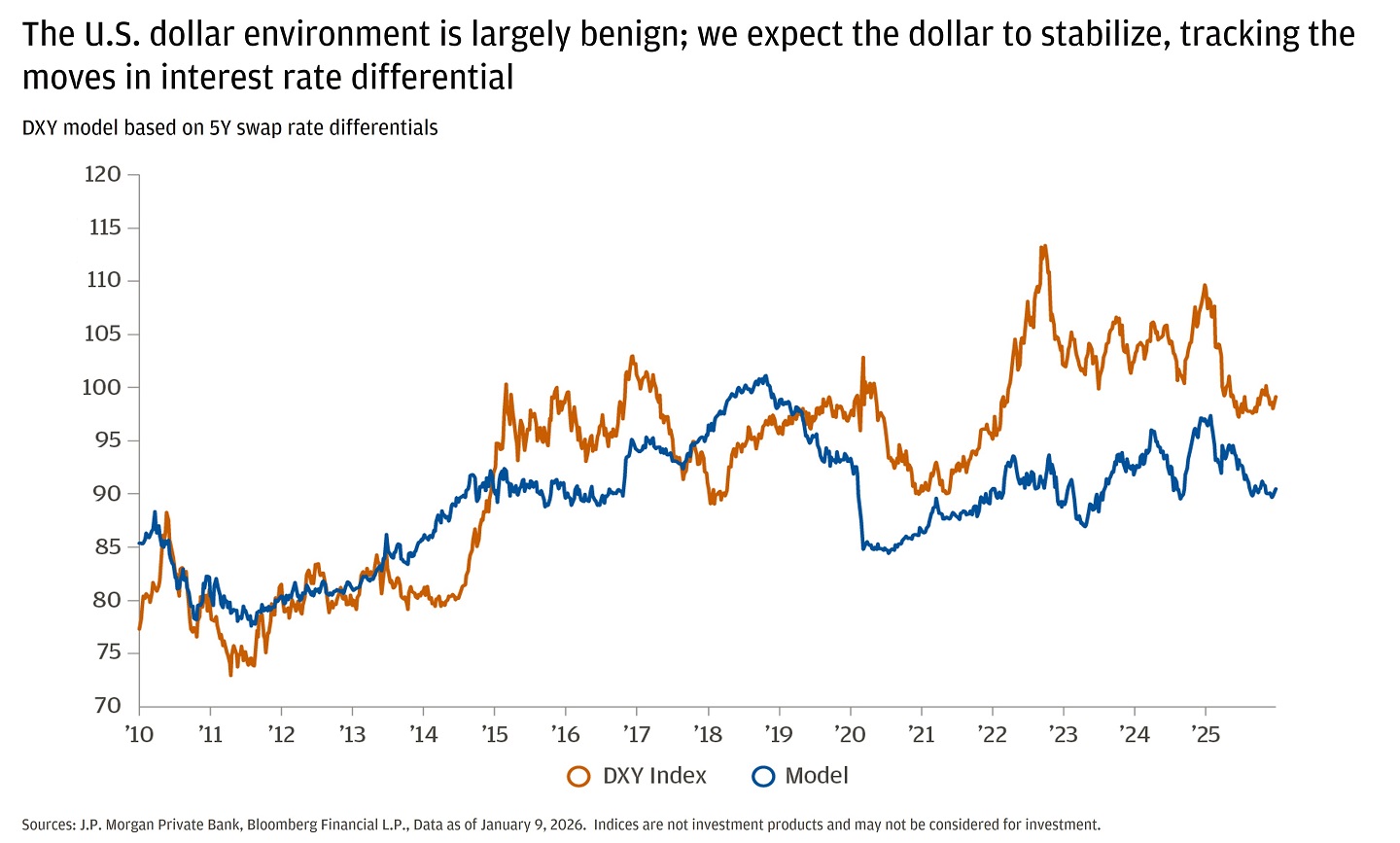
However, there are instances when this relationship does not hold. For example, in 2012-13, gold lost 18% of its value even though the dollar remained relatively stable, rising less than 1%. We think a relatively weak dollar will present a stable and benign backdrop for gold prices over the next six to 12 months. Following a year of significant weakness, the dollar is entering a bumpy process of bottoming, as shown in the chart below. In our base case, we anticipate that the U.S. economy could gradually recover over the second half of the year, potentially coinciding with improvements in other major economies such as Europe and Japan. Lingering concerns over Federal Reserve (Fed) independence and U.S. fiscal sustainability may also limit the dollar’s strength. 

Line chart showing DXY Index and the 5-year swap rate differentials model from 2010 to January 9, 2026.

Change in real yields

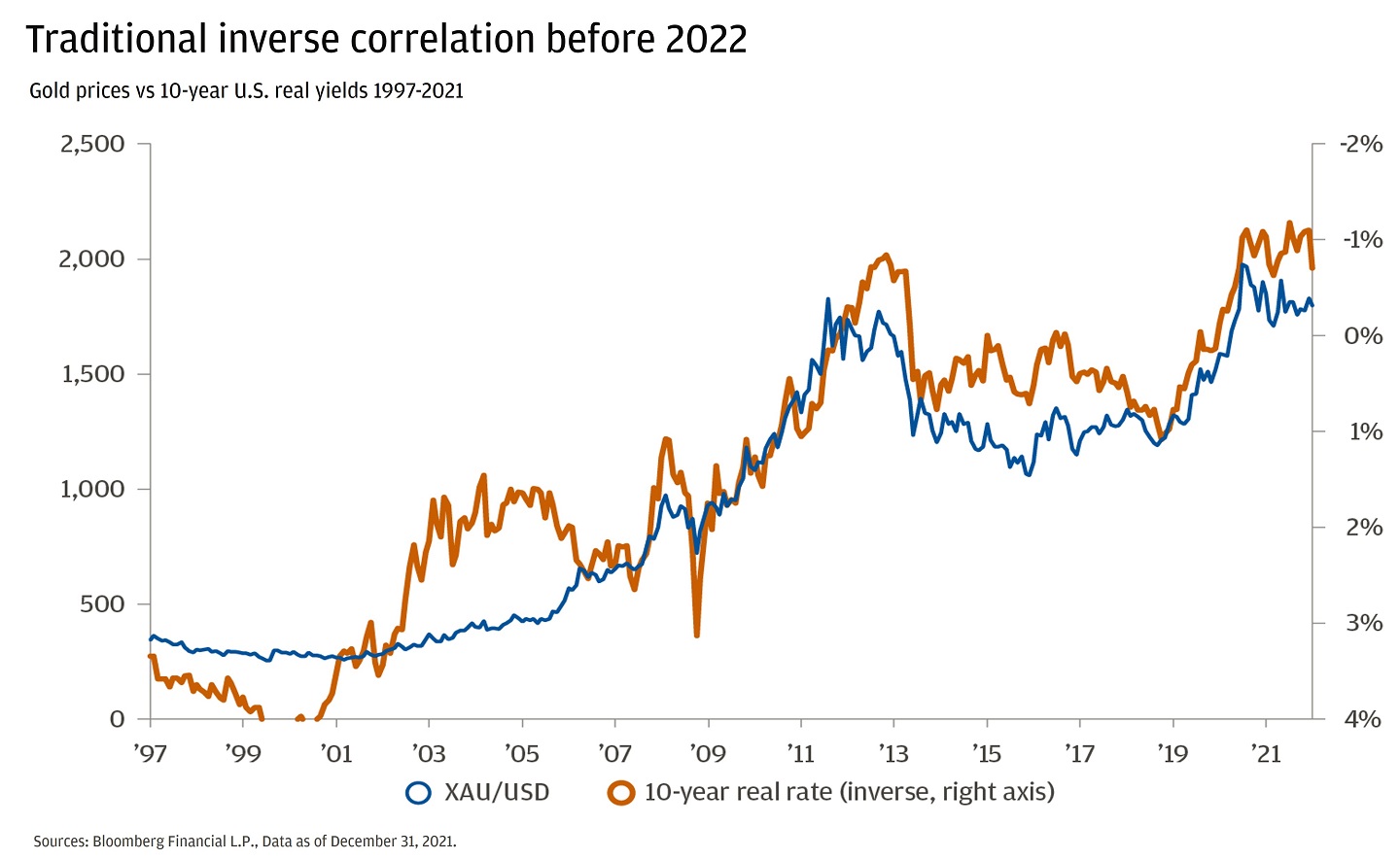
Historically, gold prices have generally had an inverse relationship with real yields (inflation-adjusted interest rates). As gold does not generate interest income, real yields can be seen as the opportunity cost of holding it. When real yields go down, gold becomes more attractive relative to interest-bearing assets such as cash and fixed-income securities.

This relationship explains a large part of the price increase in gold since the 1990s, a period of structural decline in real yields. Large gold rallies such as those in 2008-2012 and 2019-2021 can also be attributed to real yields turning negative due to global quantitative easing and zero interest rate policies. This chart tracks the relationship.

Line chart showing correlation between gold price and 10-year real Treasury yields from 1997 to 2021.

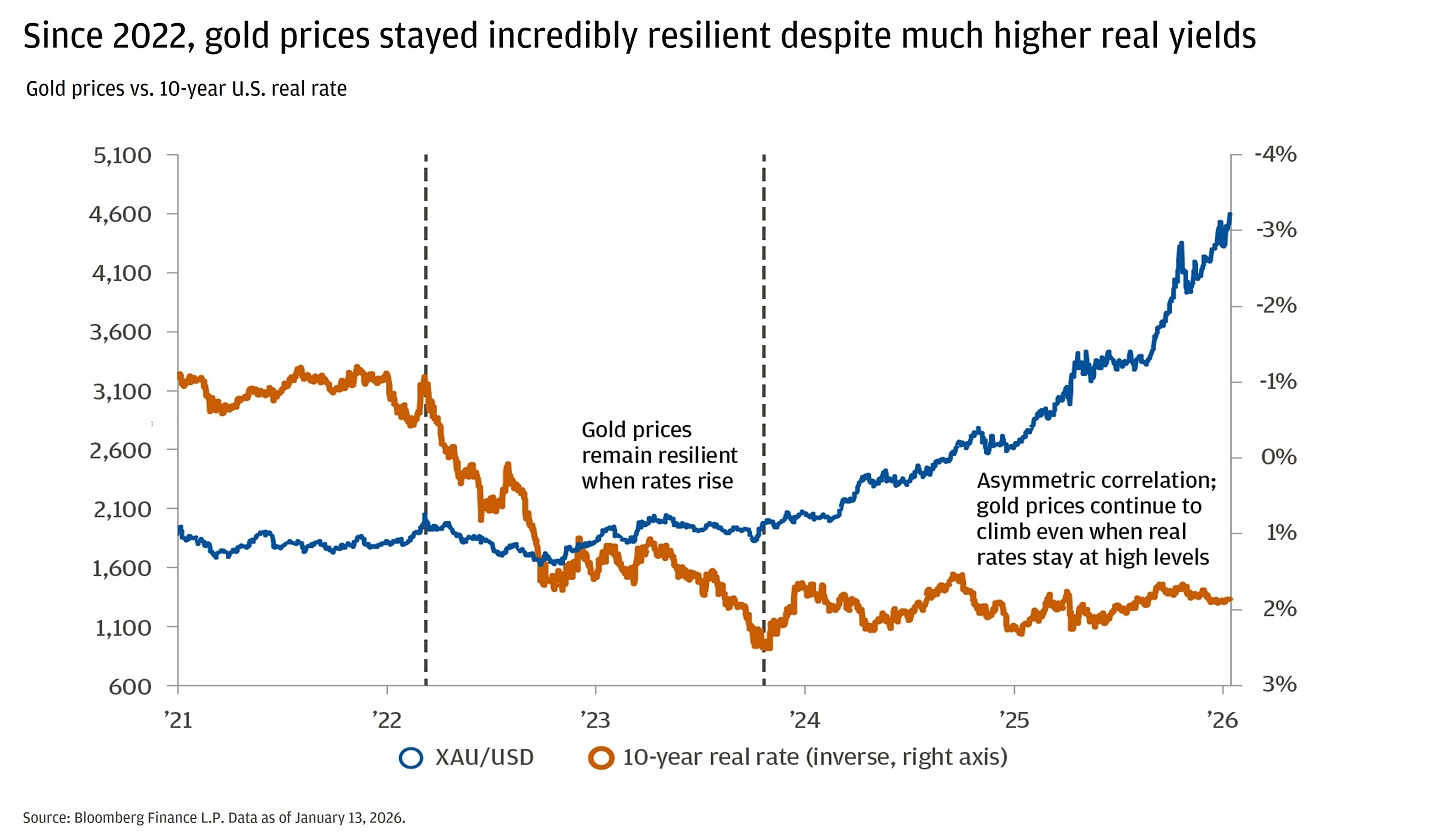
However, there are periods where this relationship breaks down, and as the chart below shows, that’s been the case over the past two years. In early 2022, the Fed began raising interest rates at an unprecedented pace in response to stubbornly elevated inflation and global supply disruptions following Russia’s invasion of Ukraine. Real yields rose from deeply negative territory to the highest levels seen since the global financial crisis of 2008. Yet gold remained very resilient: Prices were little changed in 2022, although with significant volatility, and in 2023 posted a +13% return, ending the year at a record high of $2,068 per ounce.

We believe this correlation is not broken and will likely reestablish itself. At present, gold still reacts to the movements in real yields, only in an asymmetric manner: It rises when yields decrease, but declines to a smaller degree when yields increase. Why? The primary reason is a recent shift in supply and demand dynamics.

Line chart showing correlation between gold prices and 10-year U.S. real rates from 2021 to 2026.

Supply and demand dynamics

All commodities prices are driven by supply and demand. Demand for gold is particularly important because supplies (in the form of gold mining) have been fairly stable for many years. This sets it apart from other commodities. There are three key sources of demand for gold: industrial, investment and reserve management.

Jewelry fabrication accounts for around 50% of total annual gold consumption. Demand is particularly strong in Asia, especially from India and China. Industrial and technology uses account for around 10% of gold demand, with significant sources including electronics, dentistry and aerospace.

While investment and reserve management demand accounts for a smaller portion of total gold demand, at times they are significant drivers of gold prices. This has been the case in recent years.

Central banks have been significant buyers of gold for centuries. Under the Gold Standard, central banks were required to hold sufficient gold reserves to back their currencies and allow currency to be exchanged for gold. When this system proved unworkable during times of crisis, governments adopted the Bretton Woods system, which fixed the dollar to gold at a set price and fixed international currencies to the dollar.

Strains began to emerge as the United States began to run large deficits, and the United States fully abandoned the link to gold in 1971, allowing the price of gold to float freely on international markets.

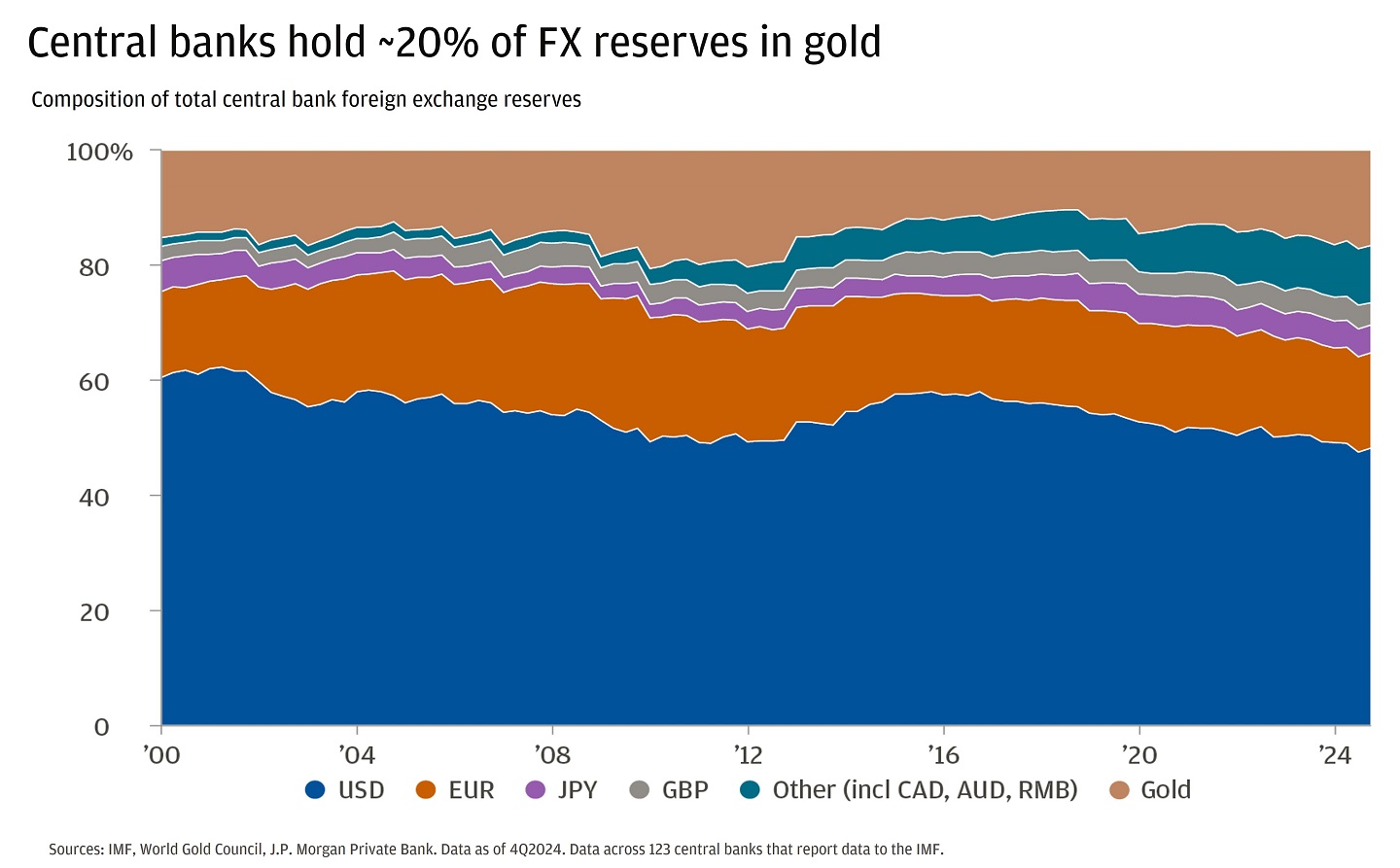
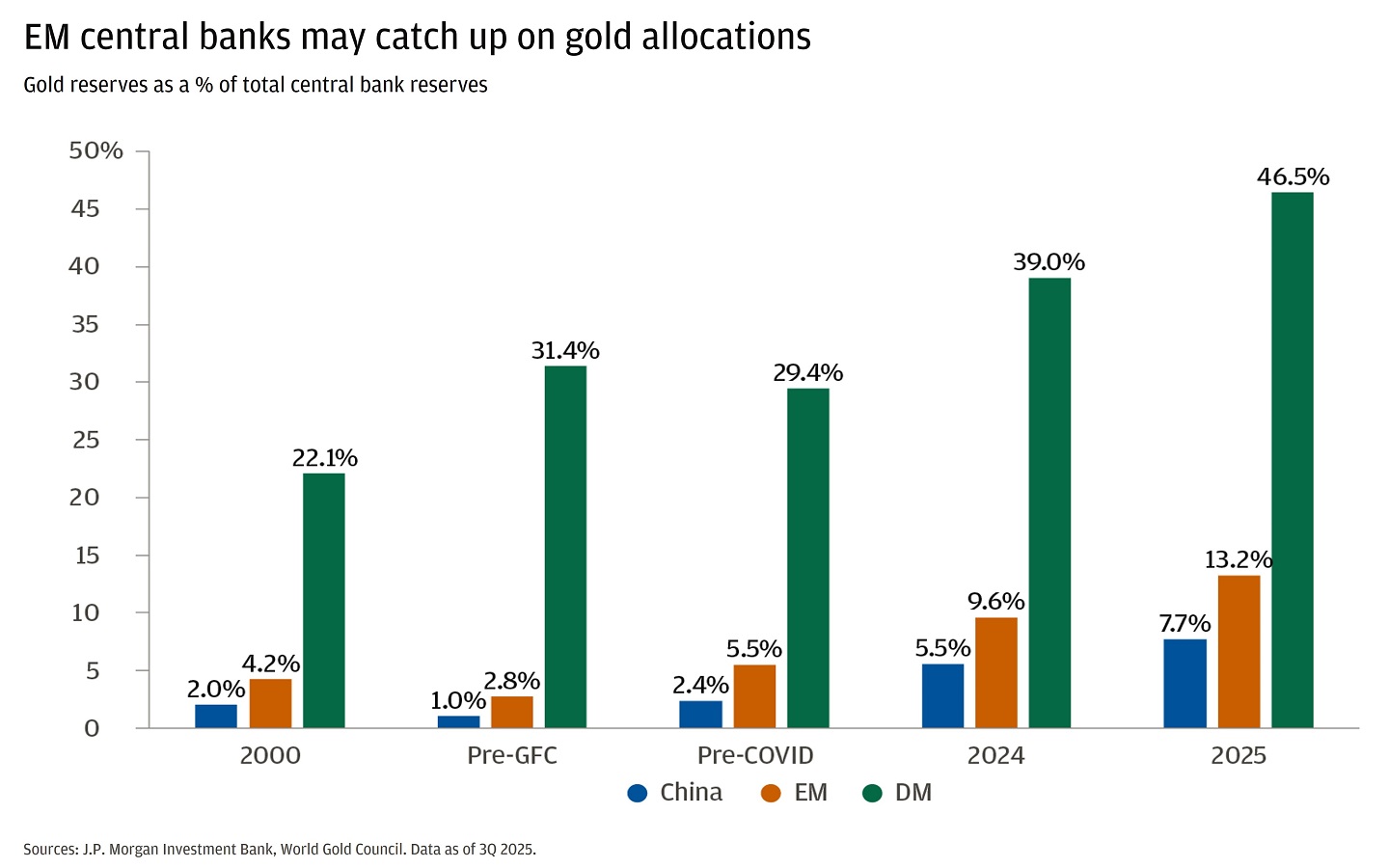
Still, central banks find gold to be an appealing store of value because it is scarce. Over the past 20 years, central banks worldwide have generally kept around 20% of their foreign exchange reserves in gold. However, emerging market central banks tend to hold much less gold than their developed market peers, as this chart shows.

Chart showing composition of central bank foreign exchange reserves in percentages from 2010 to Q4 2024.
Bar chart showing the percentage of gold reserves held by central banks in different time periods.

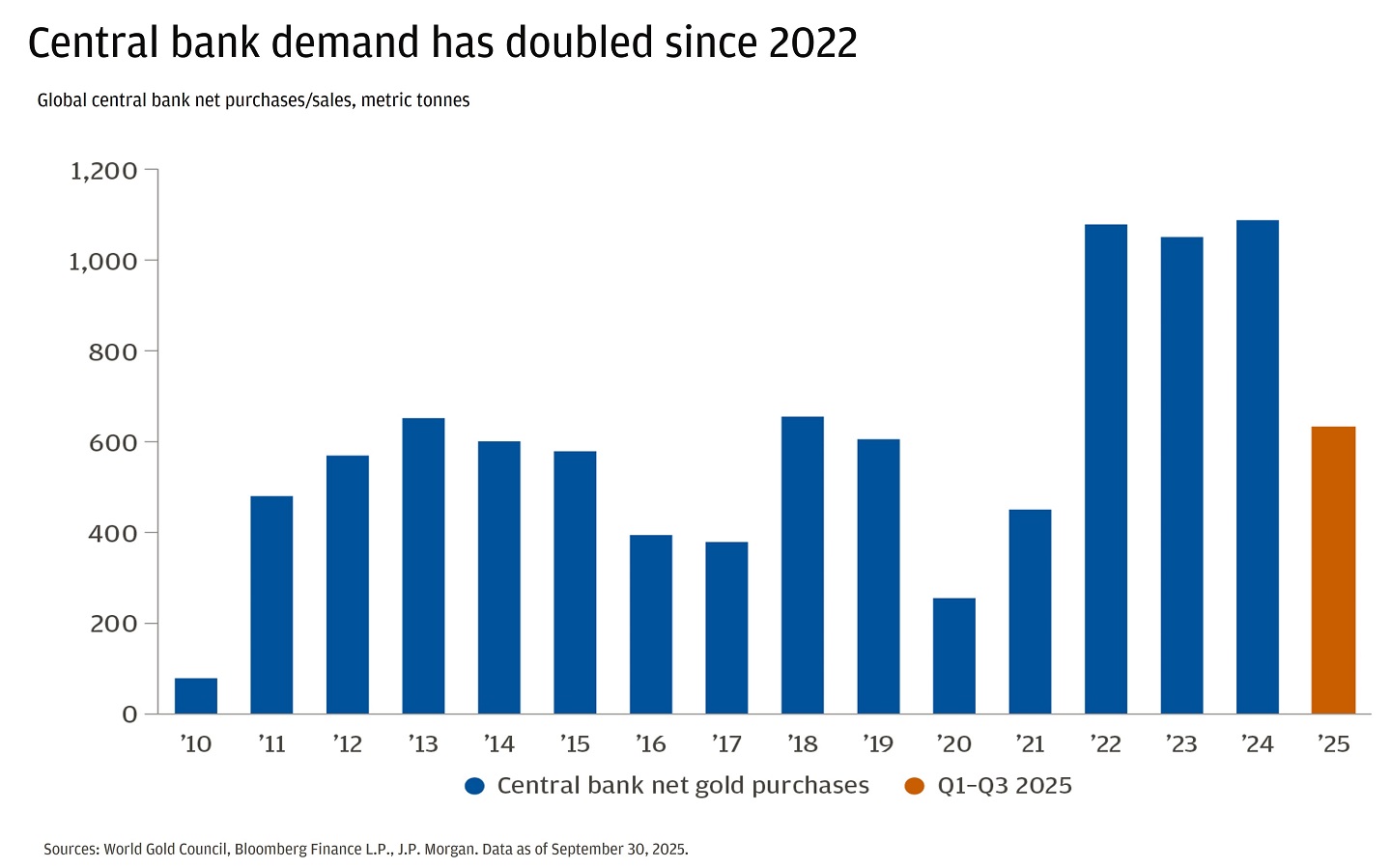
After a long hiatus, central bank purchases have risen notably in recent years. Net purchases by central banks reached a record 1,082 tons in 2022, more than doubling the average over the previous 10 years. They sustained that breakneck pace in 2023 and 2024, and purchases slowed only slightly over the first three quarters of 2025 despite the sharp price rally.2 Demand remained broad-based and driven by emerging market central banks.

The outlook of central bank purchase remains strong, as a record of 43% of 73 global monetary authorities believe their own gold reserves will increase over the next year.3 There are several reasons for this, but it has become apparent that countries facing elevated geopolitical risks (such as those on the borders of the Russia-Ukraine war) are increasing their gold reserves.

Some nations that are not allied with the United States are looking to reduce their reserve mix away from dollars to make those reserves less vulnerable to sanctions. Other governments aim to add some protection against a backdrop of higher and more volatile inflation worldwide. The scarcity of gold sometimes makes it useful as an inflation hedge, although this is often transitory.

Bar chart showing central bank net gold purchases from 2010 to Q3 2025 in metric tons.

Retail and institutional investors

Many investors hold positions in gold through exchange-traded funds (ETFs), futures markets, options or structured notes. Some prefer to hold the physical metal and invest in bars, coins and claims linked to individually numbered bars. Institutional investors often hold physical gold and are more long-term oriented. Pension funds and foundations, in particular, tend to hold the metal for decades. Hedge funds and commodity trading advisers are more speculative in their approaches but can have prolonged impacts on price movements.

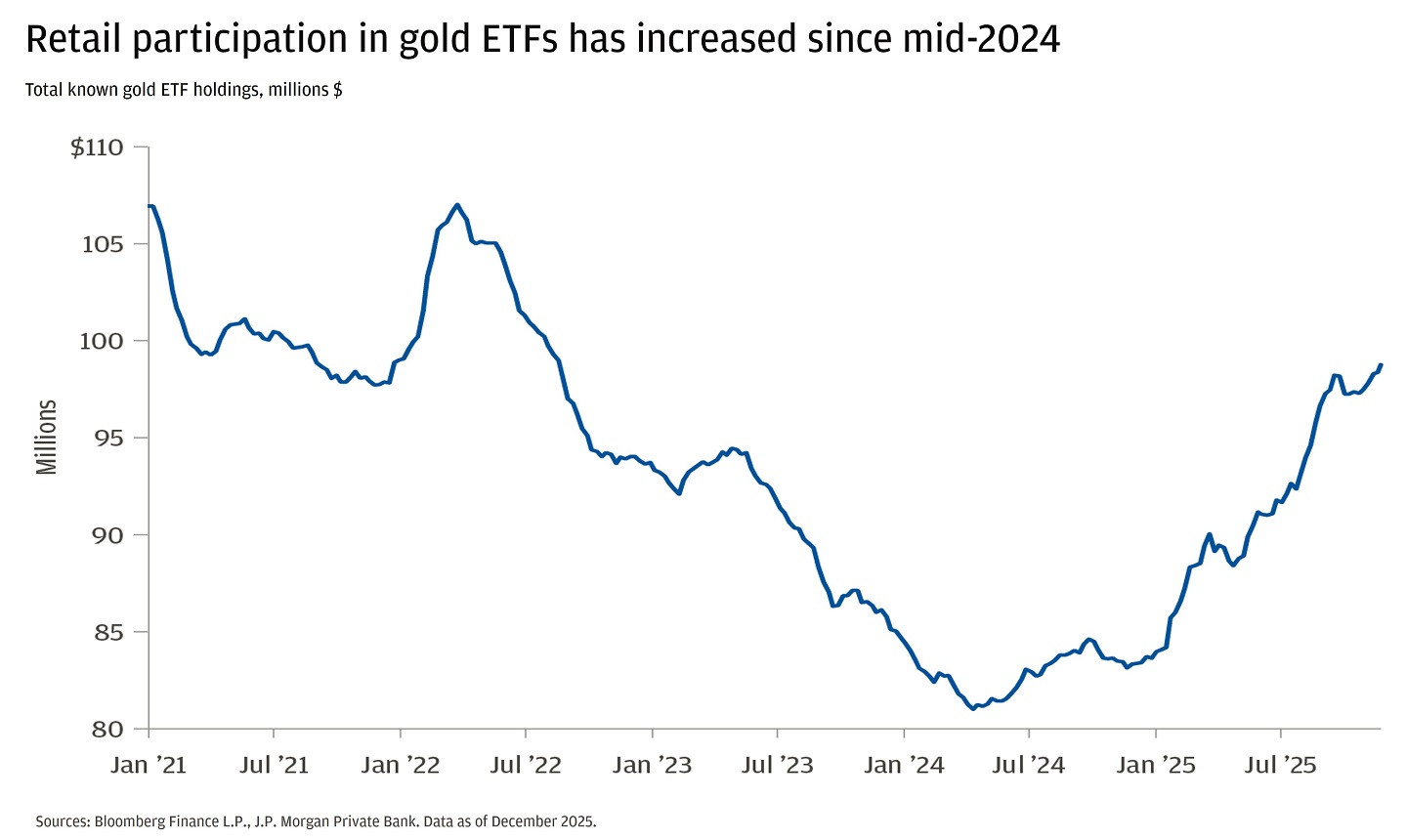
Holdings of gold ETFs have become popular with retail investors since their inception in 2004. Retail flows in gold ETFs are often short-term and tend to be driven by fears of inflation, conflict or crisis (they hit a record high during the COVID-19 pandemic), as well as interest rates. As the chart below illustrates, ETF demand picked up in mid-2025 and accelerated rapidly. It was a main driver for the sharp rally in 2025. This trend has exhibited a clear inverse correlation with movements in cash rates.

Retail investors typically shift into cash when the Fed maintains elevated rates. As the Fed reduces interest rates and cash yields decline, investors reallocate into fixed income or alternative strategies, including gold. This explains why holdings reached a trough in 2024: As the market began to price in imminent rate cuts by the Fed, cash returns declined, prompting a rotation into other asset classes.

Line chart showing amount of gold ETF holdings from 2023 to 2025 in millions of dollars.

Gold in a portfolio

In our view, a key rationale for considering gold is its role as a portfolio diversifier. Historically, gold has exhibited a low correlation to both global equities and global bonds, and while this trend may persist, future correlations can vary depending on market conditions. Over the last five times the S&P 500 declined 20%, gold has averaged a 6% return. Gold has also tended to perform well during periods of higher inflation. Historically, when U.S. year-over-year Consumer Price Index (CPI) inflation has been between 3% and 4%, gold has averaged a one-year return of 13%.

As the steep decline seen in late January shows, gold is fundamentally a risky asset. Its annualized volatility over the past 20 years has been around 17%, slightly higher than that of large-cap equities. Since 1975, gold has experienced 91 distinct drawdowns of more than 10% – about one every seven months on average. The S&P 500 has seen 68 such drawdowns, or roughly one every nine months. This is not an asset class for the faint of heart.

Despite its high standalone volatility, gold generally lowers overall portfolio risk when funded from a mix of stocks and bonds due to its low correlation with both asset classes. According to J.P. Morgan Asset Management’s Long-Term Capital Market Assumptions (LTCMAs), adding a ~5% position to gold funded pro rata from a balanced allocation (55% stocks/45% bonds) keeps expected return unchanged, but modestly reduces expected volatility.

Our outlook on gold

As shown by our price outlook of $6,000 to $6,300 per ounce, we have a positive outlook on gold based on current market dynamics. Demand dynamics are robust: Broad-based central bank purchases are expected to persist as emerging market central banks continue to increase allocations. These institutions remain under-allocated to gold relative to their developed market peers. Further inflows from retail investors could occur if cash rates decline.

We expect to see sustained support for gold over the longer term due to concerns regarding fiscal discipline globally. In last year’s update, we expected gold to perform well under a Trump administration, based on certain economic factors: persistent concerns over the U.S. deficit amid expansionary fiscal policy, and a potential increase in dollar reserve diversification in response to trade tensions and heightened geopolitical risks. These factors may continue to influence gold prices in the coming year.

References

1.

Investing.com, “XAU Spot Gold Price.” (Accessed February 19, 2026)

2.

World Gold Council, “2024 Central Bank Gold Reserves Survey.” (June 18, 2024)

3.

World Gold Council, “2025 Central Bank Gold Reserves Study.” (June 17, 2025)

Connect with a Wealth Advisor

Reach out to your Wealth Advisor to discuss any considerations for your current portfolio. If you don’t have a Wealth Advisor, click here to tell us about your needs and we’ll reach out to you.

Connect now

IMPORTANT INFORMATION

This material is for informational purposes only, and may inform you of certain products and services offered by J.P. Morgan’s wealth management businesses, part of JPMorgan Chase & Co. (“JPM”). Products and services described, as well as associated fees, charges and interest rates, are subject to change in accordance with the applicable account agreements and may differ among geographic locations. Not all products and services are offered at all locations. If you are a person with a disability and need additional support accessing this material, please contact your J.P. Morgan team or email us at accessibility.support@jpmorgan.com for assistance. Please read all Important Information.

The U.S. Dollar Index (DXY) is an index (or measure) of the value of the United States dollar relative to a basket of foreign currencies, often referred to as a basket of U.S. trade partners' currencies. The Index goes up when the U.S. dollar gains “strength” (value) when compared to other currencies.

All market and economic data as of January 21, 2026, and sourced from Bloomberg Finance L.P. and FactSet unless otherwise stated.

Past performance is not a guarantee of future returns and investors may get back less than the amount invested.

The S&P 500 Index is an unmanaged broad-based index that is used as representation of the U.S. stock market. It includes 500 widely held common stocks. Total return figures reflect the reinvestment of dividends. “S&P500” is a trademark of Standard and Poor’s Corporation.

Bonds are subject to interest rate risk, credit and default risk of the issuer. Bond prices generally fall when interest rates rise.

IMPORTANT INFORMATION

All market and economic data as of January 21, 2026, and sourced from Bloomberg Finance L.P. and FactSet unless otherwise stated.

JPMAM Long-Term Capital Market Assumptions

Given the complex risk-reward trade-offs involved, we advise clients to rely on judgment as well as quantitative optimization approaches in setting strategic allocations. Please note that all information shown is based on qualitative analysis. Exclusive reliance on the above is not advised. This information is not intended as a recommendation to invest in any particular asset class or strategy or as a promise of future performance. Note that these asset class and strategy assumptions are passive only—they do not consider the impact of active management. References to future returns are not promises or even estimates of actual returns a client portfolio may achieve. Assumptions, opinions and estimates are provided for illustrative purposes only. They should not be relied upon as recommendations to buy or sell securities. Forecasts of financial market trends that are based on current market conditions constitute our judgment and are subject to change without notice. We believe the information provided here is reliable, but do not warrant its accuracy or completeness. This material has been prepared for information purposes only and is not intended to provide, and should not be relied on for, accounting, legal or tax advice. The outputs of the assumptions are provided for illustration/discussion purposes only and are subject to significant limitations.

“Expected” or “alpha” return estimates are subject to uncertainty and error. For example, changes in the historical data from which it is estimated will result in different implications for asset class returns. Expected returns for each asset class are conditional on an economic scenario; actual returns in the event the scenario comes to pass could be higher or lower, as they have been in the past, so an investor should not expect to achieve returns similar to the outputs shown herein. References to future returns for either asset allocation strategies or asset classes are not promises of actual returns a client portfolio may achieve. Because of the inherent limitations of all models, potential investors should not rely exclusively on the model when making a decision. The model cannot account for the impact that economic, market, and other factors may have on the implementation and ongoing management of an actual investment portfolio. Unlike actual portfolio outcomes, the model outcomes do not reflect actual trading, liquidity constraints, fees, expenses, taxes and other factors that could impact the future returns. The model assumptions are passive only—they do not consider the impact of active management. A manager’s ability to achieve similar outcomes is subject to risk factors over which the manager may have no or limited control.

The views contained herein are not to be taken as advice or a recommendation to buy or sell any investment in any jurisdiction, nor is it a commitment from J.P. Morgan Asset Management or any of its subsidiaries to participate in any of the transactions mentioned herein. Any forecasts, figures, opinions or investment techniques and strategies set out are for information purposes only, based on certain assumptions and current market conditions and are subject to change without prior notice. All information presented herein is considered to be accurate at the time of production. This material does not contain sufficient information to support an investment decision and it should not be relied upon by you in evaluating the merits of investing in any securities or products. In addition, users should make an independent assessment of the legal, regulatory, tax, credit and accounting implications and determine, together with their own financial professional, if any investment mentioned herein is believed to be appropriate to their personal goals. Investors should ensure that they obtain all available relevant information before making any investment. It should be noted that investment involves risks, the value of investments and the income from them may fluctuate in accordance with market conditions and taxation agreements and investors may not get back the full amount invested. Both past performance and yield are not a reliable indicator of current and future results.

Key Risks

Diversification and asset allocation do not ensure a profit or protect against loss.

Investments in commodities may have greater volatility than investments in traditional securities, particularly if the instruments involve leverage. The value of commodity-linked derivative instruments may be affected by changes in overall market movements, commodity index volatility, changes in interest rates, or factors affecting a particular industry or commodity, such as drought, floods, weather, livestock disease, embargoes, tariffs and international economic, political and regulatory developments. Use of leveraged commodity-linked derivatives creates an opportunity for increased return but, at the same time, creates the possibility for greater loss.

When investing in mutual funds or exchange-traded and index funds, please consider the investment objectives, risks, charges, and expenses associated with the funds before investing. You may obtain a fund’s prospectus by contacting your investment professional. The prospectus contains information, which should be carefully read before investing.

Structured product involves derivatives. Do not invest in it unless you fully understand and are willing to assume the risks associated with it.  The most common risks include, but are not limited to, risk of adverse or unanticipated market developments, issuer credit quality risk, risk of lack of uniform standard pricing, risk of adverse events involving any underlying reference obligations, risk of high volatility, risk of illiquidity/little to no secondary market, and conflicts of interest. Before investing in a structured product, investors should review the accompanying offering document, prospectus or prospectus supplement to understand the actual terms and key risks associated with each individual structured product. Any payments on a structured product are subject to the credit risk of the issuer and/or guarantor. Investors may lose their entire investment, i.e., incur an unlimited loss. The risks listed above are not complete. For a more comprehensive list of the risks involved with this particular product, please speak to your J.P. Morgan representative. If you are in any doubt about the risks involved in the product, you may clarify with the intermediary or seek independent professional advice.


GENERAL RISKS & CONSIDERATIONS
Any views, strategies or products discussed in this material may not be appropriate for all individuals and are subject to risks. Investors may get back less than they invested, and past performance is not a reliable indicator of future results. Asset allocation/diversification does not guarantee a profit or protect against loss. Nothing in this material should be relied upon in isolation for the purpose of making an investment decision. You are urged to consider carefully whether the services, products, asset classes (e.g. equities, fixed income, alternative investments, commodities, etc.) or strategies discussed are suitable to your needs. You must also consider the objectives, risks, charges, and expenses associated with an investment service, product or strategy prior to making an investment decision. For this and more complete information, including discussion of your goals/situation, contact your J.P. Morgan representative.

NON-RELIANCECertain information contained in this material is believed to be reliable; however, JPM does not represent or warrant its accuracy, reliability or completeness, or accept any liability for any loss or damage (whether direct or indirect) arising out of the use of all or any part of this material. No representation or warranty should be made with regard to any computations, graphs, tables, diagrams or commentary in this material, which are provided for illustration/reference purposes only. The views, opinions, estimates and strategies expressed in this material constitute our judgment based on current market conditions and are subject to change without notice. JPM assumes no duty to update any information in this material in the event that such information changes. Views, opinions, estimates and strategies expressed herein may differ from those expressed by other areas of JPM, views expressed for other purposes or in other contexts, and this material should not be regarded as a research report. Any projected results and risks are based solely on hypothetical examples cited, and actual results and risks will vary depending on specific circumstances. Forward-looking statements should not be considered as guarantees or predictions of future events.

Nothing in this document shall be construed as giving rise to any duty of care owed to, or advisory relationship with, you or any third party. Nothing in this document shall be regarded as an offer, solicitation, recommendation or advice (whether financial, accounting, legal, tax or other) given by J.P. Morgan and/or its officers or employees, irrespective of whether or not such communication was given at your request. J.P. Morgan and its affiliates and employees do not provide tax, legal or accounting advice. You should consult your own tax, legal and accounting advisors before engaging in any financial transactions.

Legal Entity and Regulatory Information.

J.P. Morgan Wealth Management is a business of JPMorgan Chase & Co., which offers investment products and services through J.P. Morgan Securities LLC (JPMS), a registered broker-dealer and investment adviser, member FINRA and SIPC. Insurance products are made available through Chase Insurance Agency, Inc. (CIA), a licensed insurance agency, doing business as Chase Insurance Agency Services, Inc. in Florida. Certain custody and other services are provided by JPMorgan Chase Bank, N.A. (JPMCB). JPMS, CIA and JPMCB are affiliated companies under the common control of JPMorgan Chase & Co. Products not available in all states.

Bank deposit accounts and related services, such as checking, savings and bank lending, are offered by JPMorgan Chase Bank, N.A. Member FDIC.

This document may provide information about the brokerage and investment advisory services provided by J.P. Morgan Securities LLC (“JPMS”). The agreements entered into with JPMS, and corresponding disclosures provided with respect to the different products and services provided by JPMS (including our Form ADV disclosure brochure, if and when applicable), contain important information about the capacity in which we will be acting. You should read them all carefully. We encourage clients to speak to their JPMS representative regarding the nature of the products and services and to ask any questions they may have about the difference between brokerage and investment advisory services, including the obligation to disclose conflicts of interests and to act in the best interests of our clients.

J.P. Morgan may hold a position for itself or our other clients which may not be consistent with the information, opinions, estimates, investment strategies or views expressed in this document.  JPMorgan Chase & Co. or its affiliates may hold a position or act as market maker in the financial instruments of any issuer discussed herein or act as an underwriter, placement agent, advisor or lender to such issuer.


Check the background of our firm and investment professionals on FINRA's BrokerCheck

To learn more about J. P. Morgan Wealth Management’s investment business, including our accounts, products and services, as well as our relationship with you, please review our J.P. Morgan Securities LLC Form CRS and Guide to Investment Services and Brokerage Products.

This website is for informational purposes only, and not an offer, recommendation or solicitation of any product, strategy service or transaction. Any views, strategies or products discussed on this site may not be appropriate or suitable for all individuals and are subject to risks. Prior to making any investment or financial decisions, an investor should seek individualized advice from a personal financial, legal, tax and other professional advisors that take into account all of the particular facts and circumstances of an investor's own situation. 

This website may provide information about the brokerage and investment advisory services provided by J.P. Morgan Securities LLC ("JPMS"). When JPMS acts as a broker-dealer, a client's relationship with us and our duties to the client will be different in some important ways than a client's relationship with us and our duties to the client when we are acting as an investment advisor. A client should carefully read the agreements and disclosures received (including our Form ADV disclosure brochure, if and when applicable) in connection with our provision of services for important information about the capacity in which we will be acting.

INVESTMENT AND INSURANCE PRODUCTS ARE:
• NOT FDIC INSURED • NOT INSURED BY ANY FEDERAL GOVERNMENT AGENCY • NOT A DEPOSIT OR OTHER OBLIGATION OF, OR GUARANTEED BY, JPMORGAN CHASE BANK, N.A. OR ANY OF ITS AFFILIATES • SUBJECT TO INVESTMENT RISKS, INCLUDING POSSIBLE LOSS OF THE PRINCIPAL AMOUNT INVESTED

J.P. Morgan Wealth Management is a business of JPMorgan Chase & Co., which offers investment products and services through J.P. Morgan Securities LLC (JPMS), a registered broker-dealer and investment adviser, member FINRA and SIPC Insurance products are made available through Chase Insurance Agency, Inc. (CIA), a licensed insurance agency, doing business as Chase Insurance Agency Services, Inc. in Florida. Certain custody and other services are provided by JPMorgan Chase Bank, N.A. (JPMCB). JPMS, CIA and JPMCB are affiliated companies under the common control of JPMorgan Chase & Co. Products not available in all states.

Please read additional Important Information in conjunction with these pages.