
Version 1 - Primary Nav Search

Key takeaways

  • The “Great Wealth Transfer” refers to an estimated $124 trillion expected to move from baby boomers to Generation X and millennials over the next two decades.
  • Many families plan thoughtfully for estate planning and taxes but underestimate the banking access and liquidity required to carry out the plan smoothly.
  • High-net-worth families should consider devising a game plan for the transfer, including proper account titling, updated account access, and sufficient cash or readily available liquidity to cover taxes and other incidental inheritance expenses.
  • Families should talk early and often about preserving their wealth and legacy; silence is where things can break down.

Contributors

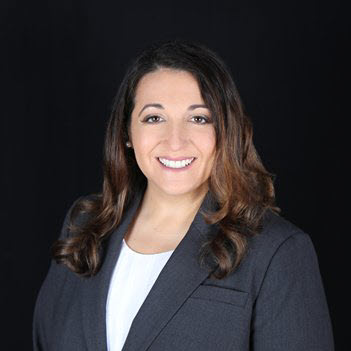
Angelena Mascilli

Managing Director, Head of Wealth Management Banking & Liquidity


The United States is in the midst of the largest intergenerational wealth transfer in its history. Known as the “Great Wealth Transfer,” an estimated $124 trillion is expected to change hands over the next two decades as aging baby boomers pass wealth to the next generation.1

Most families naturally frame this moment around estate planning, with discussions around wills and trusts, tax considerations, investments and the emotional weight that comes with receiving (or handing down) a legacy. Those conversations matter. But as importantly, the smoothness of a transfer often hinges on something more basic: the basic banking and liquidity needs that accompany any transfer of assets.

Liquidity isn’t just about having cash; it’s about having flexibility. During a wealth transfer, liquid assets can help families act decisively to pay estate expenses, fund a trust or avoid the need to sell long-term assets at the wrong time. One of the most practical gifts you can give the next generation is a plan for access and the liquidity to execute it.

Similarly, families will need easy access to the accounts left behind by their parents or other benefactors. Otherwise, an estate could get held up in probate or other stages of legal limbo for months to years.

Below are the practical steps that can help an estate plan work as intended when the goal is to preserve both wealth and relationships.

The practical steps that make an estate plan work

Families often put significant energy into “big picture” decisions, such as how assets should be distributed or invested. The families who also manage the cleanest transitions tend to get four operational details right:

  • Account access: During estate transitions, heirs will likely need to pay bills, manage cash movements, communicate with financial institutions and handle time-sensitive obligations. Not knowing where various accounts are held (and who can access them) can lead to unnecessary confusion, friction and even financial penalties. A good plan clarifies who can view accounts, move money, pay expenses and speak on the account – and under what circumstances.
  • Account structure and titling: How an account is owned – such as individually, jointly, in a trust or through a business – can influence how quickly assets move, whether probate may be involved and how distribution occurs. Titling can also produce unintended results. For example, adding one adult child as a joint owner “for convenience” may cause that account to pass directly to that individual, even if the intent was to share assets equally among multiple heirs. The same dynamic can apply to real estate and other titled assets. Aligning titles and beneficiary designations with the broader estate plan is a critical (and often overlooked) step.
  • Cash flow and obligations: Heirs and executors benefit from a simple map of how money moves today: recurring bill pay, transfers, required distributions, charitable gifts and, if they owned a business, payroll. The goal is continuity: keeping the household or business stable while the legal and administrative process plays out.
  • Decision-making continuity: Transitions aren’t always tidy. Incapacity can arrive before death; heirs may be young or not ready; and business ownership can add complexity. Families should identify who is empowered to make financial decisions, how that authority is documented and how responsibilities are communicated.

Roadblocks families can prepare for now

Addressing the four factors above early, and with the assistance of a wealth advisor, can help alleviate stress during such a big life transition. Still, even in well-intentioned families, a few issues show up repeatedly, including:

  • Scattered accounts and missing documentation: Accounts across multiple institutions can slow the process if no one has a clear inventory or permission to access.
  • Outdated authorizations: Trustee permissions, authorized users and trusted contacts can become stale over time, creating delays at the moment clarity is most needed.
  • Delayed liquidity at the wrong time: If cash isn’t readily available to cover taxes and expenses, families may have to make unpopular decisions about selling off other assets.

The encouraging news is that these challenges can be preventable. Confirming appropriate titling and access can help keep required payments moving without interruption, while reducing confusion among heirs. Building a thoughtful liquidity plan can help protect long-term assets from being sold on someone else’s timeline.

An estate planning meeting checklist

The next time you have an estate planning conversation with your advisor or banker, you might want to address the following action items:

  • Account structure and titling: Outline which of your accounts are held at various institutions, and whether they’re held individually, jointly, in a trust, etc.
  • Authorizations and continuity: For all your financial accounts, who is authorized to act, who is a trusted contact and who can step in if needed?
  • Liquidity map: Develop a detailed accounting of where cash lives within your estate. Differentiate between “transactional” cash for everyday expenses, and “strategic” cash or reserves that can be deployed for a future business or investment opportunity.
  • Life-event readiness: Put together a list of life transitions your family should plan for, such as incapacity, business succession, relocation and caregiving needs.
  • Family communication: Make a plan and share it with your family. Among other items, the plan should cover access to your various financial accounts.

The bottom line

The Great Wealth Transfer is more than a financial milestone – it’s a real-life transition for families. Estate documents and investment strategy are essential, but they work best when paired with a practical plan for banking access and liquidity. If you want your plan to be executed according to your wishes, talk with your J.P. Morgan financial professional about aligning account titling and access, and ensuring your family has the liquidity and operational readiness to carry your legacy forward. Including your advisor and banker in these conversations helps ensure your legal and financial professionals are all aligned with your plan.

Frequently asked questions about the Great Wealth Transfer

What is the Great Wealth Transfer, and why does it matter to families today?

The Great Wealth Transfer is the intergenerational bequeathal of a projected $124 trillion in assets from primarily baby boomers to their Gen X and millennial heirs over the next two decades. Proper planning can be integral to family harmony. While estate planning is imperative for any family with assets to pass down to the next generation, it often doesn’t incorporate the banking and liquidity realities of financial succession planning.

How can families avoid delayed access to cash during a life transition?

There can be no transfer of assets if heirs don’t understand or can’t access the benefactor’s bank and other financial accounts. Additionally, the execution of any transfer of assets requires some liquidity, whether to pay for taxes, creditor claims or other financial obligations. It’s also critical to ensure your cash accounts are properly titled to the appropriate heir. A trusted financial advisor can help your family plan for this moment.

How should next-generation family members be included – without overwhelming them?

Early and open communication is key to effective wealth transfer, with heirs who have conversations earlier in life reporting a smoother transition. Additionally, the next generation can be gradually looped into the family business or investment framework over time, taking on more responsibility over the course of their life. This approach ensures your heirs not only have a say in the matter but also understand the structural facets of their family’s wealth.

References

1.

Cerulli Associates, “Cerulli Anticipates $124 Trillion in Wealth Will Transfer Through 2048.” (December 5, 2024)

Connect with a Wealth Advisor

Reach out to your Wealth Advisor to discuss any considerations for your current portfolio. If you don’t have a Wealth Advisor, click here to tell us about your needs and we’ll reach out to you.

Connect now

IMPORTANT INFORMATION

This material is for informational purposes only, and may inform you of certain products and services offered by J.P. Morgan’s wealth management businesses, part of JPMorgan Chase & Co. (“JPM”). Products and services described, as well as associated fees, charges and interest rates, are subject to change in accordance with the applicable account agreements and may differ among geographic locations. Not all products and services are offered at all locations. If you are a person with a disability and need additional support accessing this material, please contact your J.P. Morgan team or email us at accessibility.support@jpmorgan.com for assistance. Please read all Important Information.


GENERAL RISKS & CONSIDERATIONS
Any views, strategies or products discussed in this material may not be appropriate for all individuals and are subject to risks. Investors may get back less than they invested, and past performance is not a reliable indicator of future results. Asset allocation/diversification does not guarantee a profit or protect against loss. Nothing in this material should be relied upon in isolation for the purpose of making an investment decision. You are urged to consider carefully whether the services, products, asset classes (e.g. equities, fixed income, alternative investments, commodities, etc.) or strategies discussed are suitable to your needs. You must also consider the objectives, risks, charges, and expenses associated with an investment service, product or strategy prior to making an investment decision. For this and more complete information, including discussion of your goals/situation, contact your J.P. Morgan representative.

NON-RELIANCECertain information contained in this material is believed to be reliable; however, JPM does not represent or warrant its accuracy, reliability or completeness, or accept any liability for any loss or damage (whether direct or indirect) arising out of the use of all or any part of this material. No representation or warranty should be made with regard to any computations, graphs, tables, diagrams or commentary in this material, which are provided for illustration/reference purposes only. The views, opinions, estimates and strategies expressed in this material constitute our judgment based on current market conditions and are subject to change without notice. JPM assumes no duty to update any information in this material in the event that such information changes. Views, opinions, estimates and strategies expressed herein may differ from those expressed by other areas of JPM, views expressed for other purposes or in other contexts, and this material should not be regarded as a research report. Any projected results and risks are based solely on hypothetical examples cited, and actual results and risks will vary depending on specific circumstances. Forward-looking statements should not be considered as guarantees or predictions of future events.

Nothing in this document shall be construed as giving rise to any duty of care owed to, or advisory relationship with, you or any third party. Nothing in this document shall be regarded as an offer, solicitation, recommendation or advice (whether financial, accounting, legal, tax or other) given by J.P. Morgan and/or its officers or employees, irrespective of whether or not such communication was given at your request. J.P. Morgan and its affiliates and employees do not provide tax, legal or accounting advice. You should consult your own tax, legal and accounting advisors before engaging in any financial transactions.

Legal Entity and Regulatory Information.

J.P. Morgan Wealth Management is a business of JPMorgan Chase & Co., which offers investment products and services through J.P. Morgan Securities LLC (JPMS), a registered broker-dealer and investment adviser, member FINRA and SIPC. Insurance products are made available through Chase Insurance Agency, Inc. (CIA), a licensed insurance agency, doing business as Chase Insurance Agency Services, Inc. in Florida. Certain custody and other services are provided by JPMorgan Chase Bank, N.A. (JPMCB). JPMS, CIA and JPMCB are affiliated companies under the common control of JPMorgan Chase & Co. Products not available in all states.

Bank deposit accounts and related services, such as checking, savings and bank lending, are offered by JPMorgan Chase Bank, N.A. Member FDIC.

This document may provide information about the brokerage and investment advisory services provided by J.P. Morgan Securities LLC (“JPMS”). The agreements entered into with JPMS, and corresponding disclosures provided with respect to the different products and services provided by JPMS (including our Form ADV disclosure brochure, if and when applicable), contain important information about the capacity in which we will be acting. You should read them all carefully. We encourage clients to speak to their JPMS representative regarding the nature of the products and services and to ask any questions they may have about the difference between brokerage and investment advisory services, including the obligation to disclose conflicts of interests and to act in the best interests of our clients.

J.P. Morgan may hold a position for itself or our other clients which may not be consistent with the information, opinions, estimates, investment strategies or views expressed in this document. JPMorgan Chase & Co. or its affiliates may hold a position or act as market maker in the financial instruments of any issuer discussed herein or act as an underwriter, placement agent, advisor or lender to such issuer.