Key takeaways

  • Kevin Warsh was sworn in as the 17th chair of the Federal Reserve (Fed) on May 22, 2026. Understandably, investors may be asking what the transition means for interest rates and the broader economy.
  • In the near term, our strategists expect the Fed to keep interest rates steady through year-end, with inflation still running above target and energy prices adding uncertainty.
  • June 16-17 will be Warsh's first FOMC meeting as chair. His communication style and handling of the policy statement may offer early signals about how he plans to lead the Federal Reserve moving forward.

By Hilarey Gould

Kevin Warsh was sworn in as the 17th chair of the Federal Reserve on May 22, 2026. The job he stepped into has some challenges at present, particularly in building committee consensus while balancing the Fed’s dual mandate. To support continuity during the transition, former Fed Chair Jerome Powell has agreed to remain on the board.

For investors, the natural question may be what is likely to change, and the answer may be less than expected – at least in the short run. U.S. monetary policy is set by the Federal Open Market Committee (FOMC), a 12-member body that votes on every decision regarding the federal funds rate.1 The chair shapes the meeting agenda, steers the discussion and speaks for the group, but ultimately holds only one vote – just like all committee members. A new face at the head of the table doesn’t rewrite the data or override committee consensus.

What a new chair may be able to shift, though, is tone, communication and emphasis. With the next FOMC meeting scheduled for June 16-17, investors may be watching Warsh closely for early reads on how he plans to run the central bank.

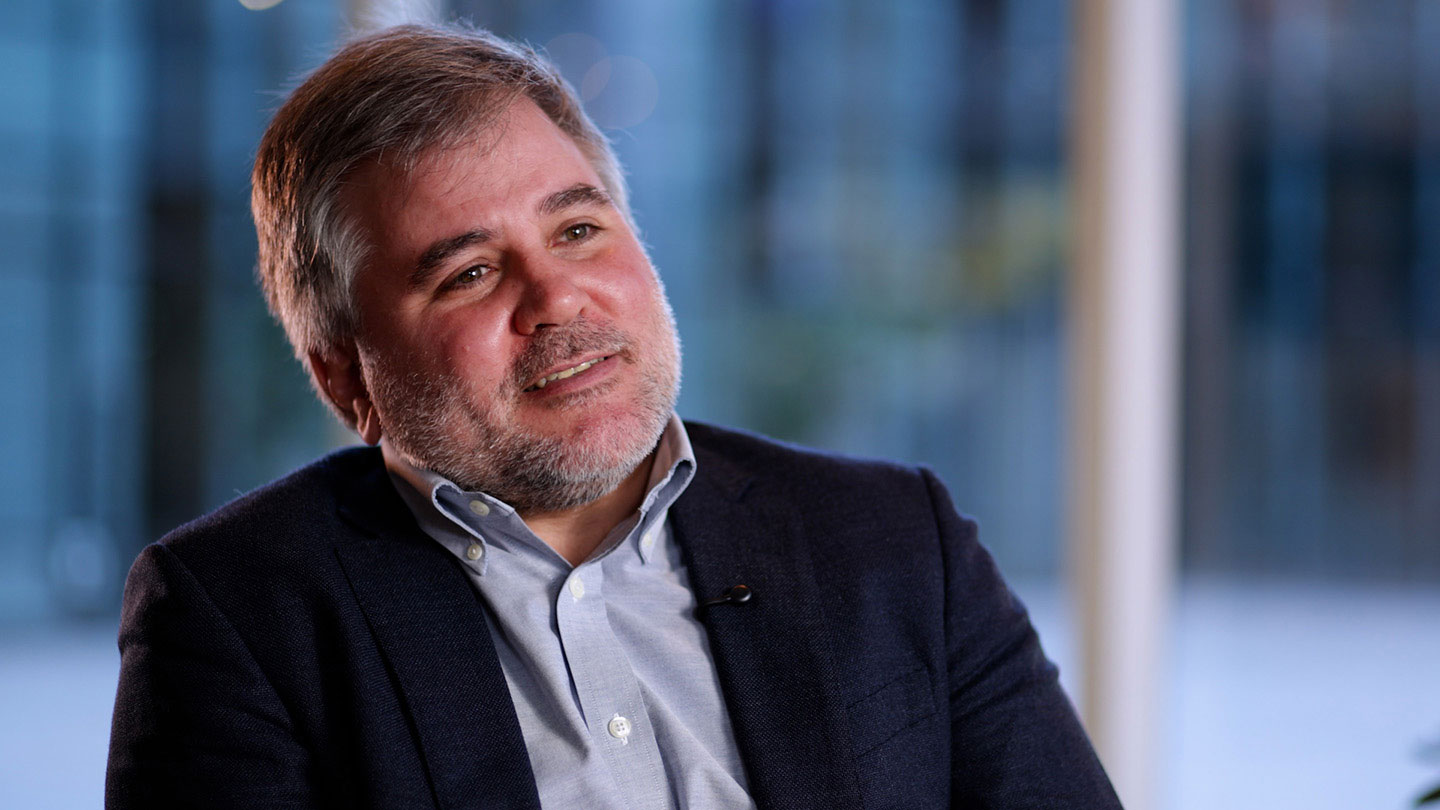
“The Kevin Warsh era has begun,” J.P. Morgan Wealth Management Chief Investment Strategist Phil Camporeale said. “The Federal Reserve is not expected to move rates in the June meeting, and we believe they will be on hold for the rest of 2026. There will, however, likely be an explicit move away from a bias toward easing to a neutral stance on rates. Additionally, there will be plenty of discussion around the future direction of policy in Chair Warsh’s first press conference, including the ‘dot plot’ and summary of economic projections. Diversification has been the best antidote to volatility so far in 2026, and we believe that will continue as investors position themselves for uncertainty for the path of rates moving forward.”

What to expect at Warsh’s first Fed meeting

The economic picture Warsh inherited is complicated. The Personal Consumption Expenditures (PCE) Price Index, historically the Fed’s preferred inflation gauge, rose 0.4% in April – up 3.8% from a year earlier – driven by rising oil prices. Core PCE, which strips out more volatile food and energy prices to capture the underlying trend, came in at a more manageable 3.3% year over year.2

Employers added 172,000 jobs in May, coming in above expectations, and unemployment held at 4.3%.3 While the job market appears on solid footing, prices remain a watch item, making a June rate cut highly unlikely. The federal funds rate – the short-term rate that influences borrowing costs across mortgages, credit cards and business loans – has been sitting at 3.50% to 3.75% through several consecutive FOMC meetings since December 2025. Our strategists’ base case is for it to stay there through year-end.

After all, cutting rates when inflation is running nearly 2 percentage points above the 2% target may be hard to justify. And if the conflict in Iran keeps energy costs elevated, that makes the case for lower rates even harder.

Some Fed governors, such as Christopher Waller, have made clear that the committee should remove any bias toward easing and instead move policy toward a more neutral stance. That’s why – while it isn’t our base case – we don’t think a move in either direction is completely off the table.4 In fact, at the April meeting, three FOMC members dissented not because they disagreed with holding rates steady, but because they objected to including an easing bias in the committee’s policy statement.5

Three things worth watching at the June Fed meeting

The dot plot

Four times a year, the Fed releases a chart after the FOMC meeting – known as the dot plot – that shows where each FOMC member expects interest rates to go over the next several years.

June is one of those meetings.

Warsh has been openly skeptical of the practice, arguing that publishing forward projections locks policymakers into positions too early and can compound mistakes when the economy shifts.6 He likely won’t be able to eliminate the dot plot at his first meeting, but any change in how the committee’s projections are framed or discussed could be a meaningful early signal of Warsh’s intentions.

Whether there’s a press conference

Former Chair Jerome Powell held a press conference after every FOMC meeting. At his confirmation hearing, Warsh did not commit to continuing the practice, hinting instead that he’d like fewer post-meeting press conferences.7

The language in the policy statement

Even without a rate move, wording matters. Any shift in how the committee describes the inflation outlook, the labor market or the path ahead could affect bond prices and investor expectations.

What the Federal Reserve chair does (and doesn’t do)

The Fed chair frames the debate and communicates the outcome of the FOMC meetings, but all rate decisions go to a committee vote. The FOMC’s 12 voting members include the seven members of the Board of Governors, the president of the Federal Reserve Bank of New York and four rotating regional bank presidents.8

That matters because the committee Warsh inherited has been leaning away from rate cuts. Recent FOMC minutes reflected a majority view that “some policy firming” (Fed language for rate hikes) would likely become appropriate if inflation keeps running above target.9 Warsh can’t override that consensus; rather, he can work within it or perhaps, over time, build toward a shift.

Warsh may also have to navigate perceptions of Fed independence. He was direct at his April 21 Senate confirmation hearing, stating: “Inflation is a choice, and the Fed must take responsibility for it.”10 He also testified that the central bank must “stay in its lane” and that independence is “largely up to the Fed” to earn and protect.11

Continuity vs. change: Where new leadership can matter

Communication is where Warsh may be able to move fastest. He’s expressed interest in scaling back “forward guidance,” the Fed’s practice of telegraphing where rates are likely headed in the future. Warsh has pointed to former Chair Alan Greenspan’s approach as a model – that is, letting data drive decisions meeting by meeting rather than broadcasting intentions well in advance.12 Less forward guidance may mean investors would need to watch incoming data more closely, rather than relying on the Fed to map out the path.

Warsh has also questioned whether the headline PCE figure tells the full story on prices.13 He’s shown interest in trimmed-mean approaches, which remove the most extreme price changes from the calculation to isolate the underlying trend. Any change in the metrics the Fed emphasizes publicly could shift how markets interpret whether policy is tight enough or not.

Tone shifts don’t automatically change rates. FOMC decisions are still made up of 12 votes, and several members remain focused primarily on getting inflation back to the 2% target. How quickly Warsh builds consensus within the committee will matter as much as the priorities he brings to the table.

What investors can do now

A change at the Fed doesn’t mean it’s time to overhaul your portfolio, but when both stocks and bonds face pressure from persistent inflation and rising yields for a short period of time, there a few things you might want to consider:

  • Diversification: See if your holdings are spread across asset classes and geographies. Concentration in any single area can add risk when the rate outlook is uncertain.
  • Real assets: Commodities, infrastructure and global real estate have historically carried a positive relationship to inflation while offering lower volatility than broad equities.
  • Gold: The metal can still act as a hedge against inflation and currency volatility.

The trade-offs between income, protection and long-term growth depend on your specific timeline, liquidity needs and risk tolerance. The key is not reacting to a single event or headline.

The bottom line

The June 16-17 FOMC meeting is Kevin Warsh’s first as our new Fed chair, and it may tell investors more about how he plans to lead the Federal Reserve than where rates might go this year. His priorities represent a genuine shift in emphasis, even if every rate move still requires a committee majority.

While a change in Fed leadership could come with changes to Fed communications, investors shouldn’t feel the need to change their strategy. Consider focusing on the fundamentals, like staying diversified, and stick to your long-term strategy to ensure you’re on track for your goals.

References

1.

Board of Governors of the Federal Reserve System, “Federal Open Market Committee.” (Accessed June 3, 2026)

2.

Bureau of Economic Analysis, “Personal Income and Outlays, April 2026.” (May 28, 2026)

3.

Bureau of Labor Statistics (BLS), “The Employment Situation – May 2026.” (June 5, 2026)

4.

Governor Christopher J. Waller, “Policy Risks Have Changed,” at The Centre for Central Banking Guest Lecture, Frankfurt School of Finance and Management, Frankfurt, Germany. (May 22, 2026)

5.

CNBC, “Fed Holds Rates Steady but With Highest Level of Dissent Since 1992.” (April 29, 2026)

6.

Council on Foreign Relations, “What To Expect From Kevin Warsh’s Fed in the First 100 Days.” (May 26, 2026)

7.

CNBC, “Warsh Pushes His Plan for ‘Regime Change’ at Senate Hearing.” (April 21, 2026)

8.

Board of Governors of the Federal Reserve System, “FAQs: How Is the Federal Reserve System Structured?” (May 28, 2026)

9.

Federal Reserve, “Minutes of the Federal Open Market Committee.” (April 28–29, 2026)

10.

Reuters, “Level-Setting the Warsh Fed, in Warsh’s Own Words.” (May 22, 2026)

11.

CNBC, “Chair Nominee Kevin Warsh Says Fed Must ‘Stay in Its Lane’ To Maintain Independence.” (April 20, 2026)

12.

Yahoo Finance, "New Fed Chair Kevin Warsh Suggests He May Take an Alan Greenspan-Style Approach at the Central Bank." (May 24, 2026)

13.

Reuters, “Fed Chair Warsh’s Preferred Inflation Measure Is Cooling.” (May 28, 2026)

Connect with a Wealth Advisor

Reach out to your Wealth Advisor to discuss any considerations for your current portfolio. If you don’t have a Wealth Advisor, click here to tell us about your needs and we’ll reach out to you.

Connect now


IMPORTANT INFORMATION

This material is for informational purposes only, and may inform you of certain products and services offered by J.P. Morgan’s wealth management businesses, part of JPMorgan Chase & Co. (“JPM”). Products and services described, as well as associated fees, charges and interest rates, are subject to change in accordance with the applicable account agreements and may differ among geographic locations. Not all products and services are offered at all locations. If you are a person with a disability and need additional support accessing this material, please contact your J.P. Morgan team or email us at accessibility.support@jpmorgan.com for assistance. Please read all Important Information.

Equities: The price of equity securities may rise or fall due to the changes in the broad market or changes in a company's financial condition, sometimes rapidly or unpredictably. Equity securities are subject to 'stock market risk' meaning that stock prices in general may decline over short or extended periods of time.

Mutual funds, ETFs, and index funds: When investing in mutual funds or exchange-traded and index funds, please consider the investment objectives, risks, charges, and expenses associated with the funds before investing. You may obtain a fund’s prospectus by contacting your investment professional. The prospectus contains information, which should be carefully read before investing.

Bonds: In general, the bond market is volatile and bond prices rise when interest rates fall and vice versa. Longer term securities are more prone to price fluctuation than shorter term securities. Any fixed income security sold or redeemed prior to maturity may be subject to substantial gain or loss. Dependable income is subject to the credit risk of the issuer of the bond. If an issuer defaults no future income payments will be made.

Commodities: Changes in economic and market conditions, interest rate risk, and lack of liquidity may affect equity performance. Investments in equity structures entail certain risk factors and investments in commodities may have greater volatility than investments in traditional securities. The value of commodities may be affected by changes in overall market movements, commodity index volatility, changes in interest rates, or factors affecting a particular industry or commodity, such as drought, floods, weather, livestock disease, embargoes, tariffs and international economic, political and regulatory developments. Investing in commodities creates an opportunity for increased return but, at the same time, creates the possibility for greater loss.


GENERAL RISKS & CONSIDERATIONS
Any views, strategies or products discussed in this material may not be appropriate for all individuals and are subject to risks. Investors may get back less than they invested, and past performance is not a reliable indicator of future results. Asset allocation/diversification does not guarantee a profit or protect against loss. Nothing in this material should be relied upon in isolation for the purpose of making an investment decision. You are urged to consider carefully whether the services, products, asset classes (e.g. equities, fixed income, alternative investments, commodities, etc.) or strategies discussed are suitable to your needs. You must also consider the objectives, risks, charges, and expenses associated with an investment service, product or strategy prior to making an investment decision. For this and more complete information, including discussion of your goals/situation, contact your J.P. Morgan representative.

NON-RELIANCECertain information contained in this material is believed to be reliable; however, JPM does not represent or warrant its accuracy, reliability or completeness, or accept any liability for any loss or damage (whether direct or indirect) arising out of the use of all or any part of this material. No representation or warranty should be made with regard to any computations, graphs, tables, diagrams or commentary in this material, which are provided for illustration/reference purposes only. The views, opinions, estimates and strategies expressed in this material constitute our judgment based on current market conditions and are subject to change without notice. JPM assumes no duty to update any information in this material in the event that such information changes. Views, opinions, estimates and strategies expressed herein may differ from those expressed by other areas of JPM, views expressed for other purposes or in other contexts, and this material should not be regarded as a research report. Any projected results and risks are based solely on hypothetical examples cited, and actual results and risks will vary depending on specific circumstances. Forward-looking statements should not be considered as guarantees or predictions of future events.

Nothing in this document shall be construed as giving rise to any duty of care owed to, or advisory relationship with, you or any third party. Nothing in this document shall be regarded as an offer, solicitation, recommendation or advice (whether financial, accounting, legal, tax or other) given by J.P. Morgan and/or its officers or employees, irrespective of whether or not such communication was given at your request. J.P. Morgan and its affiliates and employees do not provide tax, legal or accounting advice. You should consult your own tax, legal and accounting advisors before engaging in any financial transactions.

Legal Entity and Regulatory Information.

J.P. Morgan Wealth Management is a business of JPMorgan Chase & Co., which offers investment products and services through J.P. Morgan Securities LLC (JPMS), a registered broker-dealer and investment adviser, member FINRA and SIPC. Insurance products are made available through Chase Insurance Agency, Inc. (CIA), a licensed insurance agency, doing business as Chase Insurance Agency Services, Inc. in Florida. Certain custody and other services are provided by JPMorgan Chase Bank, N.A. (JPMCB). JPMS, CIA and JPMCB are affiliated companies under the common control of JPMorgan Chase & Co. Products not available in all states.

Bank deposit accounts and related services, such as checking, savings and bank lending, are offered by JPMorgan Chase Bank, N.A. Member FDIC.

This document may provide information about the brokerage and investment advisory services provided by J.P. Morgan Securities LLC (“JPMS”). The agreements entered into with JPMS, and corresponding disclosures provided with respect to the different products and services provided by JPMS (including our Form ADV disclosure brochure, if and when applicable), contain important information about the capacity in which we will be acting. You should read them all carefully. We encourage clients to speak to their JPMS representative regarding the nature of the products and services and to ask any questions they may have about the difference between brokerage and investment advisory services, including the obligation to disclose conflicts of interests and to act in the best interests of our clients.

J.P. Morgan may hold a position for itself or our other clients which may not be consistent with the information, opinions, estimates, investment strategies or views expressed in this document. JPMorgan Chase & Co. or its affiliates may hold a position or act as market maker in the financial instruments of any issuer discussed herein or act as an underwriter, placement agent, advisor or lender to such issuer.